Log In




We know that planting a tree can feel like a big project, but we’re here to help! In this guide, we outline the essential tools, materials and techniques required to plant a tree and help it flourish.
1. What size hole do I need to dig?
Planting hole size depends on soil quality and species requirements. For free-draining soil, dig holes 25% wider than the root ball and backfill with a mix of existing soil and multipurpose compost. In waterlogged soil, dig wider, deeper holes and either improve or entirely replace the soil.
2. Do I need to prepare the soil?
To help your new trees get off to the best possible start, we recommend adding a soil improver, like compost or well-rotted manure, to your backfill. This adds nutrients and keeps the soil nice and light.
You might also like to try these helpful boosters during planting:
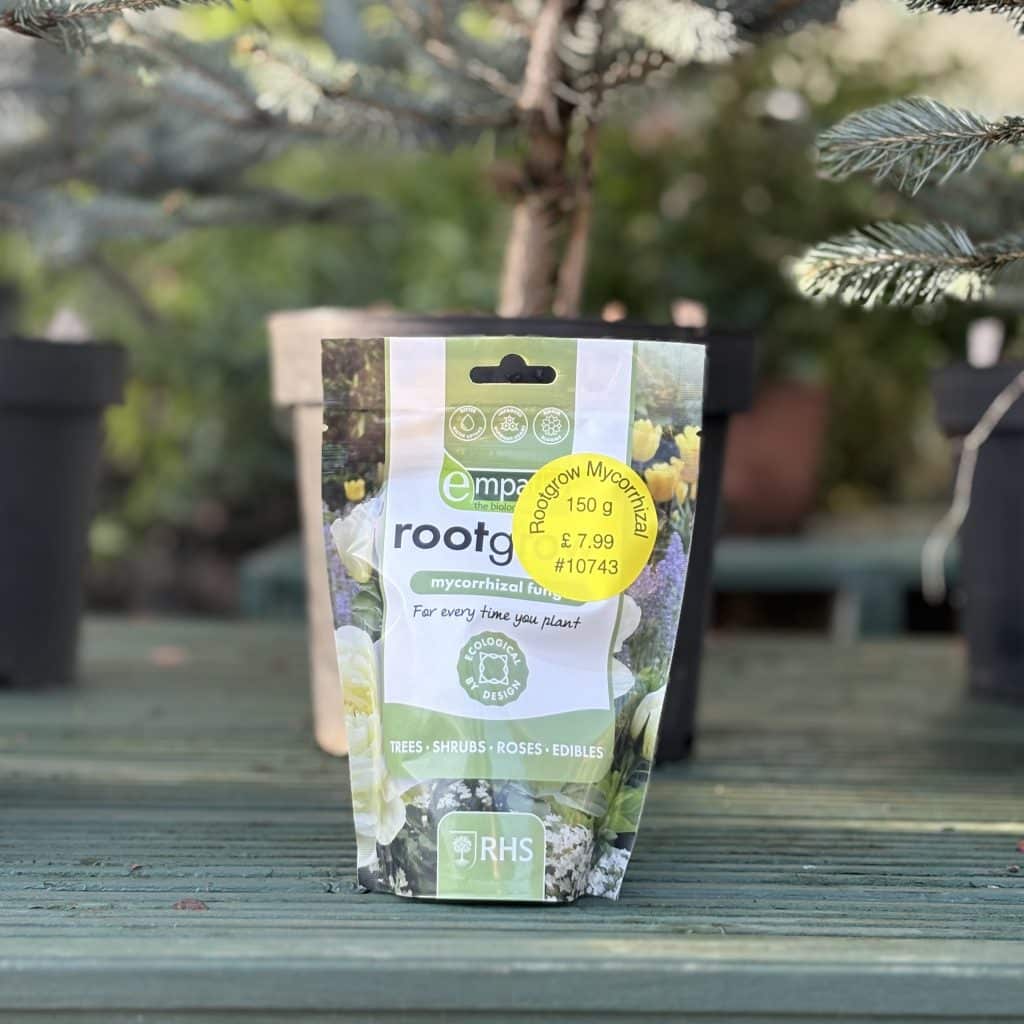
Rootgrow: A mycorrhizal fungi that helps roots find extra water and nutrients.
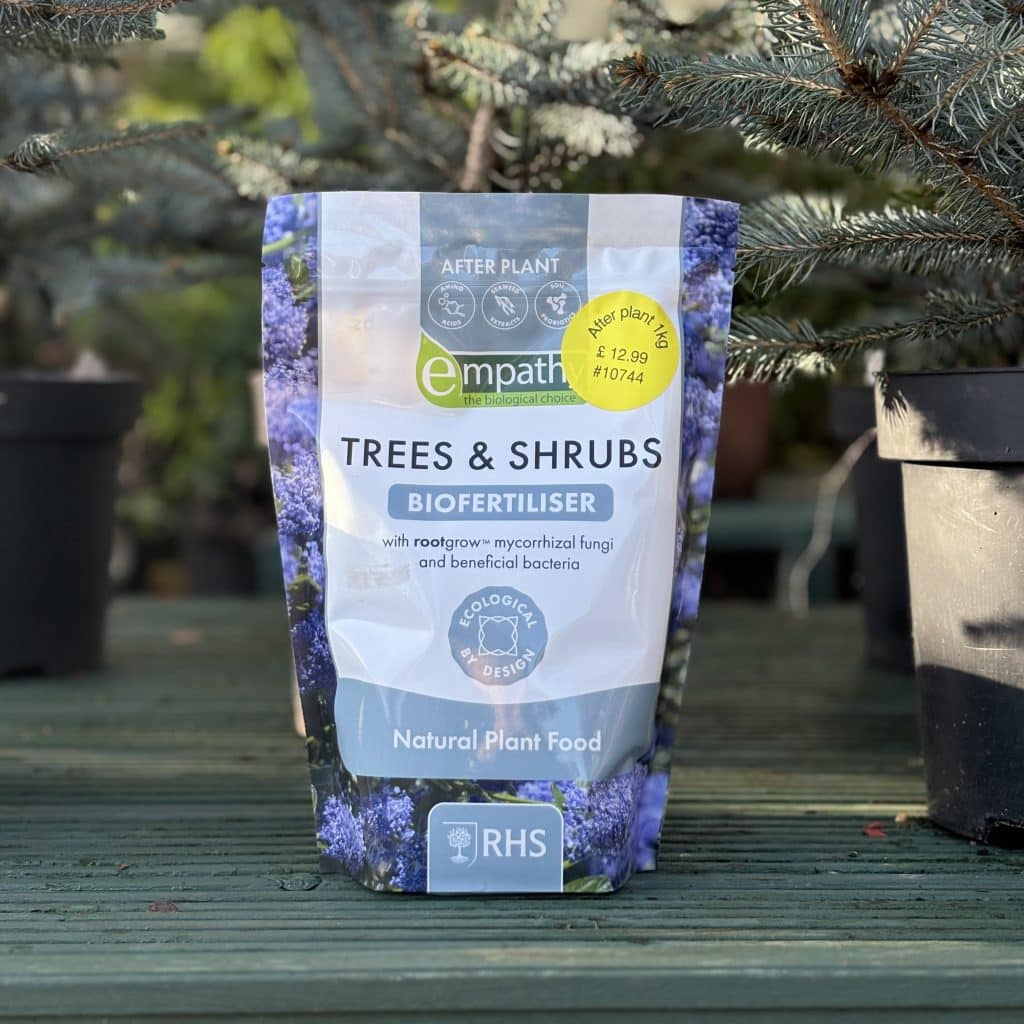
Biofertiliser: Helpful bacteria that support overall plant health.
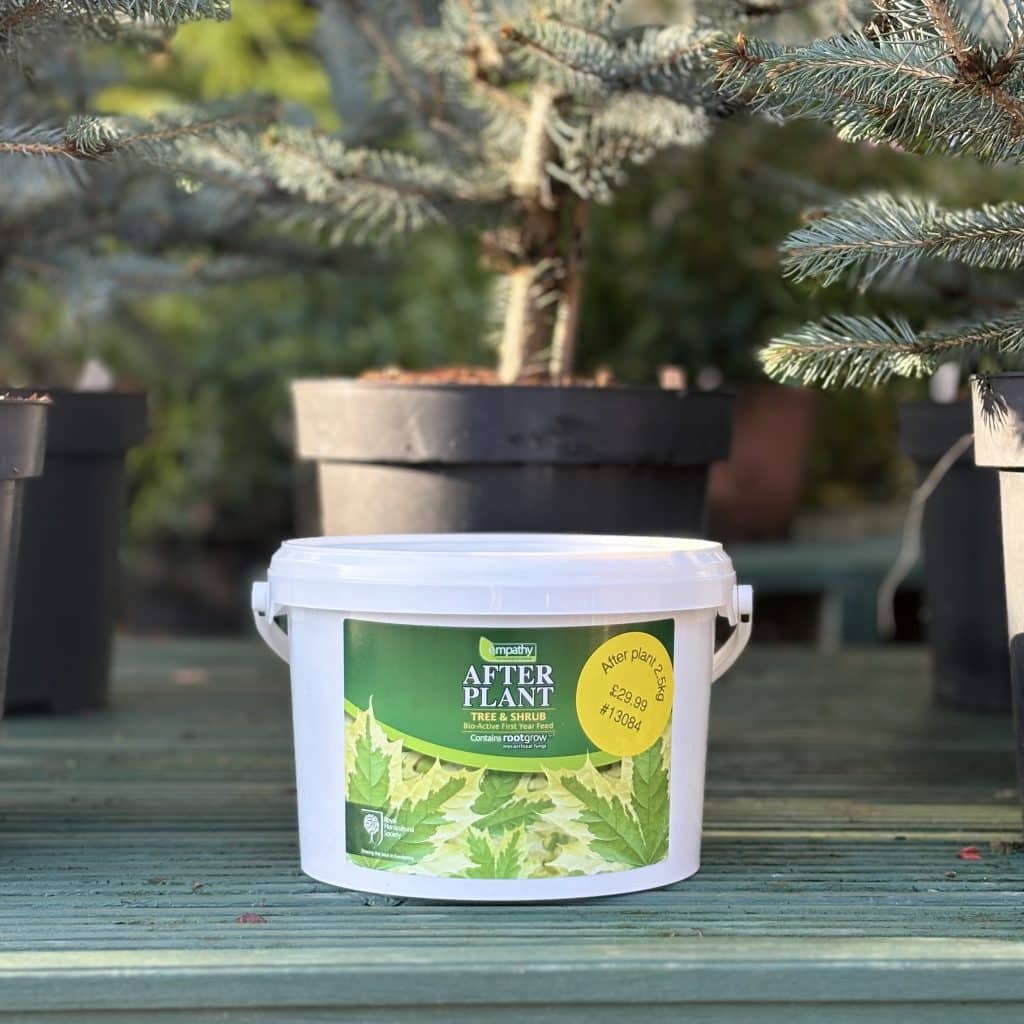
Afterplant: A gentle feed to encourage beautiful foliage and blooms in their first year.
3. Do I need to stake my tree?
Tree staking is crucial for successful establishment, as it protects the roots and keeps the tree stable. You have the option to use either single or double staking. We recommend single staking for sheltered areas and double staking for windier locations.
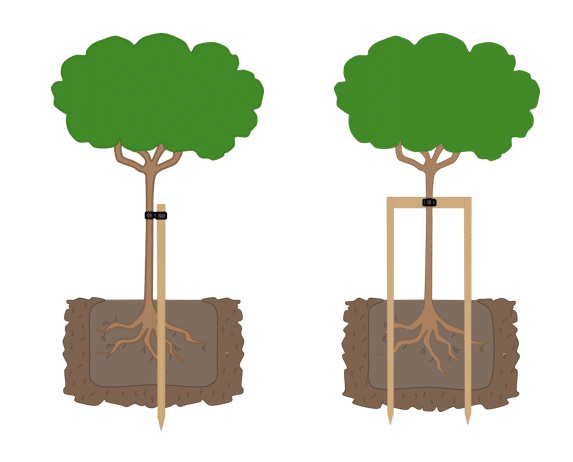
10-Step Guide to Planting a Tree
Equipment needed: Spade, measuring tape, post knocker or sledgehammer, fertiliser, staking kit (single or double), compost and mulch.
1. Choose the right location. Decide where the tree will go, keeping in mind its eventual height and spread to ensure it fits your garden in the future.
2. Mark the planting area. If the soil is free-draining mark an area about 25% wider than the root ball to allow roots space to grow.
3. Dig the hole. Dig a planting pit slightly deeper than the root ball (a few centimetres is sufficient). Keep the excavated soil to one side.
4. Prepare the tree. Remove the tree from its container or bag. Place it in the pit and ensure the top of the root ball is just below ground level.
5. Stake the tree. Use a single or double stake for stability. Knock the stakes firmly into the ground. If double staking, attach the crossbar and secure the tree tie.
6. Improve the soil. Mix the excavated soil with compost and optional fertiliser to boost growth.
7. Backfill the hole. Fill the pit with the improved soil, pressing firmly around the root ball to remove air pockets.
8. Heel in the soil. Firm the soil around the roots to ensure good contact.
9. Mulch the tree. Spread a layer of mulch around the base to retain moisture and suppress weeds, keeping it a few centimeters away from the trunk.
10. Water the tree. Water regularly to help the tree settle (e.g., a couple of litres every other day over the growing season). Avoid overwatering, which can be as harmful as underwatering.
Read More:
A Guide to Screening Trees: Is Photinia Good for Natural Privacy?
Bare Root Planting Tips: How to establish a native hedge on a tight budget
A Guide to Pleached Trees: How effective are Hornbeam at creating privacy?