Screening Trees – View our re-stocked Holly, Laurel, Ligustrum and Photinia trees for screening!
Screening Trees – View our re-stocked Holly, Laurel, Ligustrum and Photinia trees for screening!
If you are looking for somewhere to buy trees, there are several options available, from garden centres and online retailers to specialist tree nurseries. However, if you are looking for larger trees, mature specimens or specialist varieties, a dedicated tree nursery can offer a much wider choice.
For customers in Essex, London and the surrounding areas, visiting a specialist nursery also gives you the opportunity to see trees in person before buying. You can compare different varieties, sizes and shapes and get advice about which tree is best suited to your garden or landscaping project.
King & Co – The Tree Nursery is based in Rayne, near Braintree in Essex. The nursery has more than 2,000 semi-mature trees, alongside pleached trees, screening trees, evergreen trees, fruit trees, hedging, shrubs and specimen plants.
The best place to buy a tree depends on what you are looking for.
A local garden centre can be convenient if you need a smaller tree alongside other gardening supplies. Online retailers can also be useful if you already know the species and size you want.
However, a specialist tree nursery can be particularly useful when you need something larger or more unusual.
At a nursery, you may be able to:
This can be particularly important when buying a large or expensive tree, where the shape and structure of the individual specimen can make a significant difference.
If you are looking for trees in Essex, a specialist nursery can provide a much wider choice than a typical garden centre.
King & Co’s nursery in Rayne, near Braintree, holds thousands of trees, including semi-mature specimens suitable for gardens, landscaping projects and larger developments.
The nursery stocks a wide variety of species and sizes, from smaller ornamental trees through to larger specimens that can provide an established appearance soon after planting.
When choosing a tree, consider the conditions where it will be planted. Soil type, drainage, sunlight, exposure and the amount of available space can all affect which species will perform well.
It is also important to think about the eventual size of the tree rather than simply how it looks when you buy it.
For further advice on choosing trees for different conditions, the RHS guide to trees for climate change is a useful reference.
One of the main advantages of buying a mature or semi-mature tree is the immediate impact it can have.
A young tree can take many years to develop into a significant garden feature. A larger specimen provides height, structure and character much sooner.
Mature trees can be particularly useful for:
However, larger trees require more consideration before purchase.
The size of the rootball or container, the weight of the tree and access to the planting site can all affect delivery and planting.
For this reason, it can be useful to speak to a specialist nursery before ordering a large tree.
Pleached trees are an increasingly popular choice for gardens where privacy is important but space is limited.
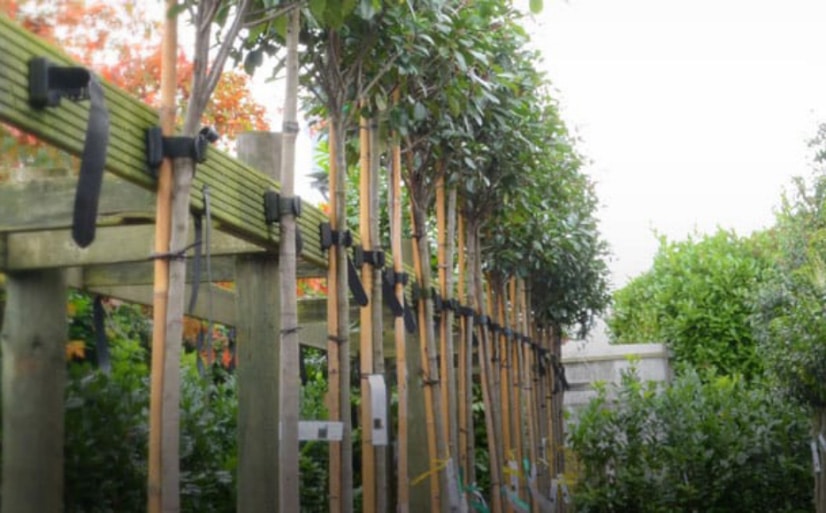
A pleached tree has a clear stem with branches trained onto a framework above it. When several are planted in a row, their crowns form a raised screen.
This allows you to create privacy above an existing wall or fence without taking up the same amount of ground space as a traditional hedge.
Popular choices include pleached Hornbeam, Lime and evergreen varieties.
When choosing pleached trees, look at the clear stem height as well as the overall height and width of the trained crown. These measurements will determine where the foliage sits in relation to your garden, fence or boundary.
Pleached trees can be particularly effective for:
If you are considering pleached trees, a specialist nursery can help you choose the right variety and size for your garden.
If you live in London, you do not necessarily need to find a nursery within the city itself.
Specialist tree nurseries are often located outside London, where there is more space to grow and hold larger trees.
King & Co’s nursery is located in Rayne, Essex, and is accessible from London and the surrounding counties. The nursery welcomes private customers as well as landscapers, garden designers, developers and other trade customers.
There can be significant advantages to travelling to a specialist nursery when buying a larger tree.
Rather than choosing a tree from a photograph, you can see the individual specimen for yourself. You can look at the trunk, branch structure, crown shape and overall proportions before deciding which tree is right for your garden.
This can be particularly valuable when buying specimen, mature or semi-mature trees.
Buying trees online can be convenient, particularly when you already know which species and size you require.
It allows you to browse different varieties from home and can make ordering smaller trees and plants straightforward.
However, buying a large tree is slightly different.
Individual trees can vary considerably in shape and structure, even when they are the same species and size. A photograph may therefore not give you a complete picture of what you are buying.
If you are investing in a larger specimen, visiting a nursery can give you a better idea of its eventual appearance.
King & Co offers a wide range of trees online, while larger specimens that are not listed online can be discussed directly with the nursery team.
Delivery is an important consideration when buying a tree, particularly if you are purchasing a mature or semi-mature specimen.
Smaller trees may be suitable for standard delivery, while larger trees and multiple trees can require a dedicated vehicle.
Before arranging delivery, consider:
Planning these details in advance can help prevent problems on delivery day.
King & Co offers tree delivery across England and Wales, with dedicated delivery options available for larger trees and quantities.
If you are buying trees locally in Essex, delivery can make transporting larger specimens considerably easier.
Before ordering, it is worth checking that the delivery vehicle can reach the property. Narrow entrances, restricted access and overhead obstructions can all affect the delivery process.
If you are unsure, speak to the nursery before placing your order. They can discuss the size of the tree, delivery requirements and any access considerations.
There is no single answer because it depends on what you need.
Garden centres can be convenient for smaller plants and general gardening purchases. However, a specialist tree nursery is often the better option if you are looking for a particular variety, a larger specimen or several trees for a project.
A specialist nursery can be particularly useful if you are looking for:
You can also benefit from specialist knowledge when deciding which species and size will work best in a particular location.
Choosing the right tree is about more than finding one that looks attractive.
Start by considering the planting location.
Different species have different soil requirements. Consider whether your soil is clay, sandy, chalky, acidic or free-draining.
Drainage is also important. Some trees cope well with dry conditions, while others prefer consistently moist soil.
The RHS guidance on trees for wet and dry soils provides useful information when choosing trees for challenging soil conditions.
Think about the tree’s eventual height and spread, rather than just its size when purchased.
A tree that looks small in a nursery can become a substantial feature over time.
Consider the distance from buildings, boundaries, driveways, paths and other plants.
Think about how much sunlight the tree will receive and whether the planting position is exposed to wind.
Some trees are better suited to sheltered gardens, while others can cope with exposed locations.
Evergreen trees provide foliage throughout the year, making them useful for screening and privacy.
Deciduous trees lose their leaves in autumn but can provide seasonal interest through flowers, foliage and autumn colour.
The right choice will depend on what you want the tree to achieve.
Landscapers, garden designers and developers often need multiple trees rather than a single specimen.
In these situations, working directly with a specialist nursery can make sourcing easier.
You may need several trees of the same variety and size, or a mixture of trees that work together within a planting scheme.
A nursery can also help identify suitable alternatives if a particular variety or size is unavailable.
For larger projects, it is worth discussing your requirements before ordering. This allows you to consider availability, quantities, sizes, delivery and access at an early stage.
King & Co works with both private and trade customers, supplying trees for gardens, landscaping projects and larger developments.
A specialist nursery offers more than somewhere to purchase a tree.
It gives you the opportunity to compare trees in person and get advice before making your decision.
This can be particularly useful when buying a large tree, where factors such as trunk shape, crown structure and overall proportions can have a major impact on the finished landscape.
At King & Co, customers can visit the nursery in Rayne and browse a large collection of trees, hedging, shrubs and topiary.
The nursery welcomes private customers, landscapers, garden designers and trade customers.
If you are still deciding where to buy trees, visiting a specialist nursery can help you make the right choice.
King & Co – The Tree Nursery is based in Rayne, near Braintree in Essex, with more than 2,000 semi-mature trees available alongside pleached trees, screening trees, evergreen trees, fruit trees and hedging.
You can visit the nursery to see the trees for yourself, discuss your requirements with the team and arrange delivery where required.
Whether you are looking for a single tree for your garden, mature specimens for a landscaping project or pleached trees for privacy, seeing the trees in person can make choosing the right one much easier.
Browse our tree collection or contact King & Co to discuss your requirements.
Low maintenance trees are an increasingly popular choice for busy homeowners, urban gardeners, property developers and anyone looking to create an attractive outdoor space without the need for constant upkeep. In this guide, we’ll explain what makes a tree low maintenance, explore the benefits of planting one and highlight some of our favourite varieties for gardens and landscapes of all sizes.
While every tree requires some level of care, maintenance needs can vary significantly depending on the species, growing conditions, and the experience of the person planting and managing it. As a general rule, low-maintenance trees tend to be slow to moderate growers with a naturally compact habit. These characteristics help minimise the need for regular pruning and reduce the likelihood of a tree outgrowing its space.
Before planting, it’s important to consider:
Selecting a tree that is well suited to its environment is one of the most effective ways to reduce future maintenance requirements!
1. Time Saving. Low maintenance trees generally require less pruning, shaping and ongoing care, making them ideal for busy homeowners.
2. Reduced Long-Term Costs. By choosing a tree that remains proportionate to its surroundings, you can avoid costly remedial pruning and reduce the need for professional intervention as the tree matures.
3. Better Suitability for Smaller Spaces. Many low maintenance varieties have compact growth habits, making them well suited to smaller gardens, courtyards and urban environments.
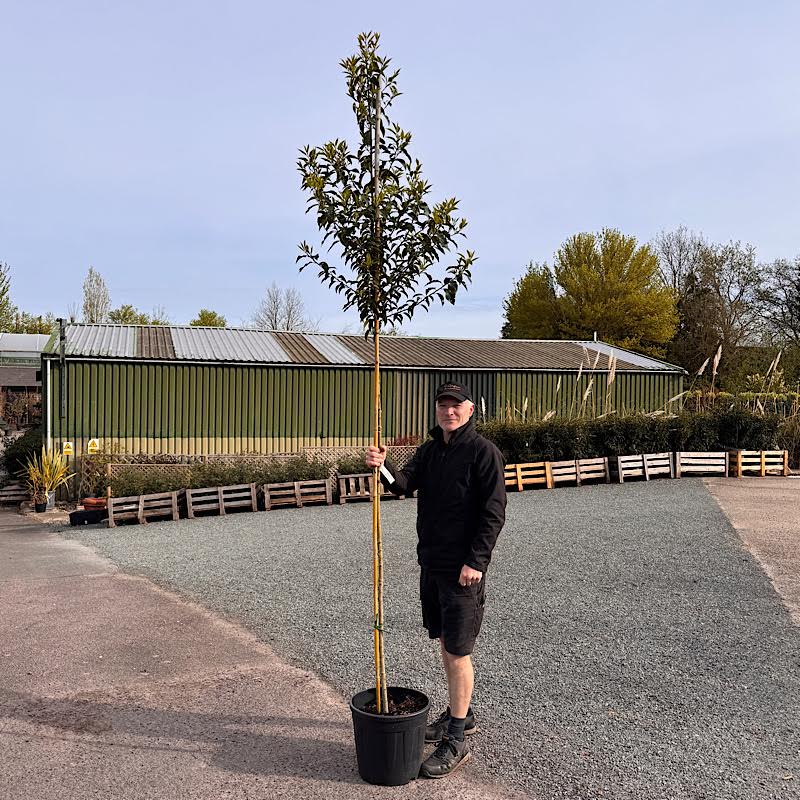
Portuguese laurel (Prunus lusitanica). A versatile evergreen tree with glossy dark-green foliage and an elegant, compact form. Portuguese laurel generally maintains an attractive shape with minimal pruning.
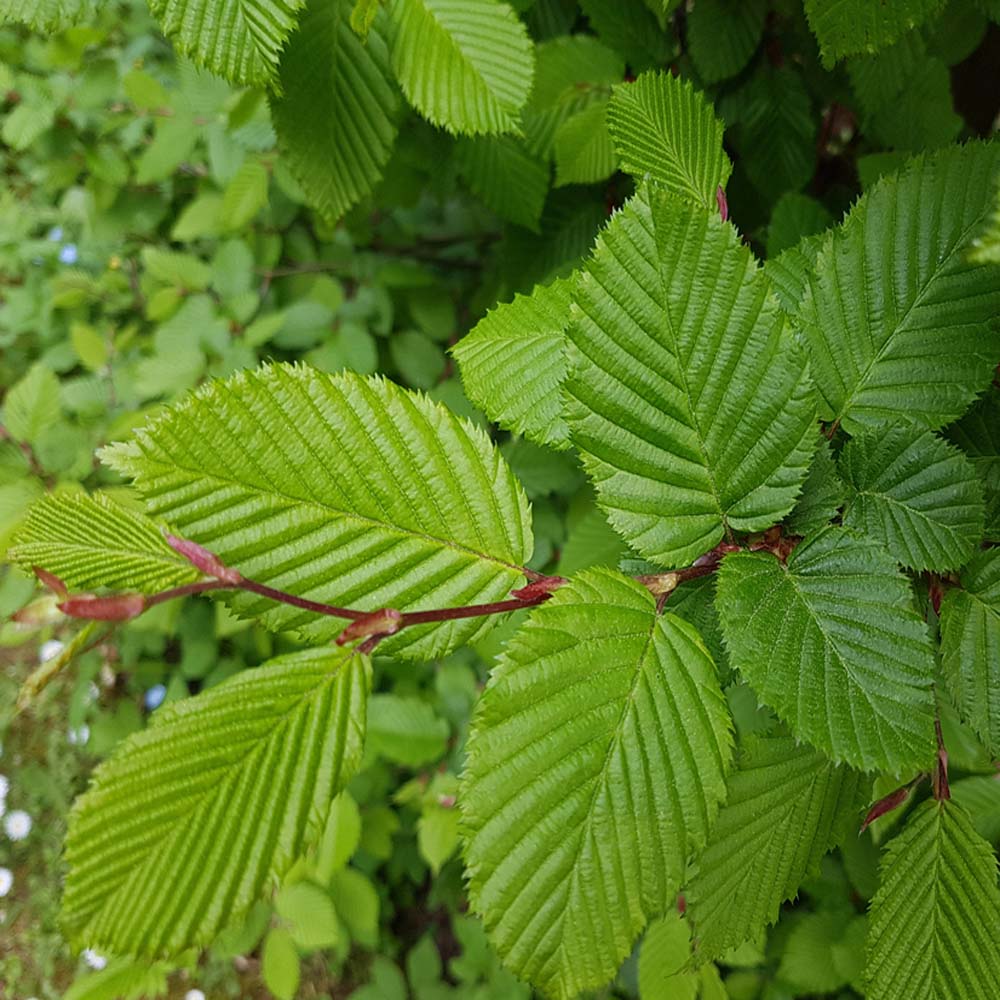
Carpinus betulus ‘Frans Fontaine’ (Hornbeam variety). This narrow, upright cultivar is perfect for gardens where space is limited. Its columnar shape requires very little maintenance while providing excellent seasonal interest.
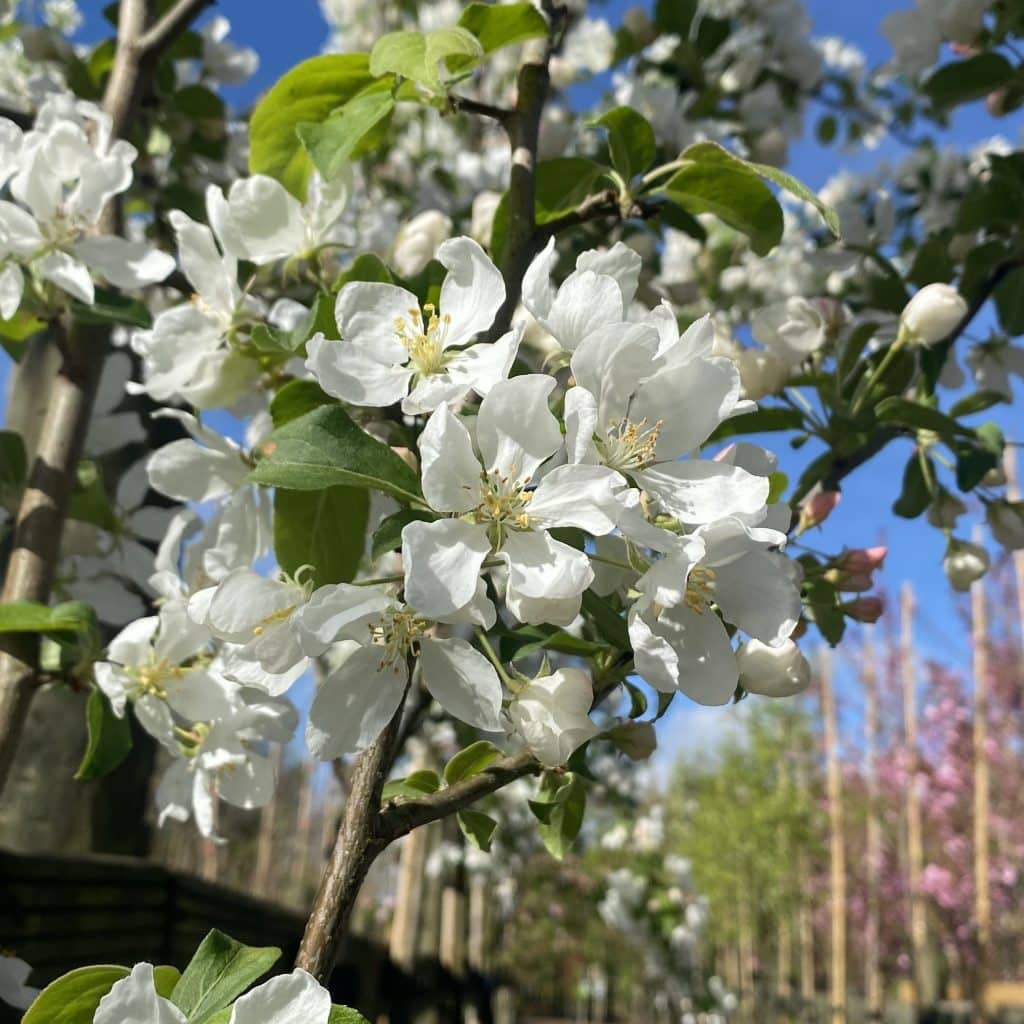
Malus ‘Street Parade’ (Crab apple variety). A compact ornamental crab apple producing attractive spring blossom followed by decorative fruits. Its manageable size and tight, narrow, upright crown make it excellent for streets or small gardens.
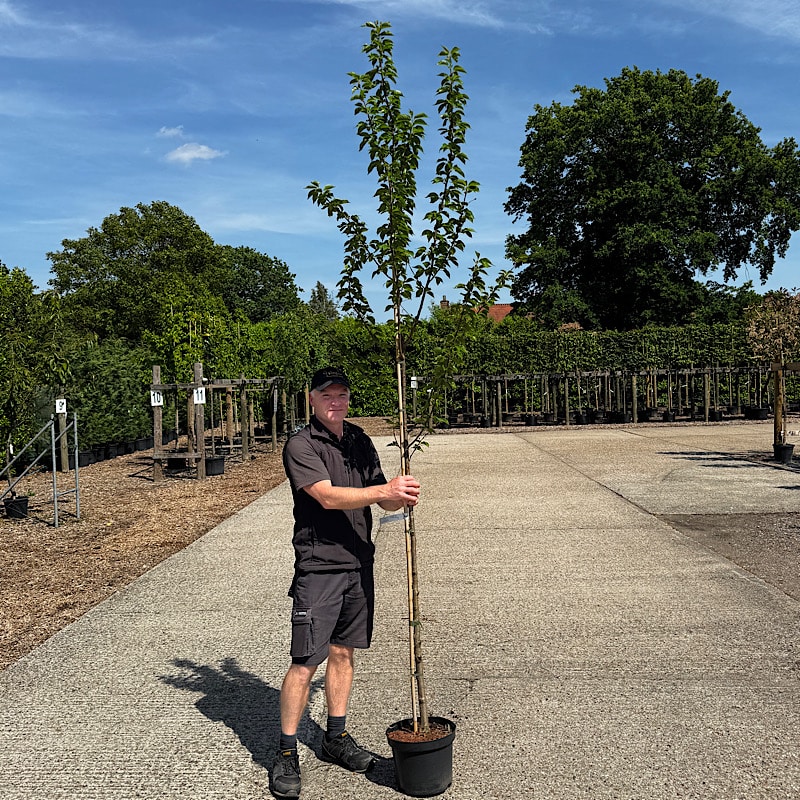
Prunus ‘Snow Goose’ (Ornamental cherry variety). An elegant flowering cherry with a slender growth habit and masses of pure white blossom in spring. Ideal for smaller gardens and urban planting schemes.
Himalayan birch (Betula jacquemontii). Renowned for its striking white bark, this beautiful birch delivers year round interest with little maintenance beyond occasional formative pruning.
Silver birch (Betula pendula). One of the UK’s most recognisable native trees, silver birch is graceful, adaptable and easy to grow. Its light canopy and elegant form require minimal ongoing management.
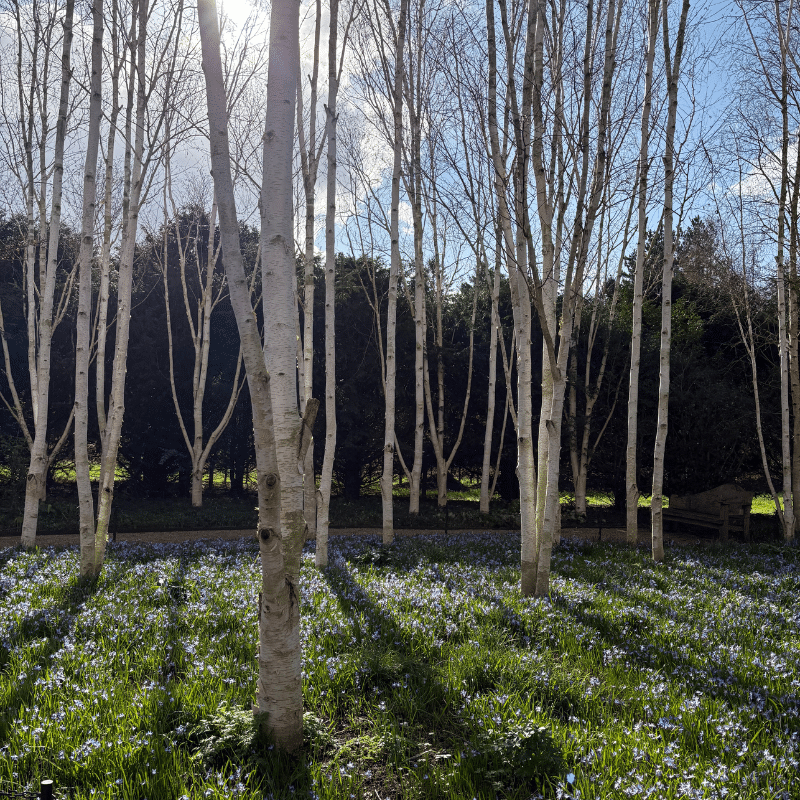
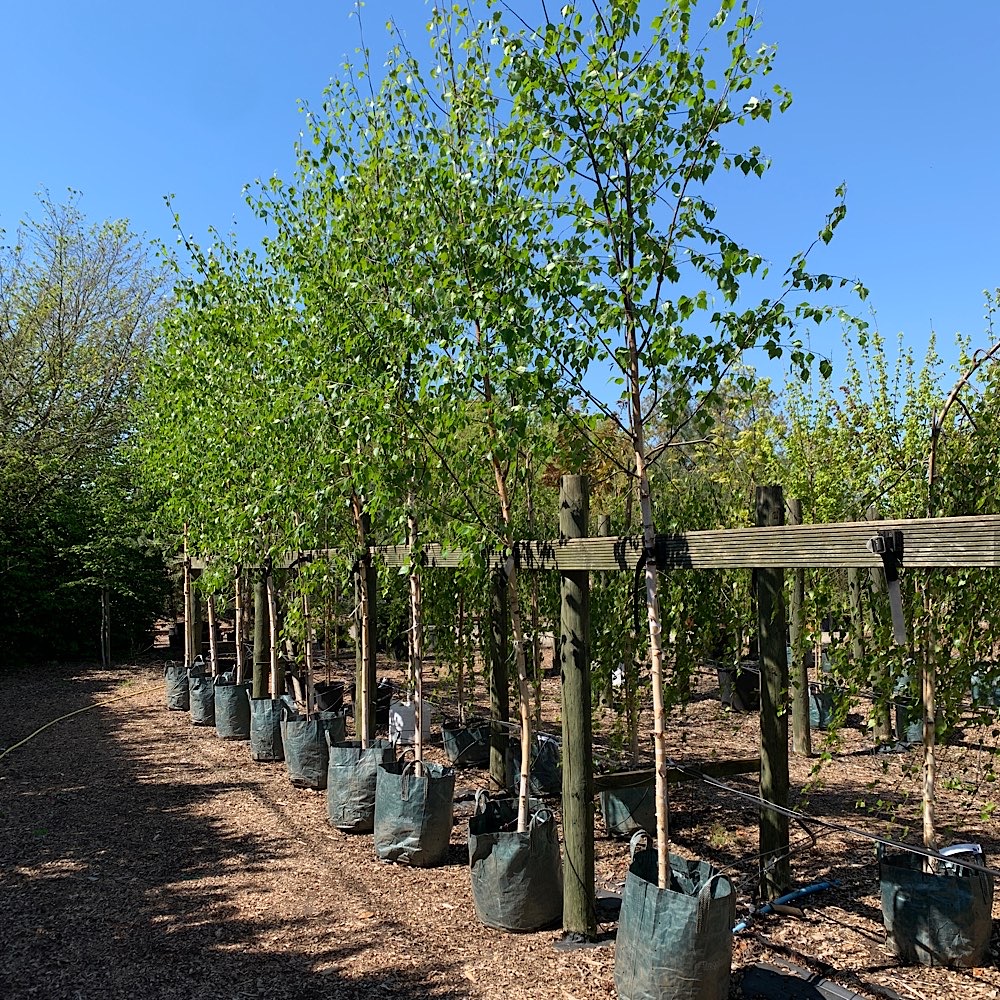
While low maintenance trees require less attention than many other varieties, a little care during the establishment period will help ensure they thrive for years to come. The main things to consider are:
Watering. Regular watering is essential during for the first few growing seasons after planting. Once established, many low maintenance trees only occasional watering during prolonged dry spells.
General maintenace. Maintaining a weed and grass free circle around the base of the trees helps to remove competition for water and nutrients. You can also be in the practice of applying a layer of mulch around the base of the tree. This helps to retain soil moisture, suppress weeds and improve soil health. Be sure to keep mulch clear of the trunk to prevent moisture related issues.
Pruning. One of the key advantages of low maintenance trees is that they require very little pruning. Occasional removal of dead, damaged or crossing branches is usually all that is needed to maintain a healthy structure and attractive appearance.
For more tips check out our Tree Care Guide!
Whether you’re looking to create an instant impact or are happy to watch your tree mature over time, we stock low maintenance trees in a wide range of sizes to suit every project and budget.
For customers seeking immediate results, our semi-mature trees are typically supplied at heights of 3-3.5 metres, providing an established appearance from day one. These larger specimens are ideal for landscaping projects, new build developments and homeowners looking to enhance their garden quickly.
For those working with a smaller budget, we also offer younger trees in 10 litre containers, which are typically supplied at heights of approximately 1.75-2 metres. These trees represent excellent value for money and, with proper care, will quickly establish and grow into impressive specimens.
By offering a broad range of tree sizes, we can help customers find the perfect low-maintenance tree regardless of budget, garden size or project requirements.
Choosing the right tree from the outset can save considerable time and effort in the years ahead. By selecting species that are naturally compact, well suited to their environment and slow to moderate in growth, you can enjoy the benefits of trees while keeping maintenance requirements to a minimum.

More homeowners are using AI garden advice tools to analyse garden photos and suggest planting ideas. While artificial intelligence can provide inspiration, it often lacks the practical, UK-specific knowledge required for choosing evergreen screening trees.
If you are investing in long-term garden privacy, expert horticultural advice remains significantly more reliable than automated recommendations.
AI garden advice refers to chatbot or image-based tools that generate landscaping and planting suggestions using artificial intelligence.
Users typically upload a photo or ask questions such as:
The AI then generates suggestions based on patterns from online data.
However, these tools do not:
As a result, recommendations are often general rather than tailored.
AI works from probability, not physical inspection. It cannot see:
Tree selection without site assessment can lead to poor performance or costly removal later.
Ask multiple AI platforms the same question and you may receive different answers.
One tool may suggest Leylandii.
Another may recommend Portuguese Laurel.
A third may suggest Bamboo.
Without context, none of these answers are fully reliable.
Many AI systems rely heavily on global data. However:
Evergreen screening trees must be selected with local climate in mind.
AI does not take responsibility for:
Real experts consider the next 5–20 years — not just immediate aesthetics.
AI can still play a helpful role in:
However, AI should support decision-making — not replace professional advice.
At King & Co, we specialise in evergreen screening trees for garden privacy across the UK. Our recommendations are based on real installations, real soil conditions, and real customer outcomes.
Before recommending a tree, we assess:
AI rarely asks these clarifying questions. Specialists always do.
Depending on the garden, we may suggest:
The correct solution depends entirely on context.
If you experiment with AI garden advice, increase accuracy by using detailed prompts.
Instead of:
“Best privacy tree?”
Ask:
“What evergreen screening tree grows to 4 metres, suits clay soil in southern England, tolerates wind exposure, and requires low maintenance?”
Specific questions improve outputs — but they still do not replace on-site expertise.
| AI Garden Advice | King & Co Tree Experts |
|---|---|
| Instant responses | Tailored recommendations |
| Generalised data | UK-specific experience |
| No site inspection | Practical assessment questions |
| No accountability | Professional responsibility |
| Design inspiration | Long-term privacy solutions |
For serious garden investments, expertise matters.
Privacy trees are structural elements. Unlike bedding plants, they:
Choosing incorrectly can result in:
That is why expert guidance is essential.
AI garden advice can provide general ideas, but it lacks site-specific analysis. It does not assess soil, drainage, or UK microclimates. For structural planting such as evergreen screening trees, expert advice is more reliable.
AI can suggest popular species, but it may not account for British growing conditions or long-term maintenance. Local tree specialists provide more accurate recommendations. Soil types vary even between postcodes.
The main risks include conflicting recommendations, unsuitable plant choices, and lack of accountability. Incorrect tree selection can lead to costly removal or poor privacy results.
AI is useful for inspiration. However, for permanent garden privacy solutions, consulting experienced tree specialists ensures better long-term results.
AI garden advice is innovative and convenient. However, when selecting evergreen screening trees for privacy, practical horticultural expertise provides more accurate and reliable outcomes.
At King & Co, we combine specialist knowledge with real-world experience to help customers choose the right privacy solution — first time.
Before relying solely on algorithms, speak to real tree experts who understand British gardens.
A Guide to Screening Trees: Is Photinia Good for Natural Privacy?
Bare Root Planting Tips: How to establish a native hedge on a tight budget
A Guide to Pleached Trees: How effective are Hornbeam at creating privacy?
A Guide to Leylandii: Is it good for screening?
Available from November to March, pre-order bare root and root ball plants today to jump to the front of the delivery queue! Securing your order early also guarantees the best selection of species and a head start on the growing season.
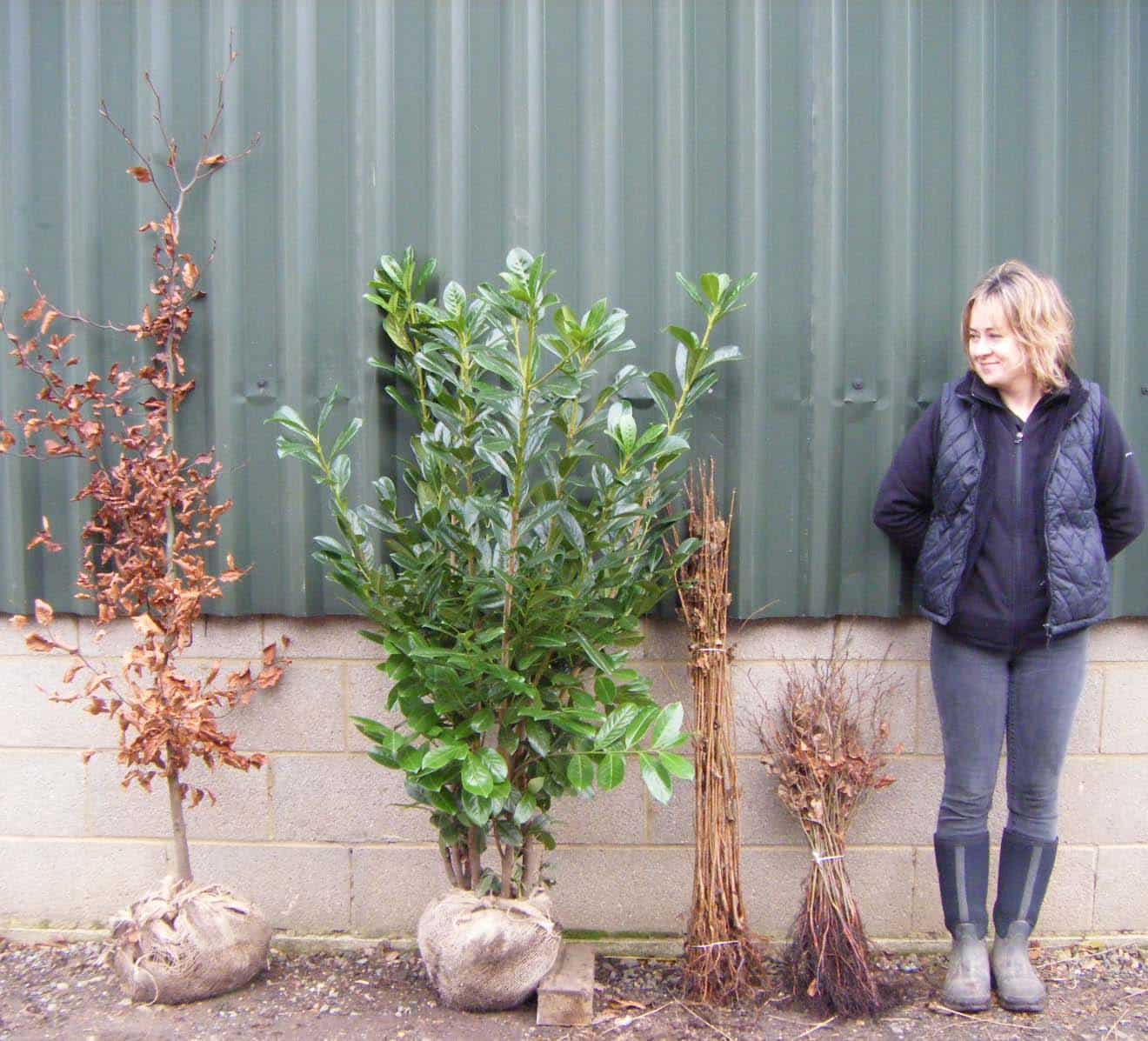
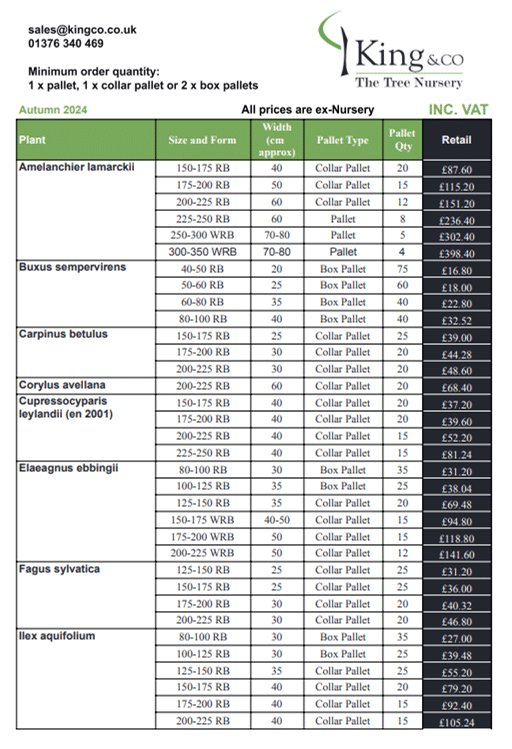
Take a look at our price lists here…
• Root Ball Hedging 2024-25 (Retail) Price List (contact sales@kingco.co.uk for a trade version)
Get ahead of the season and pre-order bare root and root ball plants today!
If you are unsure of how to plant bare root hedging take a look at our video guide. This video provides instructions for notch planting and accessory installation!
Don’t miss out, pre-order bare root and root ball plants today!
Read more:
Planting pleached hornbeam trees for privacy is one of our favourite ways to create a screen above a fence line while maximising space. In this article, we’ll explore how we recently used them to enhance and transform a new build garden. As you will see, their 1.8m (6ft) clear stems are excellent at effectively blocking views from overlooking, neighbouring properties. These clear stems also allow for underplanting with shrubs, which can further conceal fences or walls.
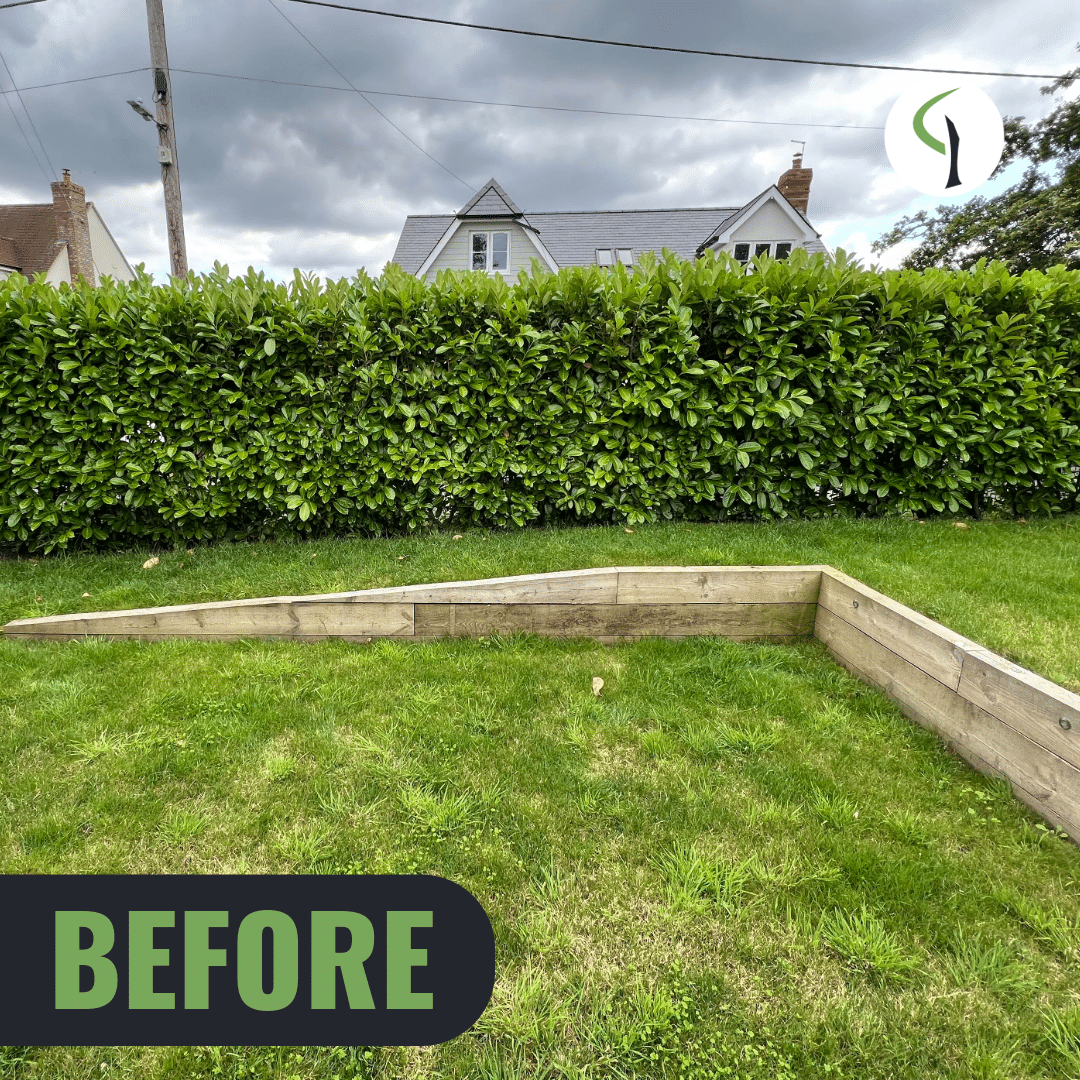
This customer recently moved into a new build property and wanted more garden privacy. The laurel hedge was in need of a trim, and existing sleepers formed a ramp between the two levels. The plan was to convert the ramp into a raised bed, keeping ground level for planting the pleached hornbeam trees.
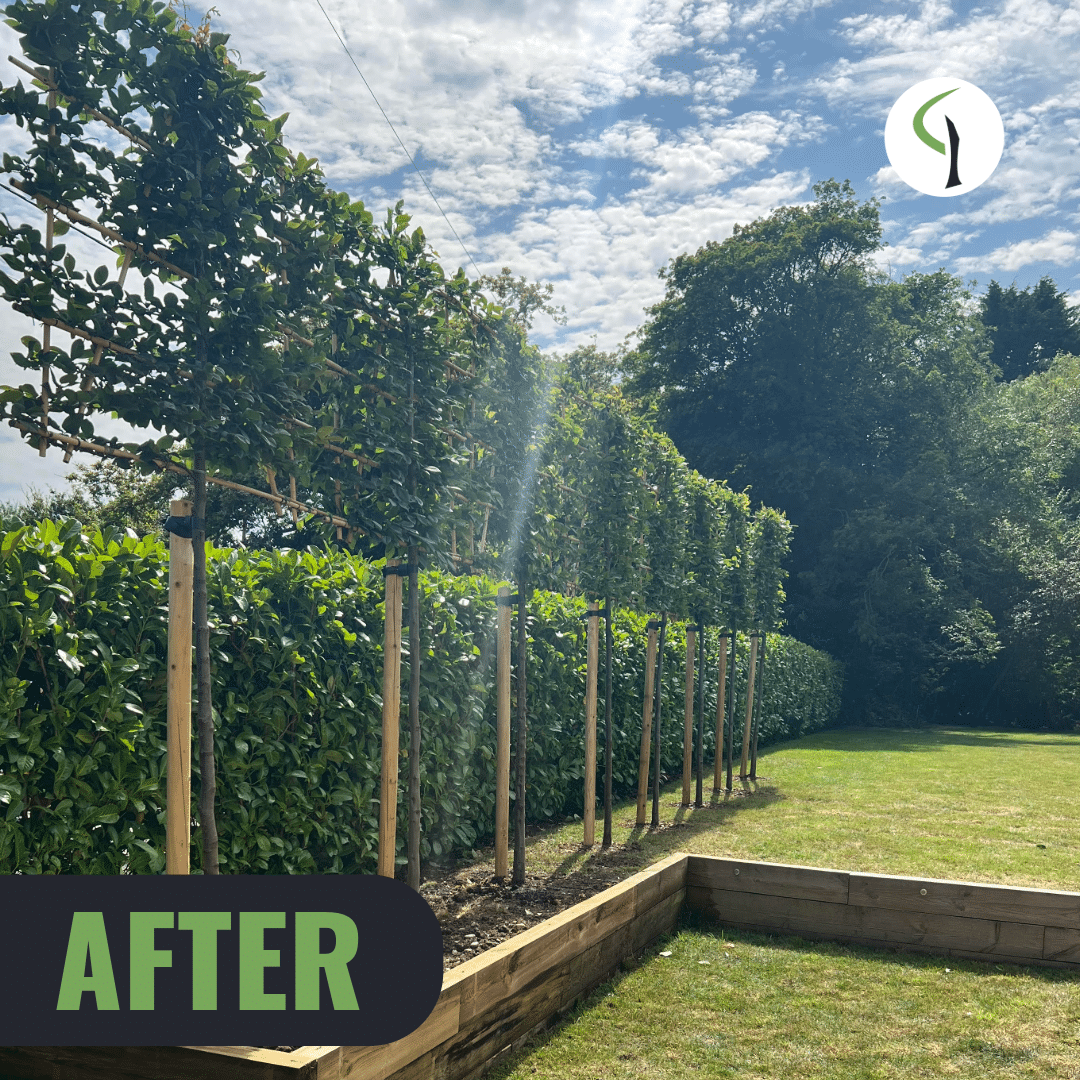
The King and Co planting team installed eight pleached trees along the hedge line, providing privacy and shade. They planted the hornbeam trees at 1.5m centres to create a ‘touching’ finish. Carpinus betulus thrives in Essex clay soils and will grow beyond the frames, making it ideal for those who want effective screening with pleached hornbeam.
You can plant these container-grown trees year-round, just water them well during the growing season. This is the same for trees planted in winter. If you would like to plant your own tree, watch our video here.
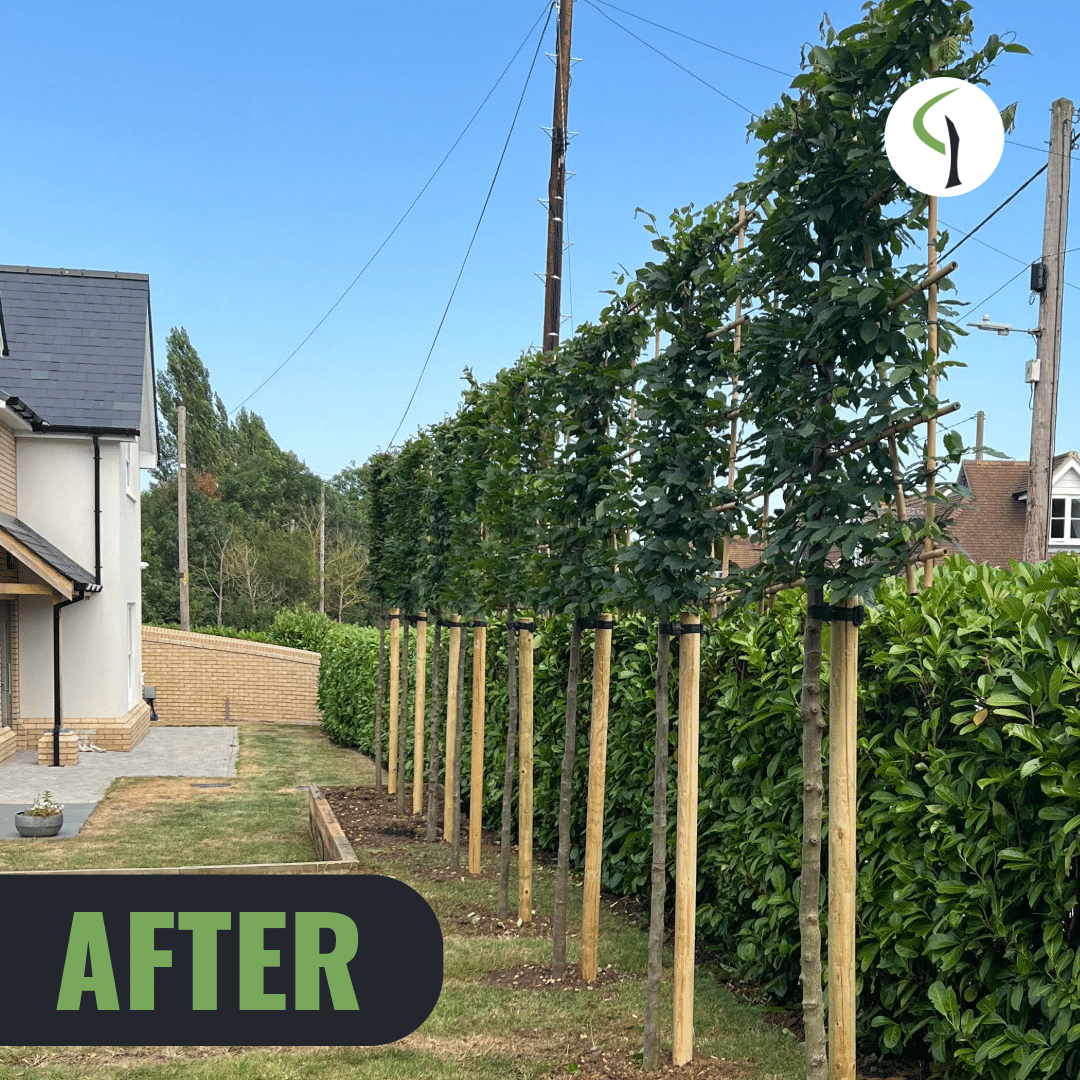
For all screening enquiries, contact the King and Co team or visit the Nursery in Rayne, Essex to select your own trees. King and Co are able to advise the best trees for screening your garden with just a few photos and measurements.
Plant pleached hornbeam trees for privacy and bring beauty and functionality to your garden today!
Read more:
The Woodland Trust’s created the United Kingdom and Ireland Sourced and Grown (UKISG) initiative as a voluntary benchmark for tree procurement. Like the Plant Healthy Certification Scheme, UKISG focuses on full visibility of the supply chain.
King and Co sources every UKISG tree from within the UK and Ireland, making each tree traceable from seed collection to planting. This approach develops resilient woodlands and reduces the risk of importing pests and diseases.
Purchasing trees sourced and grown in the UK helps the Woodland Trust reach its goal of planting 64 million trees by 2025 and supports the UK’s net-zero 2050 target. Importing trees increases the biosecurity risk to native species, while transport alone contributes significantly to carbon emissions.
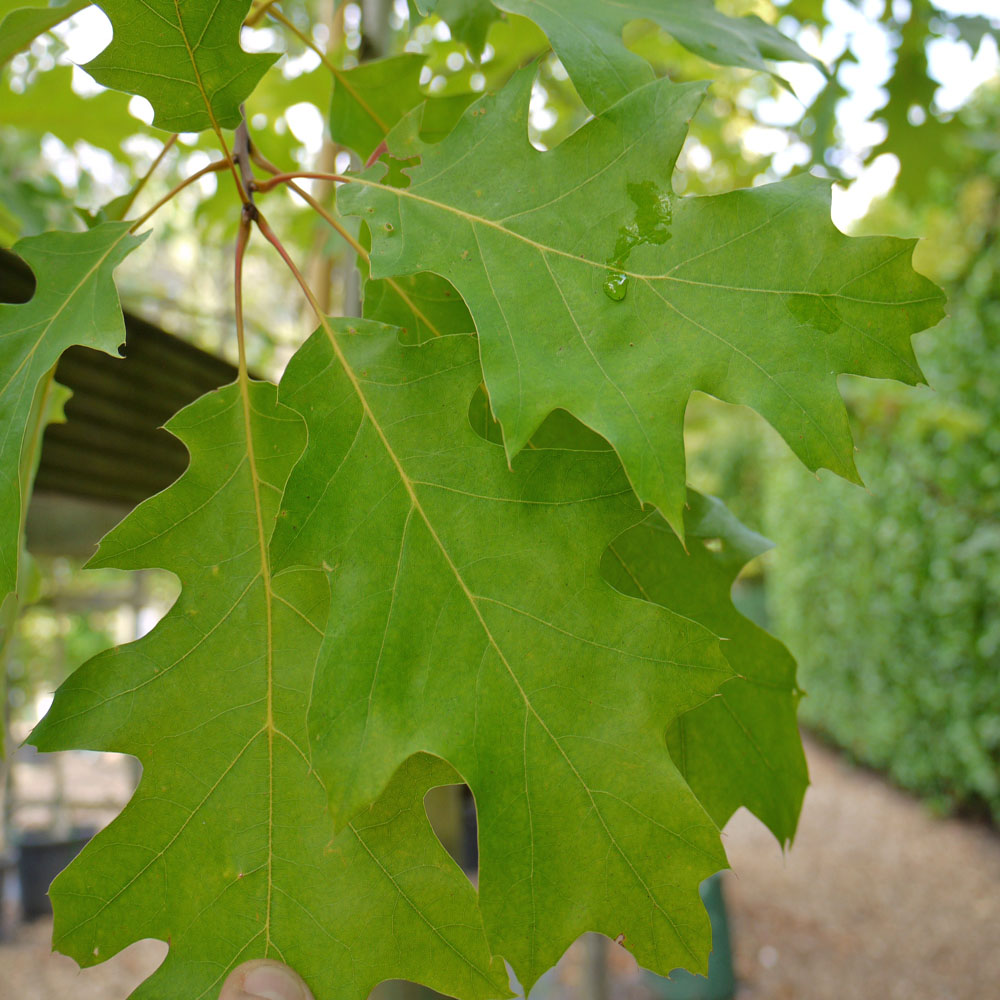
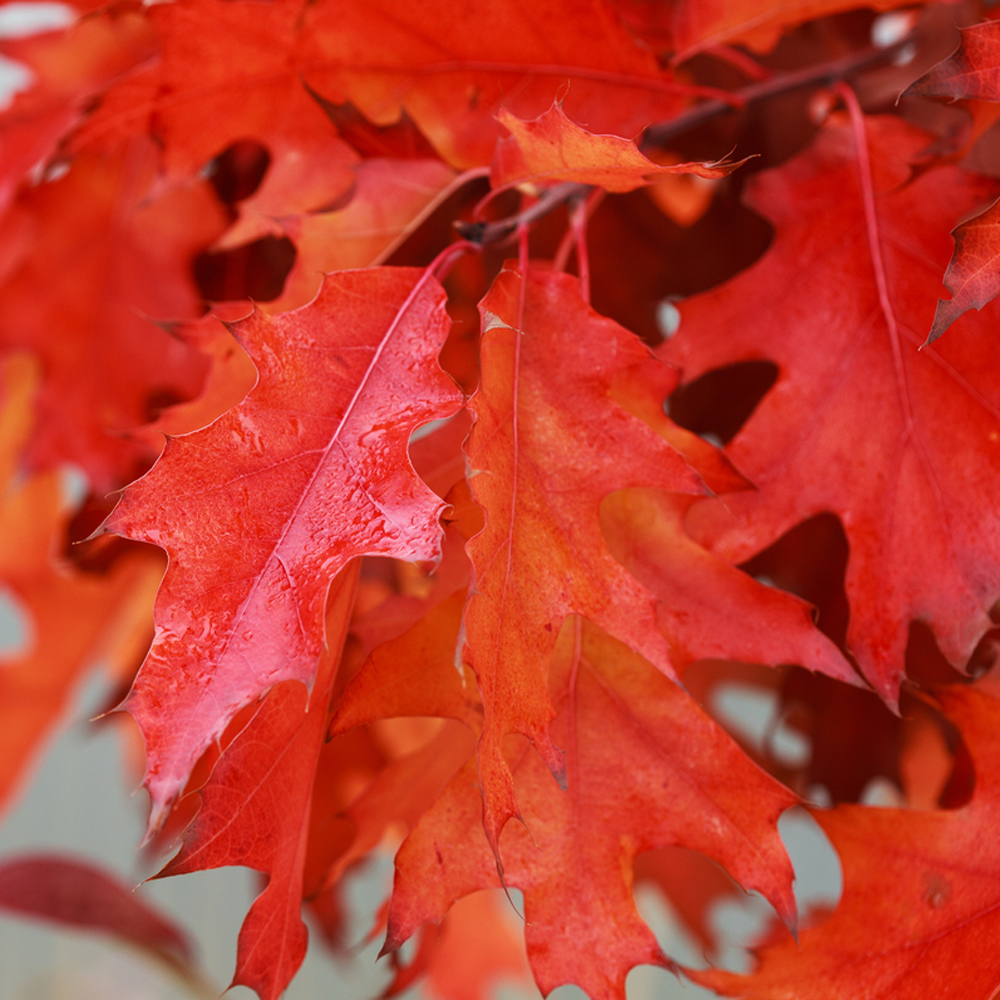
Independent inspectors evaluate us to ensure we uphold the highest biosecurity standards in the tree-growing industry. They carefully assess every detail when it comes to the sourcing and growing of seeds and trees.
Further along the growing cycle, inspectors examine how we handle, check, and care for our stock. They also rigorously assess our methods and practices to ensure safe biosecurity. This scrutiny continues to pre-dispatch checks before shipping trees to customers. Rest assured, buy from a Plant Healthy and UKISG nursery for plants you know have received the best possible care!
By purchasing from a Plant Healthy and UKISG-certified nursery, customers can trust that the plants have received the best possible care. Since both schemes are voluntary, King and Co’s participation reflects its strong commitment to preserving the safety of UK native species.
Read More:
One of the best trees for privacy, Prunus laurocerasus is a fast-growing evergreen variety that grows around 30-50cm a year. Known for their dense, bushy crowns, Cherry laurels can knit together quickly to form a raised screen above a fence line.
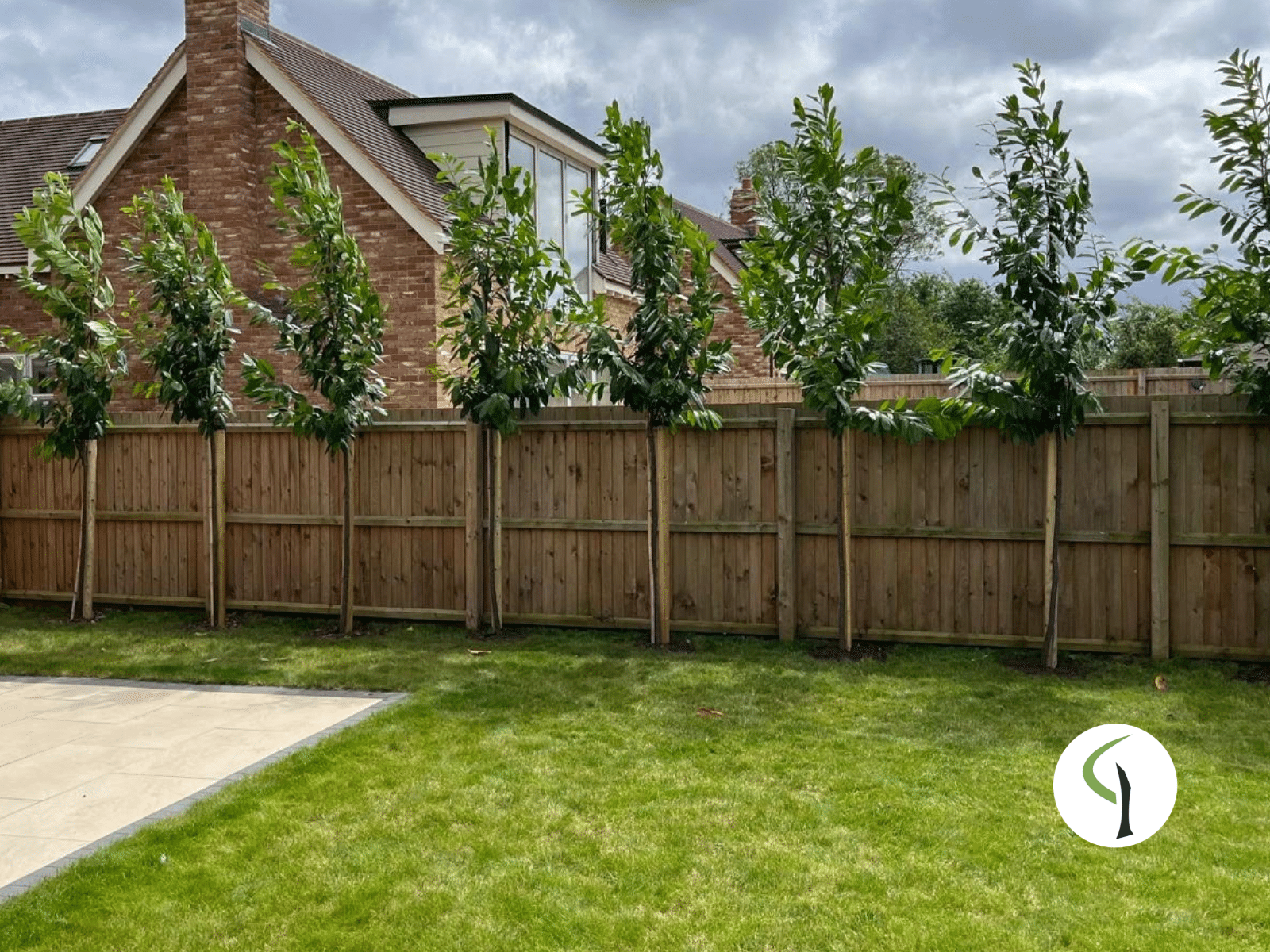
King and Co’s screening trees have clear stems to preserve garden space. The foliage starts from 1.5-1.8m so importantly blocks the view of anyone overlooking. It is possible to underplant screening trees with shrubs to hide a fence or wall.
This customer recently moved into a new build property and wanted above fence screening. Their new home featured a garden that was overlooked by their neighbours’ large windows. To soften the view and gain some privacy, they chose our laurel screening trees.
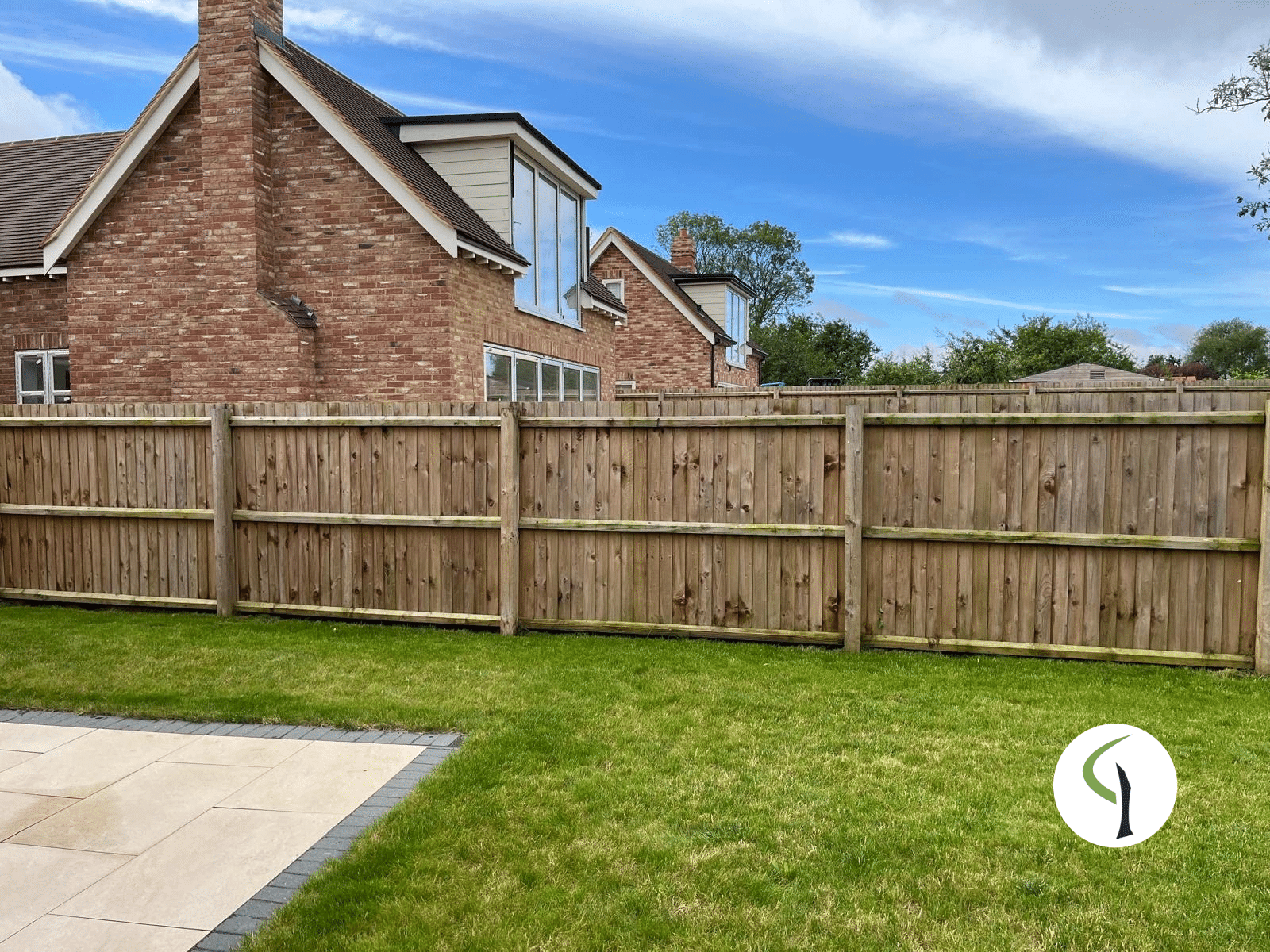
The King and Co planting team installed sixteen trees along the fence line, creating privacy and some shade. The fast growing laurel trees will knit together quickly to form a hedge above the fence. These laurel trees can cope with poorer clay soils.
Theses container grown trees can be planted all year round, but they will need to be watered well during the growing seasons. If you would like to plant your own tree, watch our video here.
For all screening enquiries, contact the King and Co team or visit the Nursery in Rayne, Essex to select your own trees. King and Co can advise the best trees for screening your garden with just a few photos and measurements.
Read more:
King and Co are able to provide UK native hedging species well below the grant amount per metre.
Whilst the countryside stewardship grants make excellent financial sense, both arable and livestock farmers can benefit from planting new hedgerows. Arable farmers can boost the pollinators and beneficial predators around the field perimeter. Livestock farmers can create shade, shelter and a natural boundary.
Environmentally, new hedges can reduce flood risk by increasing drainage as well as capturing and storing carbon. The countryside stewardship hedging incentive is a great way to boost bio-diversity. Contact King and Co via the form below, email sales@kingco.co.uk or call 01376 340 469 for help and advice.
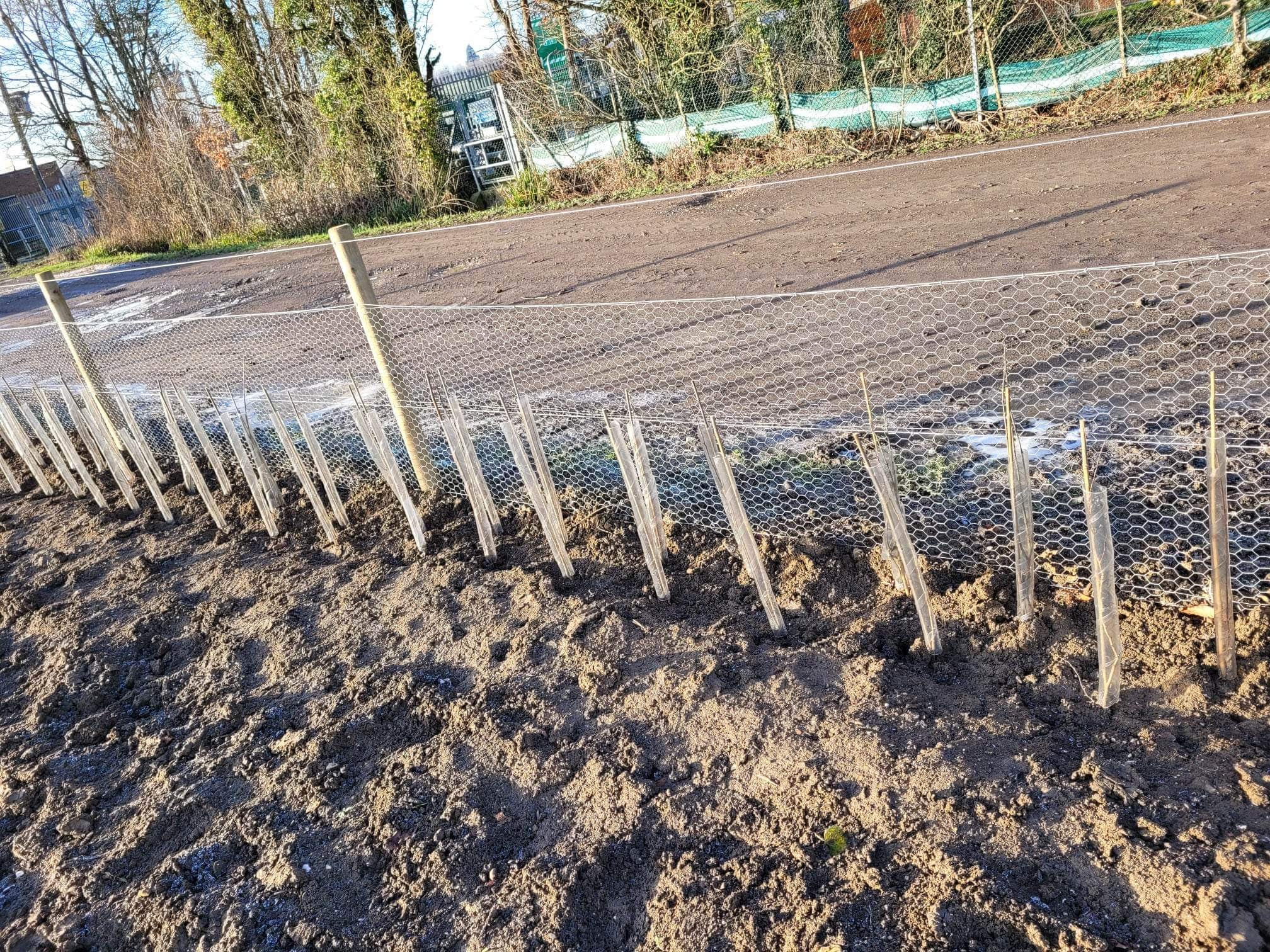
Plants under BN11 Specification:
King and Co’s BN11 Stewardship hedging mix is mainly based on Hawthorn (Crataegus monogyna), with the addition of UK Native species such as Field Maple (Acer campestre), Spindle (Euonymus europaeus), Dogwood (Cornus sanguinea) and Crab Apple (Malus sylvestris) to name a few. We can however make a custom mix depending on the specification of your chosen grant.
Read more on BN11 Countryside Stewardship Grants.
Plants under BN7 Specification:
It is available for Countryside Stewardship Mid Tier, Higher Tier and Capital Grants on planted boundary lines of shrubs that are:
Read more on BN7 Countryside Stewardship Grants.
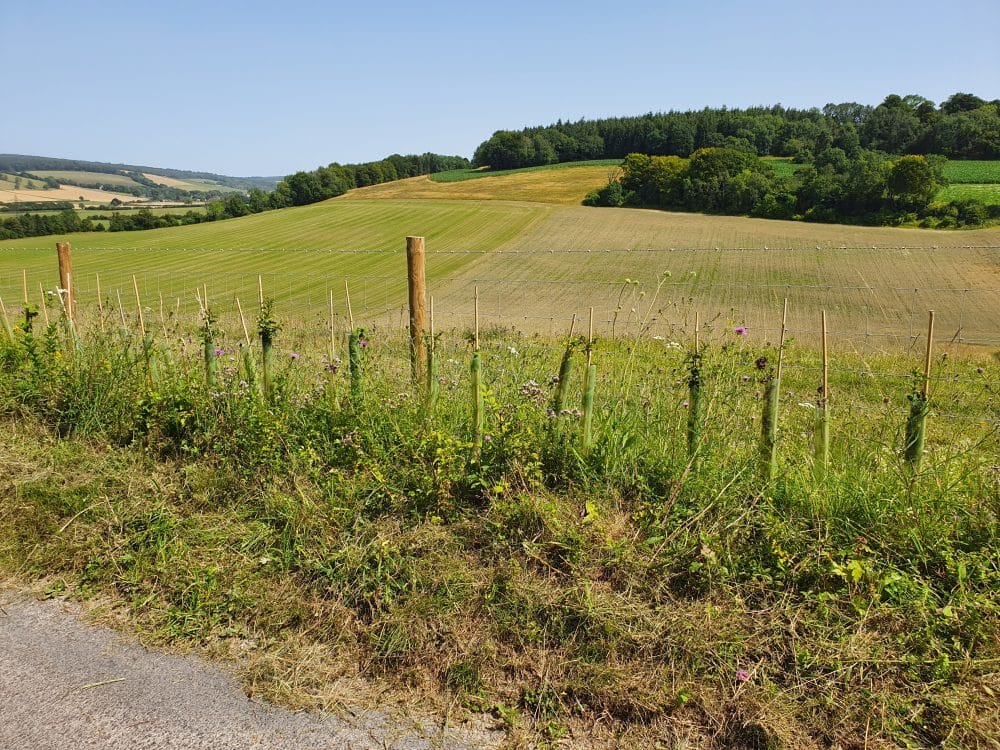
Watch our video on ‘notch’ planting to help plant your hedge quickly and efficiently. Make sure to ‘heel-in’ tightly for good soil/root contact.
Fence off the plants if sheep, cattle or horses graze the land. If the area has a rabbit or hare problem, use biodegradable spiral guards.
Yes
Competitive weeds such as brambles, nettles and grasses all compete with your new plants for moisture, nutrients and light. Weeds around new planting significantly reduces growth rate.
King and Co can plant your hedge for you, if you are local to the Nursery.
Apply herbicide in a 1.5m strip in the August or September prior to planting only. This is to reduce competition for the new hedge plants.
Read More from King and Co:
You can buy trees, hedging, shrubs and topiary online by browsing our website.
If you do not see a plant or size that is suitable for you then please call as we stock a wide variety of plants in our tree nursery. It’s worth noting that many other websites sell other people’s stock (i.e. they act as an agent) so you cannot view the products at their own site. At King & Co, all of our advertised plants are available for viewing at our tree nursery in Rayne, near Braintree, situated just over an hours drive out of London.
Our knowledgeable and experienced tree nursery staff are always contactable via phone on 01376 340469 or if you have any questions regarding any of our trees or accessories.
If you cannot see what you require on our website, please complete the enquiry form. We will give it our urgent attention and will get back to you shortly with a solution that meets your needs.
If you are looking for specific evergreen trees, Photinia, Leylandii hedging, Leylandii trees, instant hedging or shrubs, use the search bar at the top of the page
 Log In