Screening Trees – View our re-stocked Holly, Laurel, Ligustrum and Photinia trees for screening!
Screening Trees – View our re-stocked Holly, Laurel, Ligustrum and Photinia trees for screening!
If you are looking for somewhere to buy trees, there are several options available, from garden centres and online retailers to specialist tree nurseries. However, if you are looking for larger trees, mature specimens or specialist varieties, a dedicated tree nursery can offer a much wider choice.
For customers in Essex, London and the surrounding areas, visiting a specialist nursery also gives you the opportunity to see trees in person before buying. You can compare different varieties, sizes and shapes and get advice about which tree is best suited to your garden or landscaping project.
King & Co – The Tree Nursery is based in Rayne, near Braintree in Essex. The nursery has more than 2,000 semi-mature trees, alongside pleached trees, screening trees, evergreen trees, fruit trees, hedging, shrubs and specimen plants.
The best place to buy a tree depends on what you are looking for.
A local garden centre can be convenient if you need a smaller tree alongside other gardening supplies. Online retailers can also be useful if you already know the species and size you want.
However, a specialist tree nursery can be particularly useful when you need something larger or more unusual.
At a nursery, you may be able to:
This can be particularly important when buying a large or expensive tree, where the shape and structure of the individual specimen can make a significant difference.
If you are looking for trees in Essex, a specialist nursery can provide a much wider choice than a typical garden centre.
King & Co’s nursery in Rayne, near Braintree, holds thousands of trees, including semi-mature specimens suitable for gardens, landscaping projects and larger developments.
The nursery stocks a wide variety of species and sizes, from smaller ornamental trees through to larger specimens that can provide an established appearance soon after planting.
When choosing a tree, consider the conditions where it will be planted. Soil type, drainage, sunlight, exposure and the amount of available space can all affect which species will perform well.
It is also important to think about the eventual size of the tree rather than simply how it looks when you buy it.
For further advice on choosing trees for different conditions, the RHS guide to trees for climate change is a useful reference.
One of the main advantages of buying a mature or semi-mature tree is the immediate impact it can have.
A young tree can take many years to develop into a significant garden feature. A larger specimen provides height, structure and character much sooner.
Mature trees can be particularly useful for:
However, larger trees require more consideration before purchase.
The size of the rootball or container, the weight of the tree and access to the planting site can all affect delivery and planting.
For this reason, it can be useful to speak to a specialist nursery before ordering a large tree.
Pleached trees are an increasingly popular choice for gardens where privacy is important but space is limited.
A pleached tree has a clear stem with branches trained onto a framework above it. When several are planted in a row, their crowns form a raised screen.
This allows you to create privacy above an existing wall or fence without taking up the same amount of ground space as a traditional hedge.
Popular choices include pleached Hornbeam, Lime and evergreen varieties.
When choosing pleached trees, look at the clear stem height as well as the overall height and width of the trained crown. These measurements will determine where the foliage sits in relation to your garden, fence or boundary.
Pleached trees can be particularly effective for:
If you are considering pleached trees, a specialist nursery can help you choose the right variety and size for your garden.
If you live in London, you do not necessarily need to find a nursery within the city itself.
Specialist tree nurseries are often located outside London, where there is more space to grow and hold larger trees.
King & Co’s nursery is located in Rayne, Essex, and is accessible from London and the surrounding counties. The nursery welcomes private customers as well as landscapers, garden designers, developers and other trade customers.
There can be significant advantages to travelling to a specialist nursery when buying a larger tree.
Rather than choosing a tree from a photograph, you can see the individual specimen for yourself. You can look at the trunk, branch structure, crown shape and overall proportions before deciding which tree is right for your garden.
This can be particularly valuable when buying specimen, mature or semi-mature trees.
Buying trees online can be convenient, particularly when you already know which species and size you require.
It allows you to browse different varieties from home and can make ordering smaller trees and plants straightforward.
However, buying a large tree is slightly different.
Individual trees can vary considerably in shape and structure, even when they are the same species and size. A photograph may therefore not give you a complete picture of what you are buying.
If you are investing in a larger specimen, visiting a nursery can give you a better idea of its eventual appearance.
King & Co offers a wide range of trees online, while larger specimens that are not listed online can be discussed directly with the nursery team.
Delivery is an important consideration when buying a tree, particularly if you are purchasing a mature or semi-mature specimen.
Smaller trees may be suitable for standard delivery, while larger trees and multiple trees can require a dedicated vehicle.
Before arranging delivery, consider:
Planning these details in advance can help prevent problems on delivery day.
King & Co offers tree delivery across England and Wales, with dedicated delivery options available for larger trees and quantities.
If you are buying trees locally in Essex, delivery can make transporting larger specimens considerably easier.
Before ordering, it is worth checking that the delivery vehicle can reach the property. Narrow entrances, restricted access and overhead obstructions can all affect the delivery process.
If you are unsure, speak to the nursery before placing your order. They can discuss the size of the tree, delivery requirements and any access considerations.
There is no single answer because it depends on what you need.
Garden centres can be convenient for smaller plants and general gardening purchases. However, a specialist tree nursery is often the better option if you are looking for a particular variety, a larger specimen or several trees for a project.
A specialist nursery can be particularly useful if you are looking for:
You can also benefit from specialist knowledge when deciding which species and size will work best in a particular location.
Choosing the right tree is about more than finding one that looks attractive.
Start by considering the planting location.
Different species have different soil requirements. Consider whether your soil is clay, sandy, chalky, acidic or free-draining.
Drainage is also important. Some trees cope well with dry conditions, while others prefer consistently moist soil.
The RHS guidance on trees for wet and dry soils provides useful information when choosing trees for challenging soil conditions.
Think about the tree’s eventual height and spread, rather than just its size when purchased.
A tree that looks small in a nursery can become a substantial feature over time.
Consider the distance from buildings, boundaries, driveways, paths and other plants.
Think about how much sunlight the tree will receive and whether the planting position is exposed to wind.
Some trees are better suited to sheltered gardens, while others can cope with exposed locations.
Evergreen trees provide foliage throughout the year, making them useful for screening and privacy.
Deciduous trees lose their leaves in autumn but can provide seasonal interest through flowers, foliage and autumn colour.
The right choice will depend on what you want the tree to achieve.
Landscapers, garden designers and developers often need multiple trees rather than a single specimen.
In these situations, working directly with a specialist nursery can make sourcing easier.
You may need several trees of the same variety and size, or a mixture of trees that work together within a planting scheme.
A nursery can also help identify suitable alternatives if a particular variety or size is unavailable.
For larger projects, it is worth discussing your requirements before ordering. This allows you to consider availability, quantities, sizes, delivery and access at an early stage.
King & Co works with both private and trade customers, supplying trees for gardens, landscaping projects and larger developments.
A specialist nursery offers more than somewhere to purchase a tree.
It gives you the opportunity to compare trees in person and get advice before making your decision.
This can be particularly useful when buying a large tree, where factors such as trunk shape, crown structure and overall proportions can have a major impact on the finished landscape.
At King & Co, customers can visit the nursery in Rayne and browse a large collection of trees, hedging, shrubs and topiary.
The nursery welcomes private customers, landscapers, garden designers and trade customers.
If you are still deciding where to buy trees, visiting a specialist nursery can help you make the right choice.
King & Co – The Tree Nursery is based in Rayne, near Braintree in Essex, with more than 2,000 semi-mature trees available alongside pleached trees, screening trees, evergreen trees, fruit trees and hedging.
You can visit the nursery to see the trees for yourself, discuss your requirements with the team and arrange delivery where required.
Whether you are looking for a single tree for your garden, mature specimens for a landscaping project or pleached trees for privacy, seeing the trees in person can make choosing the right one much easier.
Browse our tree collection or contact King & Co to discuss your requirements.
Focal point plants are a great way to deliberately draw the eye, create structure and prevent outdoor spaces from looking flat. Incorporating the right tree or shrub can instantly elevate your landscape, so we’ve rounded up some of our favourite options to inspire your next planting project!
Focal plants offer distinctive features that naturally draw the eye, from bold shapes and unusual foliage to seasonal colour and year round interest. Choosing plants with strong form, interesting texture or vibrant colour is an effective way to break up the visual monotony of their surroundings and create a more dynamic landscape.
For the greatest impact, position focal plants in highly visible areas where they’ll naturally draw the eye. Place them at the end of a path to draw the eye, by entryways to create instant impact or in the center of beds to anchor the design.
Here are five versatile plants that make excellent focal points and bring character to a variety of garden styles.
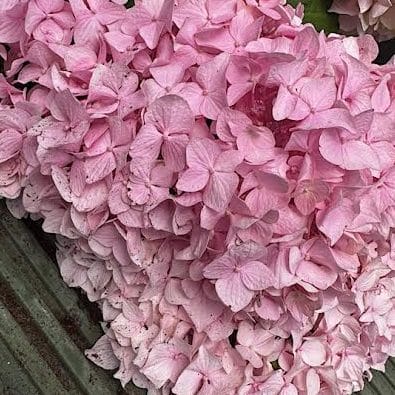
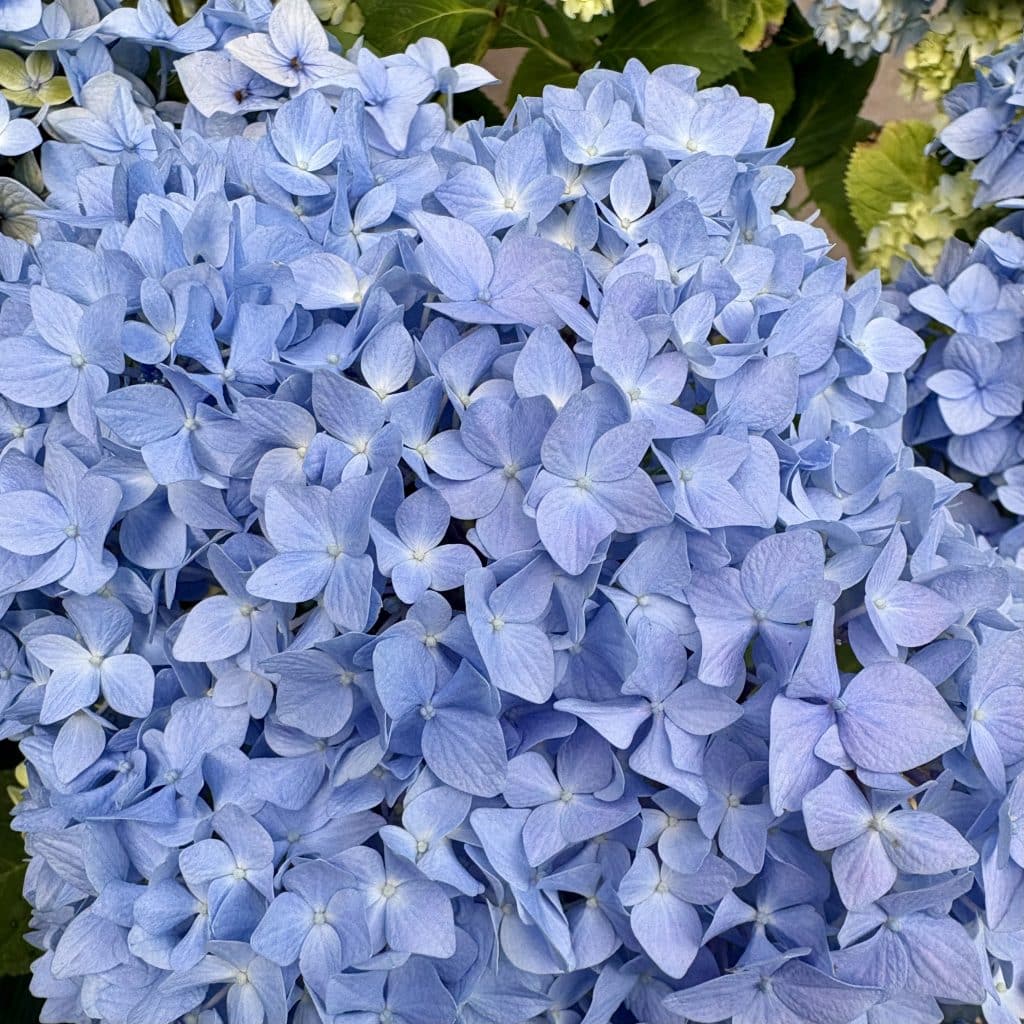
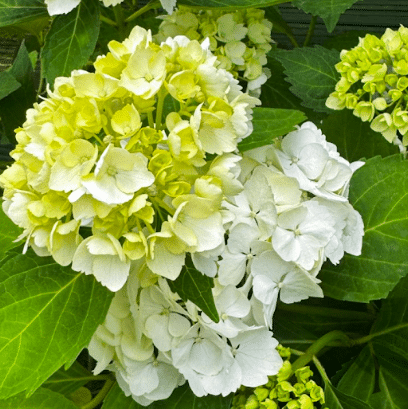
Hydrangeas make excellent focal plants thanks to their large, showy flower heads and lush foliage, which add both color and texture to planting schemes. Thriving in partial shade, they are especially effective for brightening areas that might otherwise feel dark or overlooked.
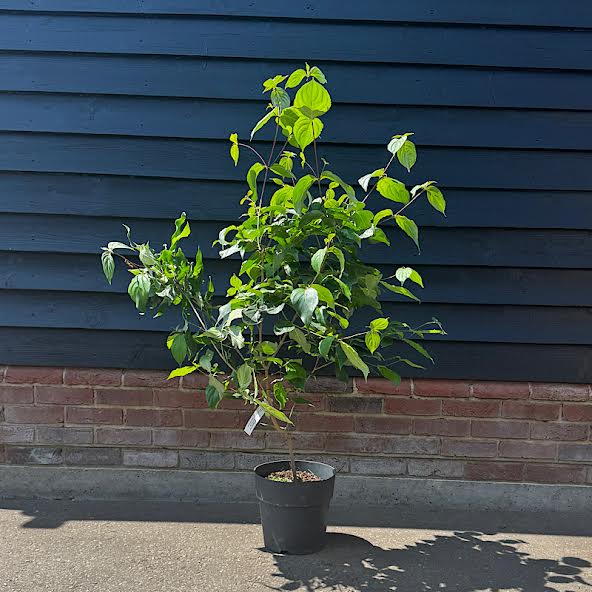
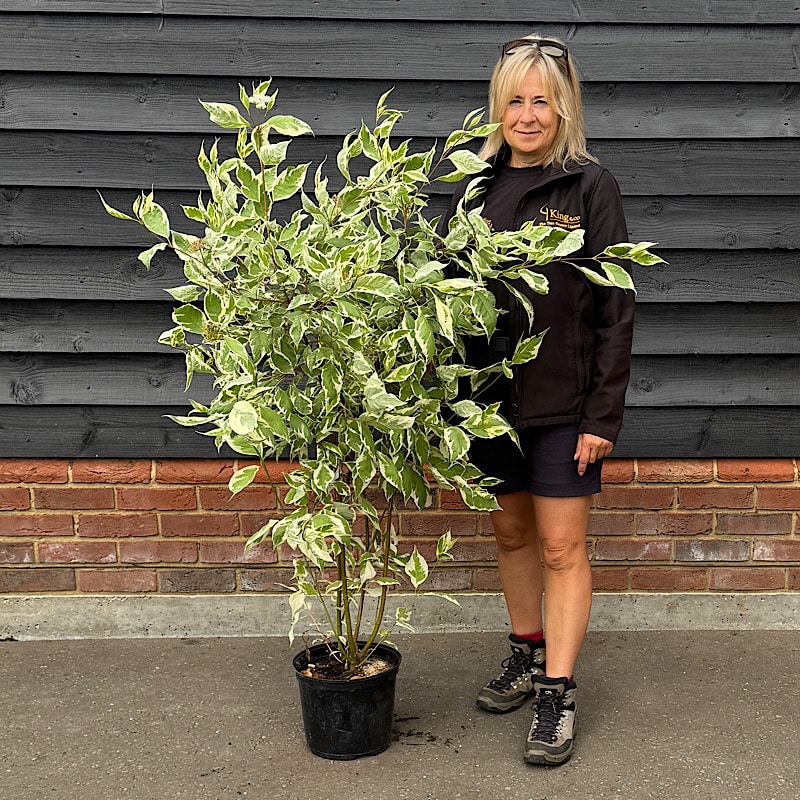
Dogwoods are excellent focal point plants thanks to their multi-season appeal. Depending on the variety, they offer colourful stems, attractive flowers, variegated foliage, vibrant autumn colour and distinctive branching habits. They are a great choice for structure and visual interest throughout the year.
‘Sibirica’ has vivid red winter stems that provide a striking splash of colour in the dormant months.
‘Kesselringii’ stands out with its deep purple-black stems, creating dramatic contrast and year-round interest.
‘Elegantissima’ offers interest across multiple seasons with elegant green and cream variegated foliage and colourful winter stems.
‘Midwinter Fire’ is renowned for its fiery stems in shades of yellow, orange and red, bringing colour to winter landscapes.
‘Flaviramea’ features bright lime-yellow stems that create a bold focal point during the colder months.
‘Chinensis’ makes an outstanding specimen tree thanks to its layered branching habit. It also has showy white bracts, rich autumn colour, and attractive bark that provides interest throughout the year.
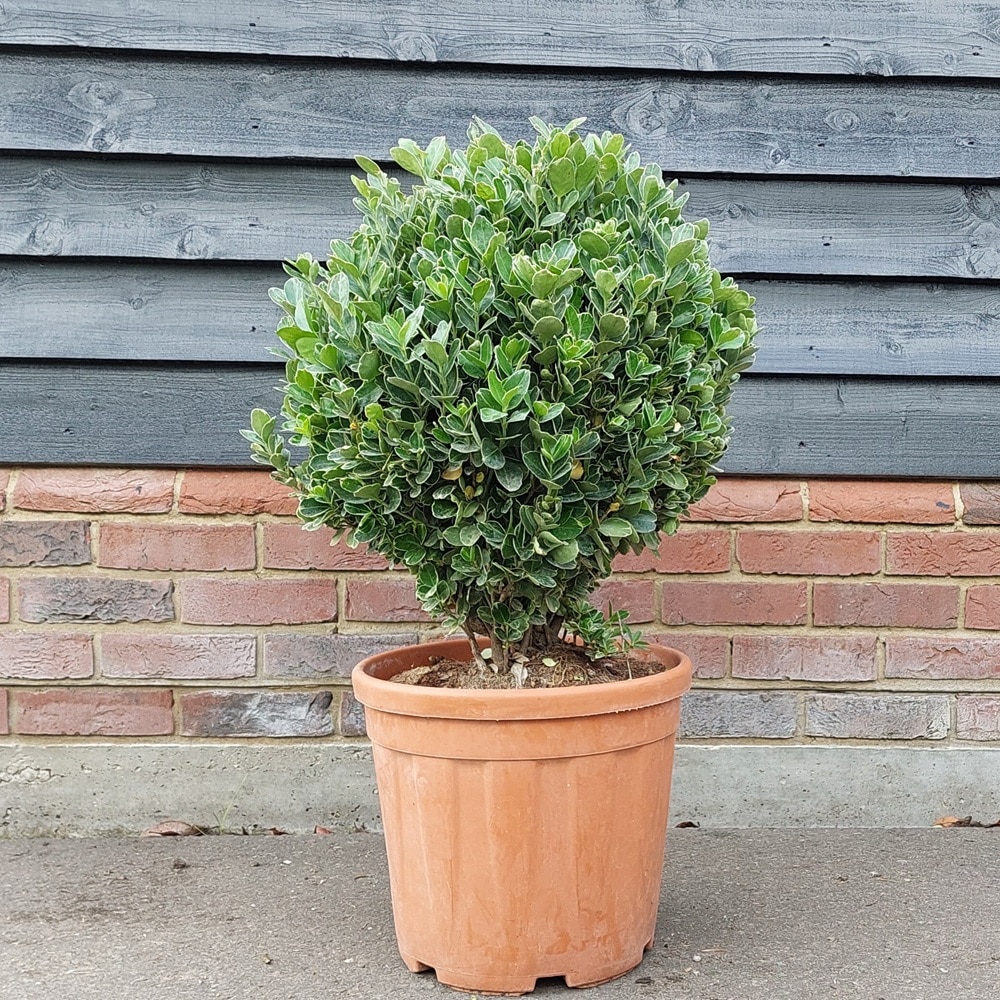
Euonymus japonicus ‘Albomarginatus’ brings year-round structure and interest with its evergreen foliage and naturally upright, bushy habit. The creamy white leaf margins provide colour and contrast throughout the seasons, while its dense growth adds reliable form to planting schemes. It also responds well to pruning, making it equally suited to clipped, formal shapes or a more relaxed, natural silhouette.
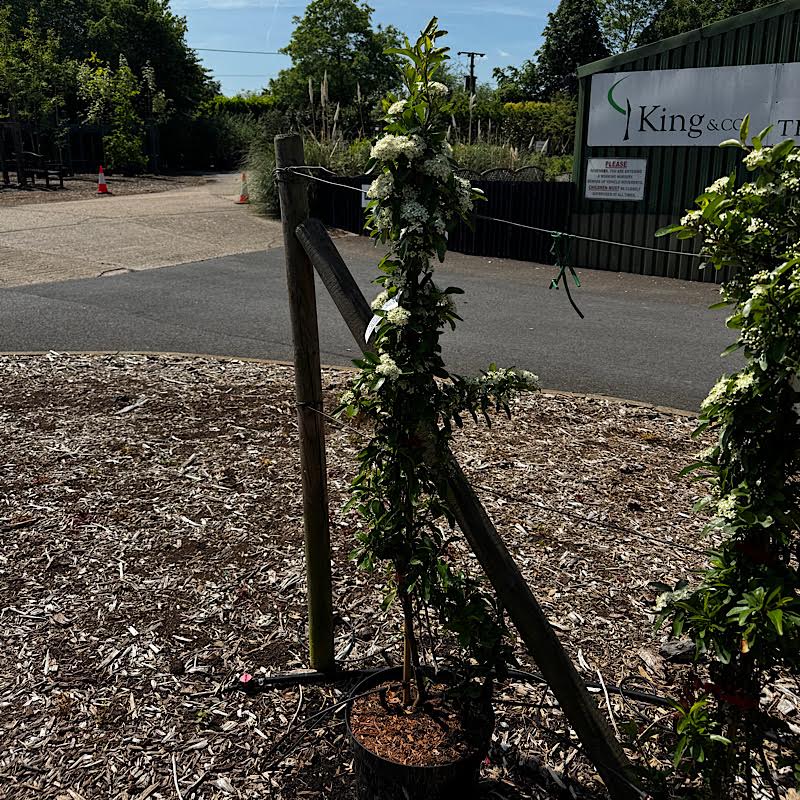
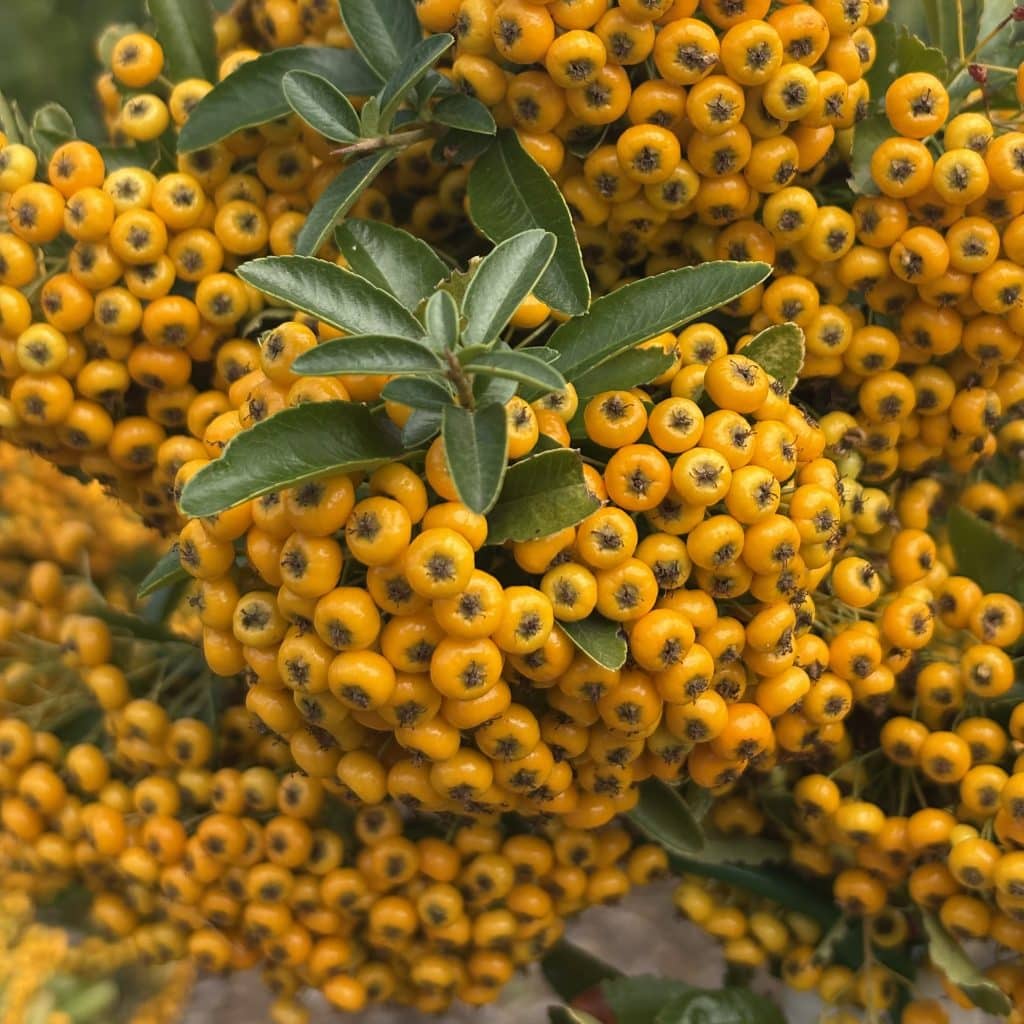
Pyracantha is great for boundaries, walls and trained features. When grown against a structure, it can create a dramatic vertical display, while its thorny branches also provide valuable shelter for garden birds. With careful pruning, Pyracantha can be shaped into a formal specimen or allowed to create a more natural, wildlife-friendly feature.
Olives make striking focal plants thanks to their silvery evergreen foliage, sculptural trunks, and graceful branching, creating year-round structure whether planted in the ground or displayed in a large container.
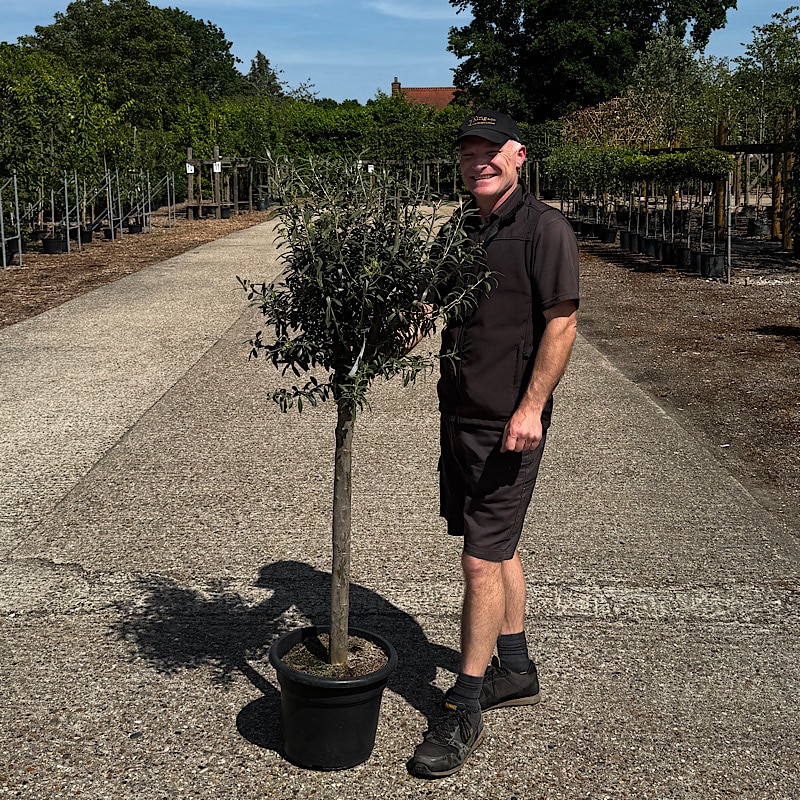
Replacing a dead tree might seem straightforward. Remove the old tree, buy another one and plant it in the same spot.
However, that approach could lead to the same problem all over again.
Before you replace a dead tree, take some time to work out why the original tree failed. The soil might hold too much water, dry out too quickly or suffer from compaction. Poor planting, inadequate watering or an unsuitable species could also have caused the problem.
Once you understand what went wrong, you can choose a replacement tree that better suits the conditions and give it the care it needs to establish successfully.
Start by investigating the planting area.
If the old rootball remains in the ground, carefully dig down beside it with a spade or trowel. You can learn a great deal about the conditions the roots experienced by examining the surrounding soil.
Look for signs that the ground was:
Consider the tree’s planting and maintenance history too. Did you plant it too deeply? Did it receive enough water during its first summer? Were grass or weeds competing with it for moisture?
This investigation gives you the information you need for a successful dead tree replacement.
Moisture levels play an important role when replacing a dead tree.
A tree needs water to survive, but its roots also need air. Too much or too little moisture can cause serious problems.
Dig beside the old rootball and examine the soil.
Sticky, saturated or persistently wet ground could point towards poor drainage. Heavy clay soils often hold water after prolonged rainfall, while compacted ground can make drainage even worse.
Some trees cope with wet conditions better than others. Choosing a replacement tree that tolerates moist or heavy soil could therefore improve your chances of success.
However, a different species will not solve severe drainage problems on its own. Standing water around the rootball may require improvements to the site before you plant again.
Dry soil can cause just as many problems, particularly during the establishment period.
Don’t rely on the surface of the soil when checking moisture. Rain can dampen the top few centimetres while the soil around the roots remains dry.
Instead, dig down beside the rootball and feel the soil. A dry root zone could indicate that the original tree needed more frequent or deeper watering.
Newly planted trees need particular attention during warm, dry or windy weather. Their developing roots cannot immediately access moisture throughout the surrounding soil.
When replacing a dead plant, consider both the plant’s water requirements and the amount of moisture your garden naturally retains.
Sometimes the tree didn’t receive the wrong care. Instead, you may have planted the wrong tree for the location.
Every tree has its own preferences for soil, drainage, moisture, sunlight and exposure.
A tree that prefers well-drained ground may struggle in a wet border. Another species might need consistently moist soil but struggle in a sandy, free-draining position.
That makes replacing a dead tree with the same species a decision worth considering carefully.
Use the evidence from the failed tree to guide your next choice.
Wet ground requires careful plant selection.
Look for trees that tolerate moist or heavier soils, particularly if your garden regularly stays damp after rainfall.
Remember that moist soil and permanently waterlogged soil present very different conditions. Many trees tolerate occasional wet periods but struggle when their roots remain submerged for long periods.
Where water regularly collects around the planting area, investigate the drainage before choosing another tree.
A suitable replacement tree should match the actual conditions of your garden rather than simply looking good at the point of purchase.
Free-draining soil presents the opposite challenge. Water moves through it quickly, which can leave newly planted trees short of moisture during dry weather.
Drought-tolerant trees can perform better in these conditions, but you should also look at the reasons the site dries out.
Nearby lawns, hedges and established trees can all compete with a young tree for available moisture.
Adding a suitable mulch can reduce moisture loss from the soil and suppress competing weeds. A consistent watering routine will also help your replacement tree establish.
Your old rootball may provide clues about planting problems.
One common mistake involves planting a tree too deeply. Soil should not cover the trunk above the appropriate root flare.
Compacted soil can create another problem. Construction work, heavy machinery and repeated foot traffic can compress the ground and restrict root growth.
When you replace a dead tree, take the opportunity to correct these problems.
Prepare the surrounding soil rather than simply putting a new tree into the old hole.
Once you understand the cause of failure, start looking for a plant that suits the site.
Consider:
Think about the job you want the new plant to perform too.
Perhaps you originally planted the tree for privacy. Maybe you wanted shade, screening, flowers or seasonal interest.
A screening tree for a wet garden needs different qualities from one for a dry, free-draining site. Matching the plant to both the purpose and growing conditions gives you a much stronger starting point.
Replacing a failed tree also gives you an opportunity to reconsider its eventual size.
A tree can look perfectly proportioned when you buy it and become much larger over the following years.
Before choosing your replacement tree, check its expected mature height and spread.
Ask yourself:
Will this tree still suit my garden in 10, 20 or 30 years?
Think particularly carefully about planting near:
You might also discover a better solution while researching your options.
For example, a pleached tree or trained screening tree can create privacy above a boundary while taking up less ground space than a conventional tree with a large spreading canopy.
Don’t rush straight from removing the old tree to planting the new one.
First, remove the old tree and as much remaining root material as practical. Take extra care if you suspect disease caused the original failure.
Next, examine the soil again.
Break up compacted areas and improve drainage where necessary. On very dry ground, consider how you will maintain moisture around the new rootball.
Avoid simply filling the old hole with compost and dropping a new tree into it.
The new roots will eventually grow beyond the original planting hole. The surrounding soil therefore needs to provide suitable conditions for healthy root development.
Planting your new tree marks the beginning of its establishment, not the end of the job.
Watering plays a particularly important role during the first growing seasons.
Check the soil regularly, especially during warm, dry or windy weather. When the soil around the rootball starts to dry, water thoroughly so moisture reaches the developing root system.
At the same time, don’t water automatically every day.
Heavy soil can remain wet beneath the surface even when the top looks dry. Overwatering can create problems just as easily as drought.
Your watering routine should reflect the soil, weather and tree rather than follow a rigid calendar.
Mulching can help your replacement tree establish.
A suitable organic mulch helps retain moisture, suppress weeds and gradually improve the soil as it breaks down.
Spread the mulch over the soil around the tree but leave a clear gap around the trunk.
Avoid piling mulch directly against the bark. Excess moisture around the trunk can create its own problems.
Grass and weeds compete with a young tree for water and nutrients.
Keep the area immediately around your new tree free from competing vegetation, particularly during the establishment period.
This matters even more on dry, free-draining soil, where several plants may compete for a limited supply of moisture.
Regularly check the planting area and remove new weeds before they become established.
Not necessarily.
A newly planted tree needs time to establish its root system. Heavy pruning immediately after planting can create unnecessary stress.
However, remove damaged, dead or diseased branches when necessary.
You can also use formative pruning as the tree develops to create a balanced structure. The correct approach depends on the species, growth habit and purpose of the tree.
Include pruning in your long-term maintenance plan for the replacement tree, rather than treating it as a one-off task.
Larger trees may need staking while their roots establish.
Check the stake and tree tie regularly. The support should hold the tree securely without restricting its natural movement or becoming too tight around the trunk.
Remove or adjust the support when the tree no longer needs it.
Regular checks can prevent a small maintenance issue from turning into damage.
Yes, sometimes.
The original species may still suit your garden if poor watering, incorrect planting or another correctable problem caused the failure.
However, the situation changes when the tree struggled because of unsuitable soil, poor drainage or limited space.
In those circumstances, choose a different species that better matches the conditions.
Disease also deserves careful consideration. If you suspect a plant health problem, investigate the cause before replacing a failed tree with the same species.
For many trees, autumn through to early spring provides a good planting window, provided the ground isn’t frozen or waterlogged.
Bare-root and rootballed trees typically suit the dormant season, while container-grown trees offer more flexibility throughout the year.
Spring and summer planting require particular attention to watering. Warm weather can quickly dry the soil around a newly planted rootball.
Whenever you plant, monitor the moisture around the roots and adjust your maintenance routine accordingly.
The answer depends on the reason for the original failure.
Wet soil may call for a tree that tolerates moist conditions, although severe drainage problems may require attention first.
Dry, free-draining soil could suit a more drought-tolerant tree alongside a reliable watering routine.
A tree that simply became too large needs a smaller or more compact replacement.
For privacy or screening, you might find that a hedge, pleached tree or trained screening tree works better than the original choice.
The best replacement tree is therefore not necessarily the same species you had before. Choose a plant that suits both the conditions of the site and the job you want it to perform.
A dead tree can feel like a wasted investment, but its failure can also tell you a lot about your garden.
Before you replace a dead tree, investigate the soil and rootball. Check whether the site stays too wet, dries out too quickly or suffers from compaction.
Then consider whether the original tree suited the soil, available space and purpose.
Choose your new tree based on those findings.
Finally, give it a clear maintenance plan covering watering, weed control, mulching, staking and pruning.
A little extra investigation before planting can give your new tree a much better chance of becoming a healthy, established part of your garden.
Choosing the right tree involves more than finding one that looks attractive.
At King & Co, we can help you choose trees and hedging suited to your garden, whether you’re replacing a dead tree, creating privacy from neighbouring properties or looking for screening plants for a particular soil type.
If your previous tree failed, don’t automatically replace it like-for-like.
Find out what went wrong first. Then choose a tree that’s better suited to the job.
Box has long been a favourite for formal hedging, topiary and garden structure. However, the rise of box tree caterpillar and box blight has left many gardeners looking for attractive, low-maintenance alternatives. Whether you’re replacing damaged plants or planning a new planting scheme, these box hedging alternatives provide excellent substitutes, offering a similar look while being less susceptible to the problems that affect box.
There are two main reasons gardeners choose to replace box: box tree caterpillar and box blight. Both can cause severe damage, resulting in defoliation, unsightly brown patches and, in many cases, the death of the plant.
Box tree caterpillars are the larvae of the invasive box tree moth. They feed almost exclusively on box, rapidly stripping plants of their foliage before attacking the bark. Heavy infestations can leave hedges and topiary looking bare within a matter of weeks.
Box blight is a fungal disease that affects box plants, causing leaves to turn brown and fall prematurely. Dark black streaks develop on the stems, and repeated outbreaks can weaken or kill plants. Once established, the disease is difficult to eradicate, making replacement the most practical solution for many gardens.
Fortunately, there are several excellent shrubs that provide a similar neat, evergreen appearance without the same susceptibility to box blight and box tree caterpillar.
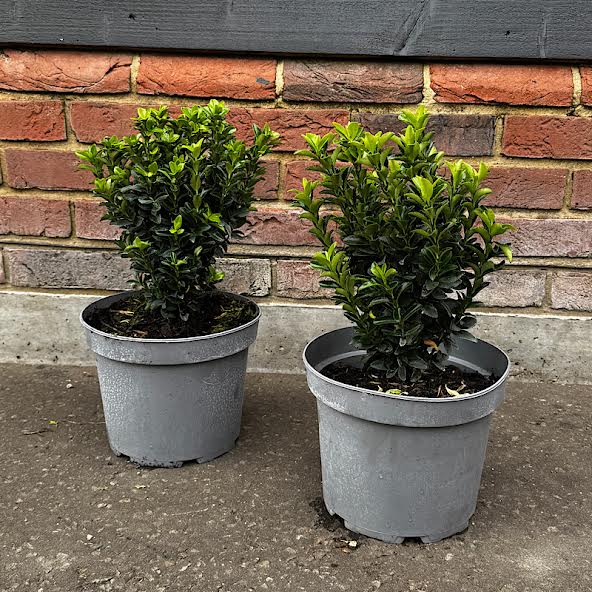
1. Euonymus ‘Jean Hugues’. Closely resembles box with its small, slightly serrated dark green leaves. ‘Jean Hugues’ also has a naturally compact, upright habit and responds exceptionally well to regular clipping. It is an excellent choice for dense hedging, formal gardens, edging and topiary.
2. Euonymus japonicus ‘Albomarginatus’ offers dense, compact growth with attractive green leaves edged in crisp white. It clips neatly into formal shapes while bringing brightness and contrast to borders and pathways. A great choice if you’re looking to add a little more interest.
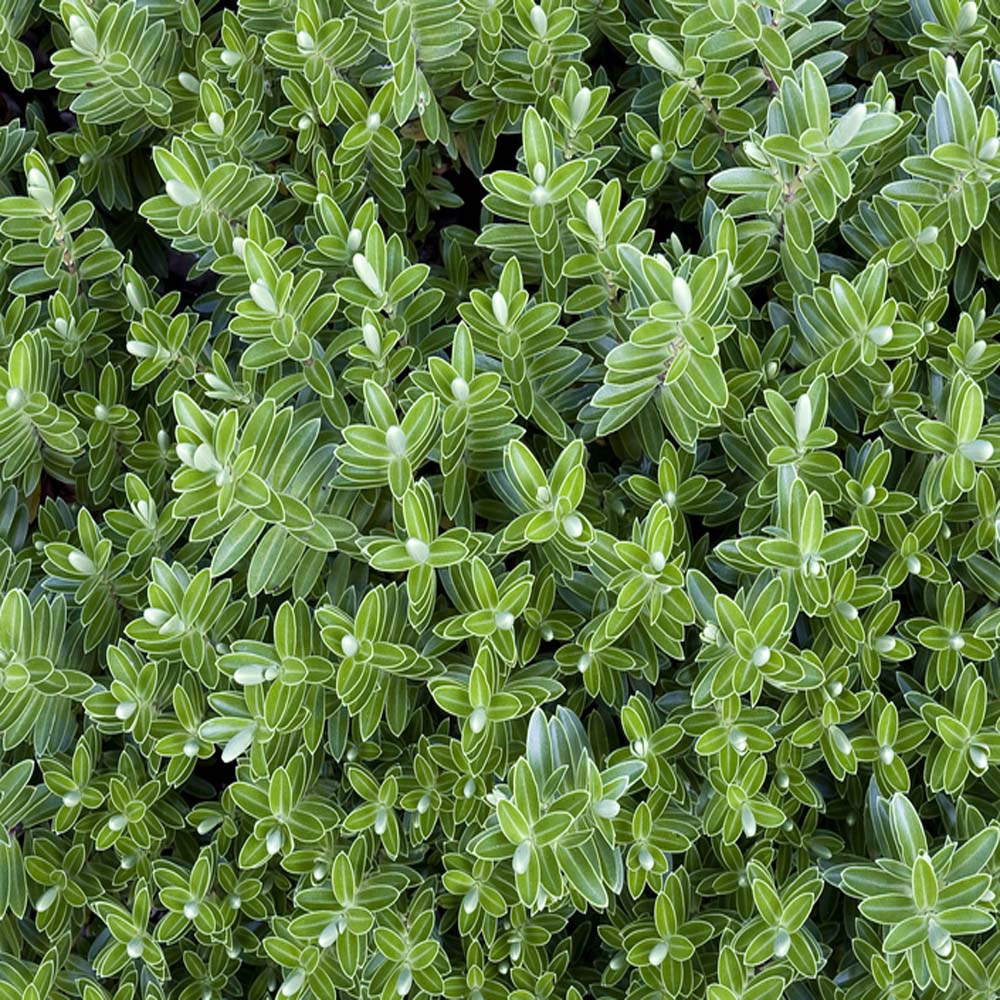
3. Hebe Sutherlandii forms naturally rounded mounds of fine grey-green foliage, making it ideal for informal low hedging or clipped shapes. Its silvery-blue tones and purple stems provide a softer look than box while still delivering year-round structure.
4. Ligustrum delavayanum has tiny, glossy dark green leaves and a naturally dense habit. It tolerates regular clipping exceptionally well and is widely used for low hedging, topiary and formal garden designs.
Planting trees before autumn gives them time to establish, allowing you to enjoy a stunning display of seasonal color as the leaves turn autumnal shades of gold, amber and red. Whether you are adding a focal point or enhancing an existing landscape, choosing the right tree is a great way to add interest to your garden throughout the season.
Choosing trees with striking autumn colour is an excellent way to extend seasonal interest and bring warmth, texture and vibrancy to your garden. While many plants begin to fade, trees with colorful foliage create a stunning display, adding depth and character to the landscape before winter arrives. These trees can also provide valuable habitats for wildlife and serve as eye-catching focal points for gardens of any size.
Our favourite varieties include…
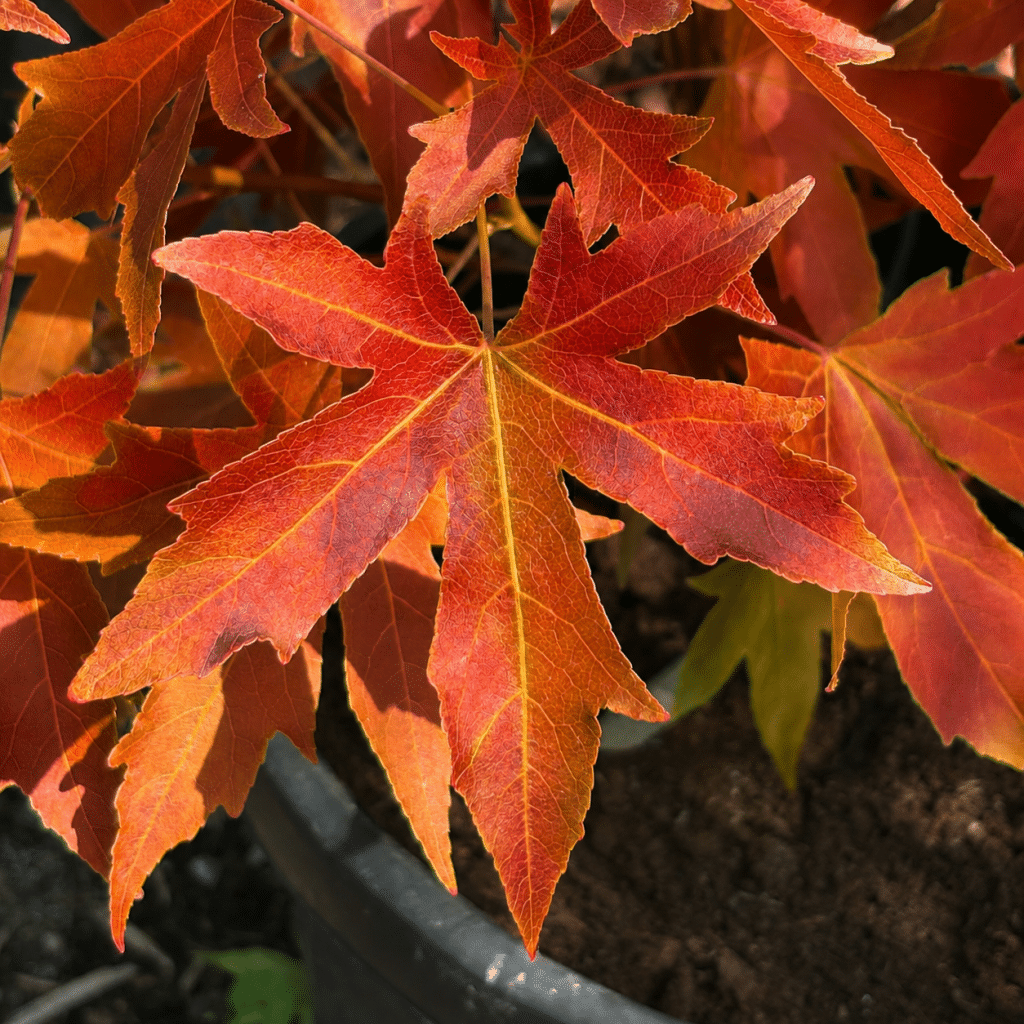
Liquidambar styraciflua ‘Worplesdon’ (Sweet Gum) features attractive maple-like leaves that emerge fresh green in spring before transforming into a spectacular display of yellow, orange, red and deep purple in autumn. Its exceptional seasonal colour makes it a striking focal point as the seasons change.
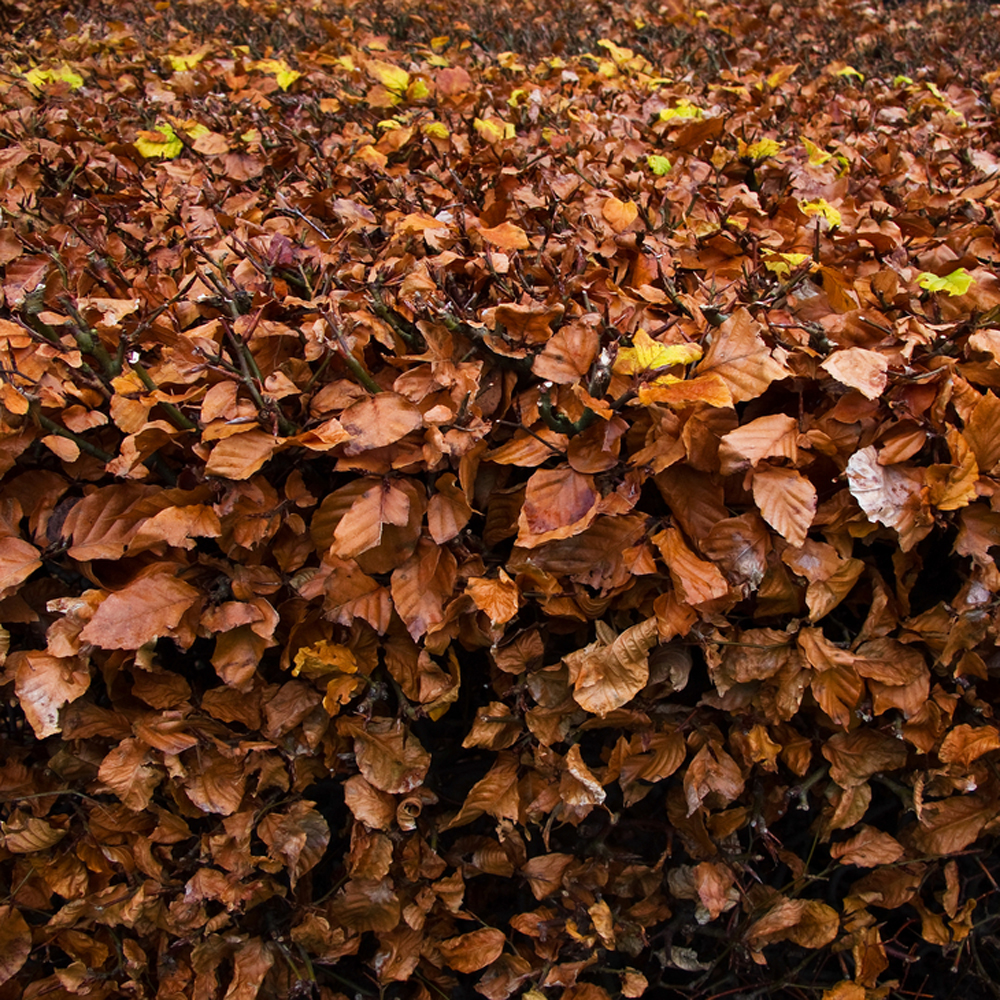
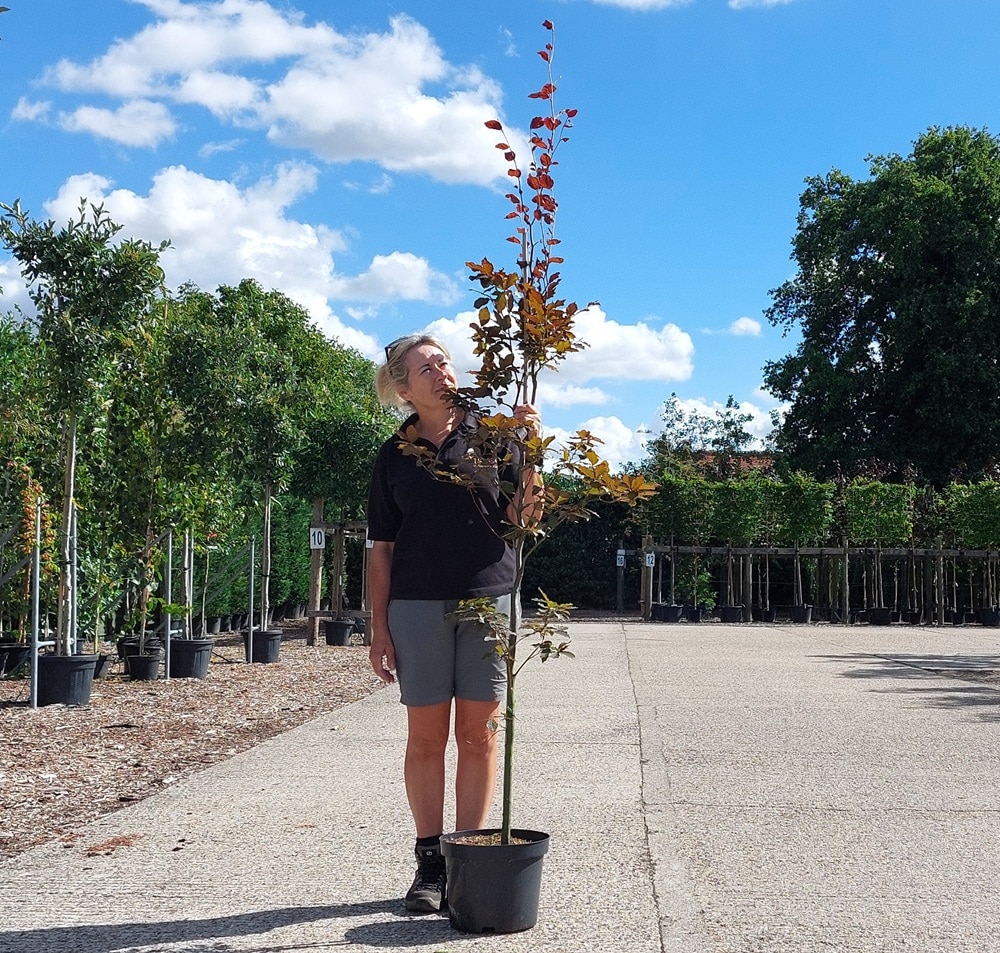
Both green and purple beech are exceptional choices for adding year-round beauty, structure and wildlife value to the landscape.
Green beech. Glossy green summer foliage transforms into a spectacular display of vibrant gold, orange, and rich coppery-russet tones in autumn.
Purple beech. Deep purple spring and summer foliage gradually changes to warm shades of reddish copper, bronze, and golden brown in autumn, creating a striking seasonal contrast.
Both green and purple beech develop a dense branching structure, and many of their crisp, papery leaves remain on the branches throughout winter. These retained leaves provide valuable winter shelter, offering nesting sites and excellent protection for birds and other wildlife from harsh weather and predators. They also continue to provide screening and structure in the landscape long after many other deciduous trees have shed their leaves.
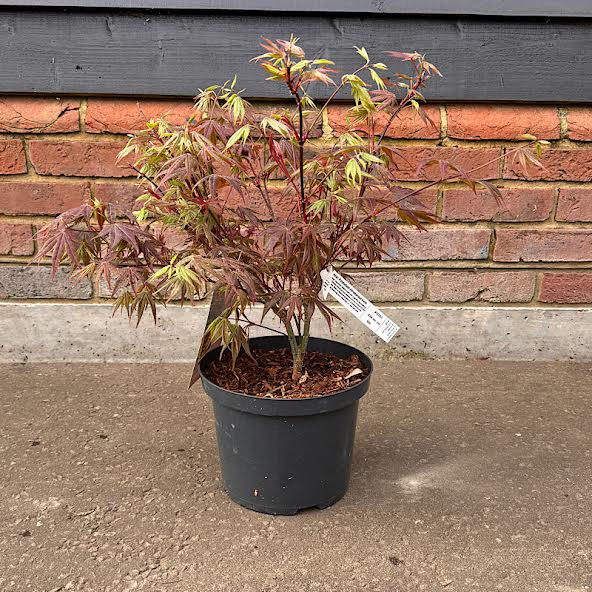
Japanese maples are widely considered some of the best trees for autumn colour. Their leaves transition into vivid shades of fiery red, brilliant orange, glowing yellow and deep purple.
‘Atropurpureum’ is a deep purple-red/burgundy tone throughout the spring and summer, turning spectacular, shades of fiery crimson-red before dropping for the winter.
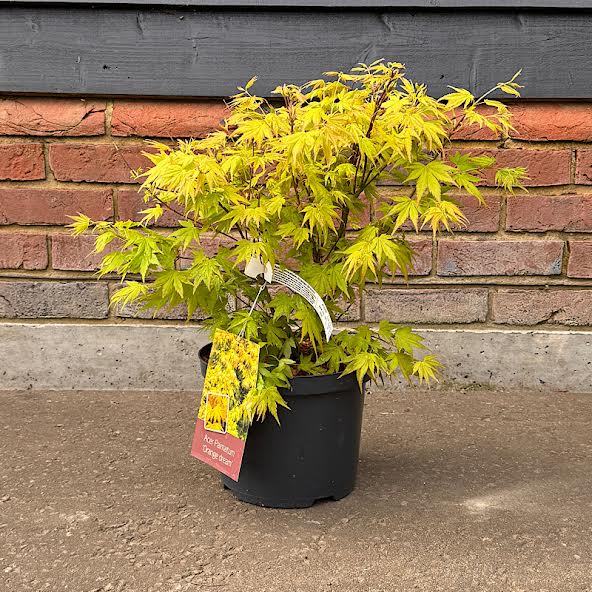
‘Orange Dream’ is typically lime green with orange margins over summar. Transforming into a vivid mix of bright yellow-gold and rich crimson before the leaves drop.
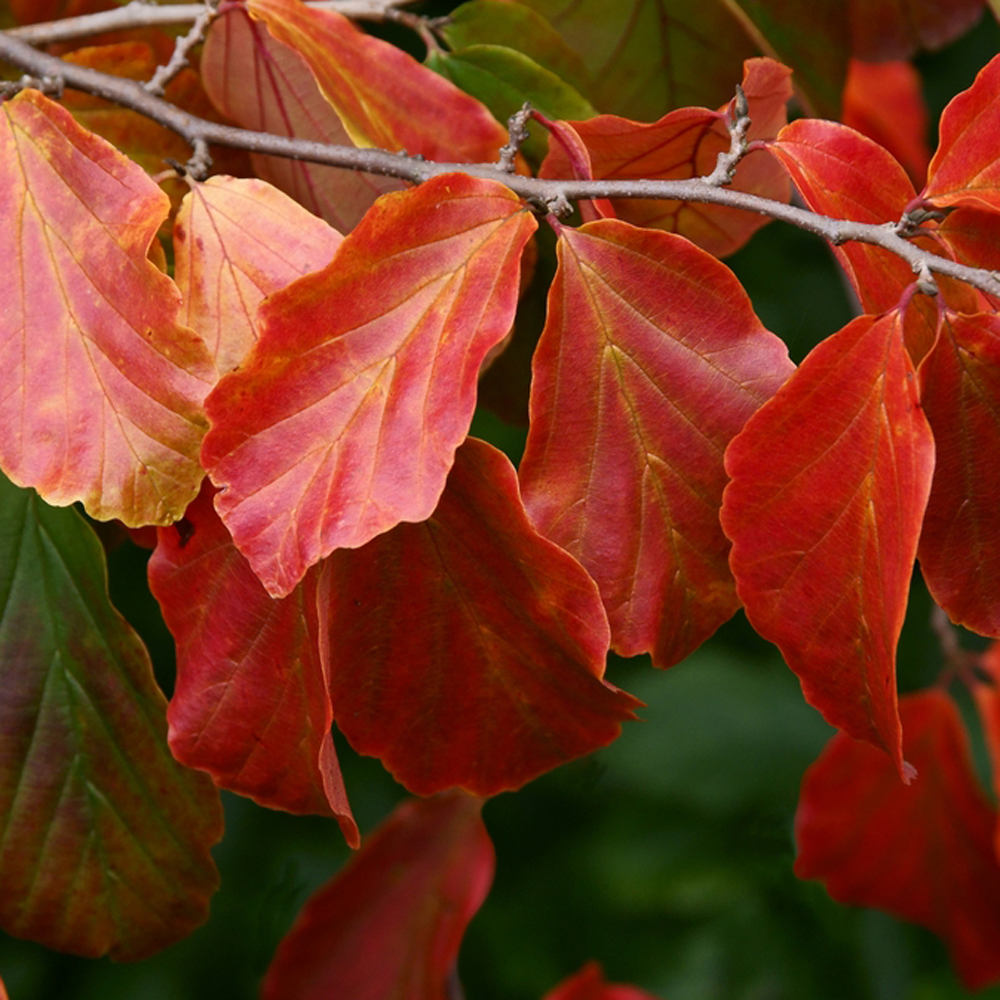
Persian ironwood (Parrotia persica) is one of the best trees you can choose for autumn. Its leaves shift through brilliant, vibrant shades of yellow, orange, crimson, and purple creating a spectacular, fiery display of seasonal colour.
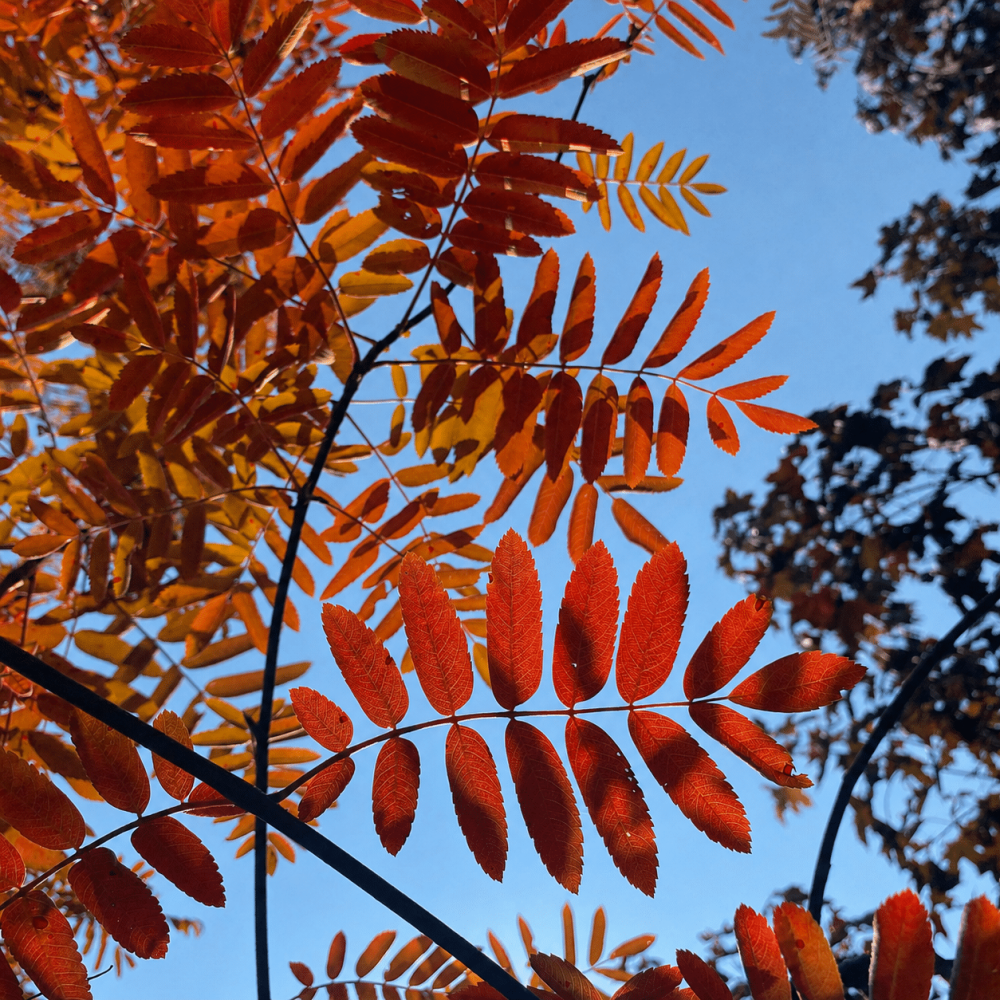
Rowan/Mountain ash (Sorbus aucuparia) is a spectacular choice for autumn. It puts on a multi-sensory seasonal show with its leaves turning fiery shades of red, purple, and yellow, and heavy clusters of bright berries ripening in late summer and autumn.
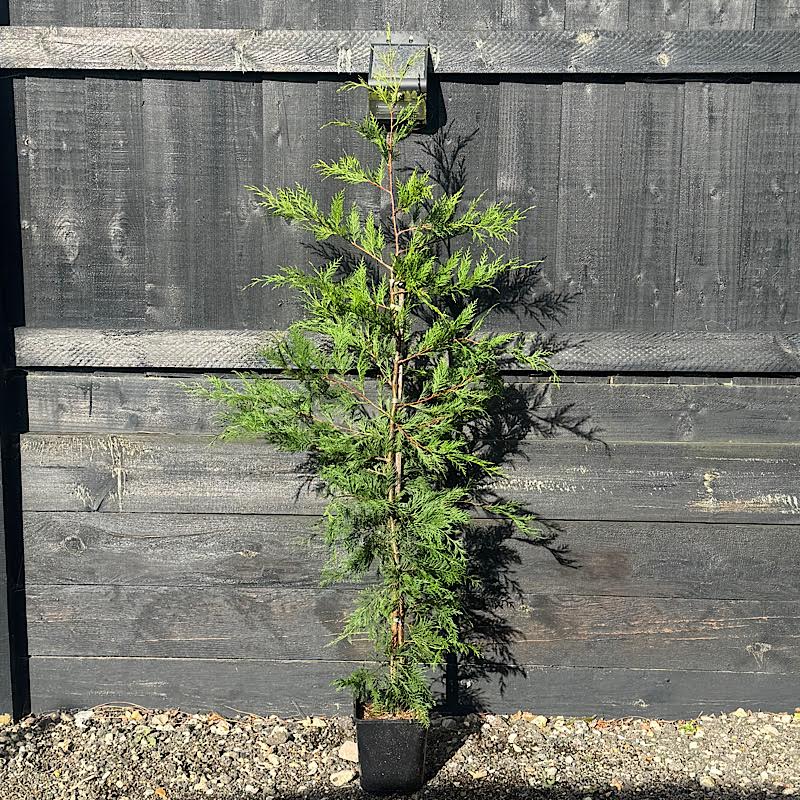
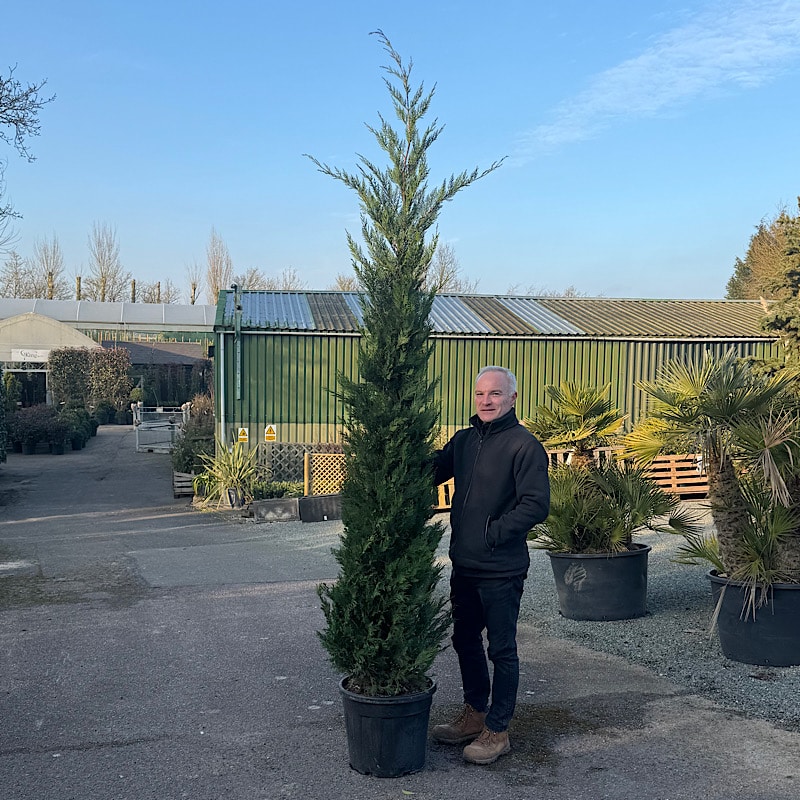
Leylandii has earned a reputation as one of Britain’s fastest-growing evergreen conifers. Why choose Leylandii? Its rapid growth, evergreen foliage and remarkable versatility make it a popular choice for gardens of all sizes. While it’s best known for creating dense privacy screens, it can also be shaped into a variety of eye-catching, architectural garden features.
Leylandii is a classic choice for creating an evergreen hedge. Its dense branching structure quickly forms a thick living wall that provides privacy, reduces noise, and offers shelter from strong winds. Because it responds well to trimming, Leylandii can be maintained at a manageable height and width while keeping a crisp, formal appearance. It remains one of the quickest ways to establish a mature-looking boundary.
Ideal for:
Privacy screening
Windbreaks
Defining boundaries
Reducing traffic noise
Creating a green backdrop for planting
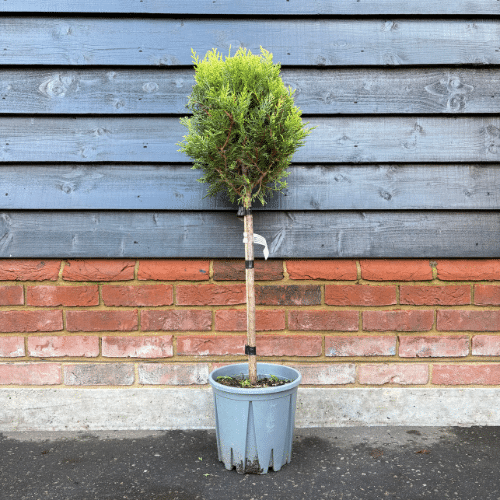
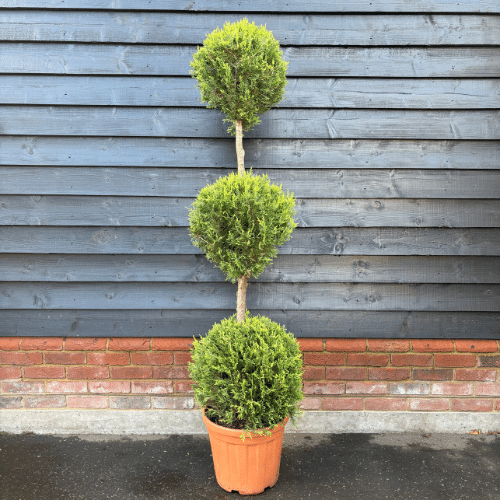
Rather than starting at ground level, the foliage begins on a clear stem, creating a lollipop style tree. This form introduces height without taking up excessive ground space, making it ideal where you want evergreen interest but don’t want a full hedge. Because the trunk remains visible, it also allows underplanting.
Perfect for:
Framing pathways
Driveways
Front gardens
Patio planting
Garden entrances
Formal gardens
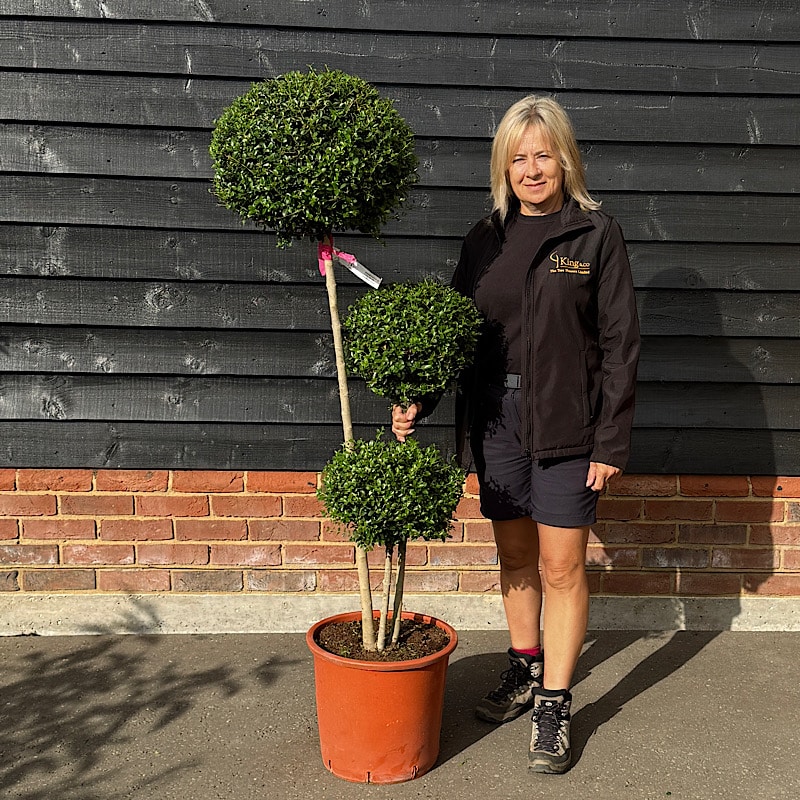
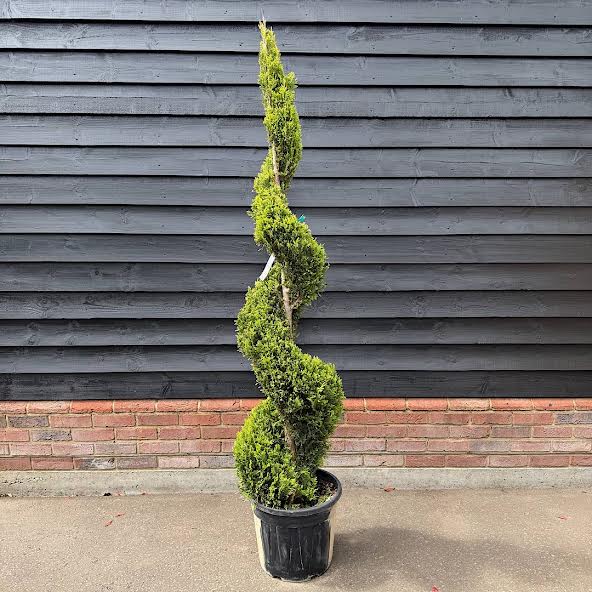
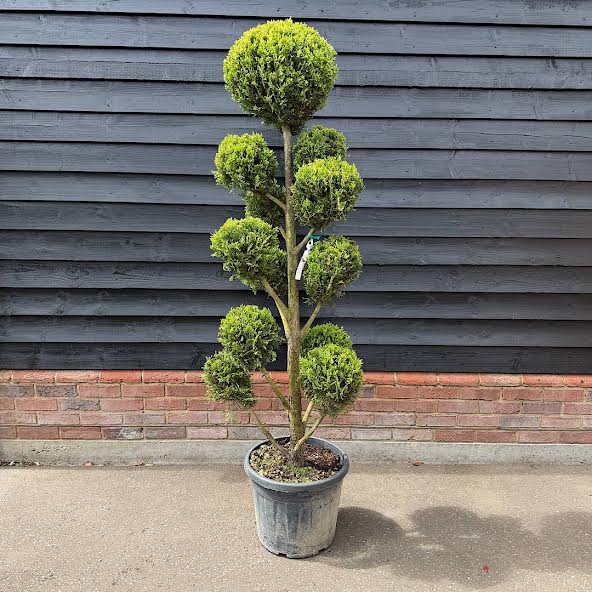
Topiary plants are an excellent way to add architectural interest and visual impact to your landscape. Popular as statement pieces beside front doors, gateways, or garden paths, their evergreen foliage provides year-round appeal. With occasional trimming, their shapes remain crisp and attractive, naturally drawing attention throughout every season.
Common uses include:
Entranceways
Feature planting
Contemporary or Courtyard gardens
Formal planting schemes
Decorative patio displays
Container planting
Trees can be an effective way to create privacy, define boundaries and soften fences or walls while adding year-round interest to the garden. Choosing the right species from the outset is essential, as the best boundary trees combine manageable growth with attractive seasonal features and are suited to the available space.
Whether your priority is screening neighbouring properties, reducing noise or creating a greener backdrop, selecting a tree with the appropriate mature size and growth habit will help ensure it remains an asset rather than becoming difficult to maintain.
Before selecting a tree for a boundary, think about how it will look and perform in the years ahead rather than simply how it appears at planting.
Mature size. Selecting a species thats mature height and spread remains in proportion to the available space will reduce future pruning requirements and help prevent overcrowding or excessive shading.
Growth habit. The natural shape of a tree can make a significant difference when planting near boundaries. Upright or narrow-growing varieties provide privacy while occupying less space, making them ideal for smaller gardens or planting close to fences.
Root system. Most ornamental trees develop root systems that are suitable for domestic gardens. However, larger, vigorous species should be given more room to allow healthy root development.
Evergreen or deciduous. Evergreen trees retain their foliage throughout the year, providing continuous screening and structure in every season. Deciduous trees offer seasonal highlights such as spring blossom and vibrant autumn foliage. They also allow more light into the garden during winter.
If privacy is your main objective, evergreen trees are often the best solution. Their year round foliage creates a permanent screen while adding colour and structure to the garden throughout every season.
Photinia ‘Red Robin’. One of the most popular screening trees, Photinia ‘Red Robin’ produces vibrant red young foliage that gradually matures to glossy green. Its naturally dense growth responds well to pruning, making it ideal for forming an attractive screen.
Laurel (Prunus). Cherry laurel (Prunus laurocerasus) and Portuguese laurel (Prunus lusitanica) are two of our favourite varieties for screening. Cherry laurel is a dependable evergreen that quickly develops into a dense barrier of rich green foliage. It is particularly well suited for creating privacy along garden boundaries while remaining easy to maintain. Portuguese Laurel offers a more refined appearance with smaller leaves and distinctive burgundy-red stems. Its naturally neat habit makes it equally effective as a screening tree while providing an elegant architectural feature.
Chinese privet (Ligustrum japonicum ‘Superbum’). Chinese Privet is a compact, semi-evergreen variety with attractive cream-edged foliage that brightens the garden throughout the year.
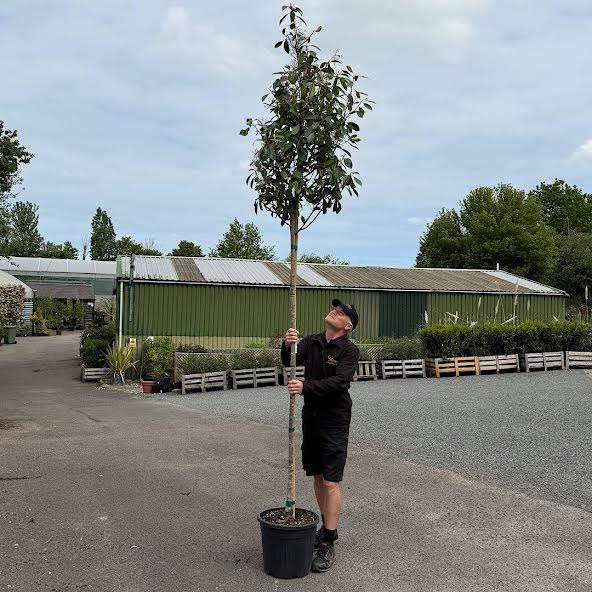
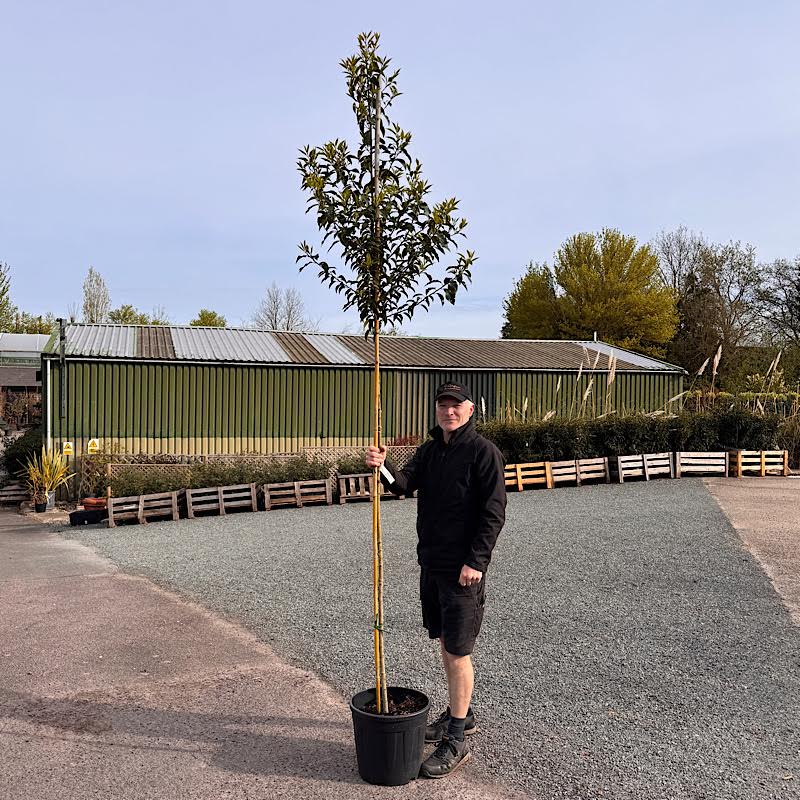
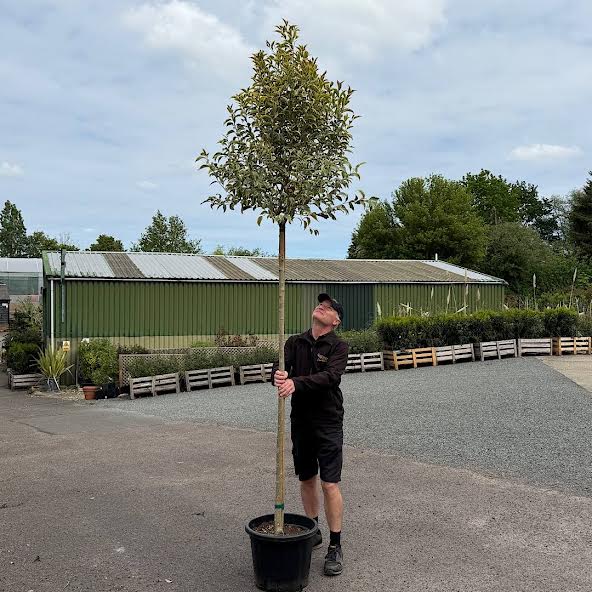
Where complete year-round screening is not essential, deciduous trees can provide privacy during the growing season while introducing blossom and autumn colour.
Malus ‘Street Parade’. This upright ornamental crab apple is particularly well suited to narrow spaces. Its compact form, spring blossom and colourful ornamental fruits make it an excellent choice for boundary planting.
Prunus ‘Snow Goose’. A slender flowering cherry that produces masses of white blossom in spring. Its naturally upright habit allows it to fit comfortably into smaller gardens without overwhelming the space.
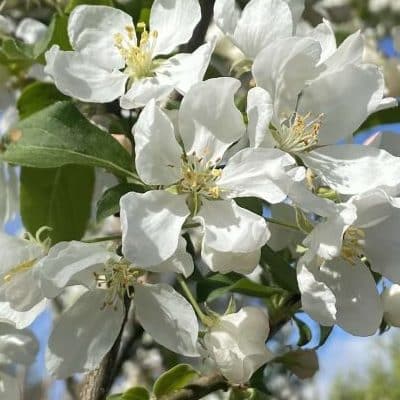
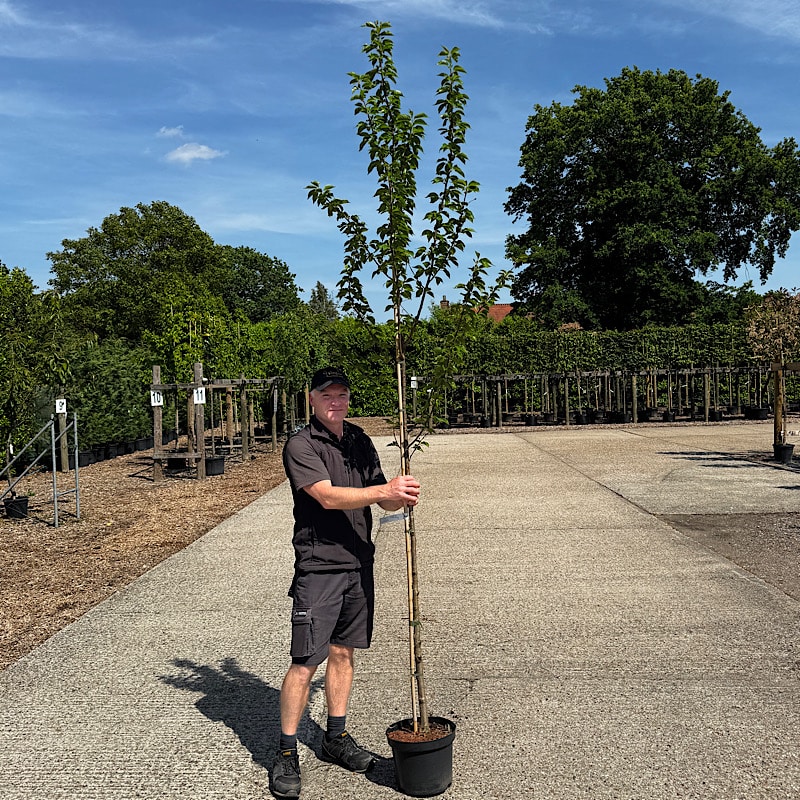
When creating a boundary screen, planting several trees at consistent intervals usually produces a more natural and effective result than relying on a single specimen. Always allow sufficient room for each tree to reach its mature size and leave adequate space from fences, walls and neighbouring structures to enable healthy growth and future maintenance.
By selecting trees that are appropriate for both the available space and the growing conditions, you can create a boundary planting scheme that delivers privacy, seasonal interest and lasting value for many years.
Learning how to choose the right tree for your garden is the first step toward creating a healthy, attractive landscape. Selection involves more than just aesthetics; the size of your garden, soil type, light conditions and the surrounding environment all play a critical role in determining which species will thrive. By matching the right tree to these specific conditions, you can encourage healthy growth, reduce maintenance and ensure your tree flourishes for years to come.
Before choosing a tree, take a few moments to assess the conditions of your garden. Considering the factors below will help you identify the species best suited to your space.
Focus on…
1. Garden Size. Consider the available space.
2. Garden Settings. Think about your surroundings.
3. Light conditions. Assess how much sunlight the planting area receives.
4. Soil Type. Understand your soil conditions.
When choosing your new tree, it is important to select a species that is in proportion to the available space. This will help ensure it does not overshadow, crowd or eventually outgrow the garden.
Smaller gardens. Trees with a naturally compact habit are ideal for limited spaces. Suitable choices include Amelanchier, ornamental cherry and Cotoneaster, to name a few.
Medium-sized gardens. These can accommodate a wider range of tree species, offering enough space for trees with a moderate mature height and spread to develop naturally. Suitable choices include Himalayan birch, Liquidambar and fruit trees on semi-dwarfing rootstocks.
Larger gardens. More generous spaces provide the opportunity to plant larger canopied trees that create a striking focal point. Smaller trees can sometimes appear out of scale when planted as isolated specimens, so grouping several of the same species in a loose triangular arrangement can create a fuller, more impactful feature.
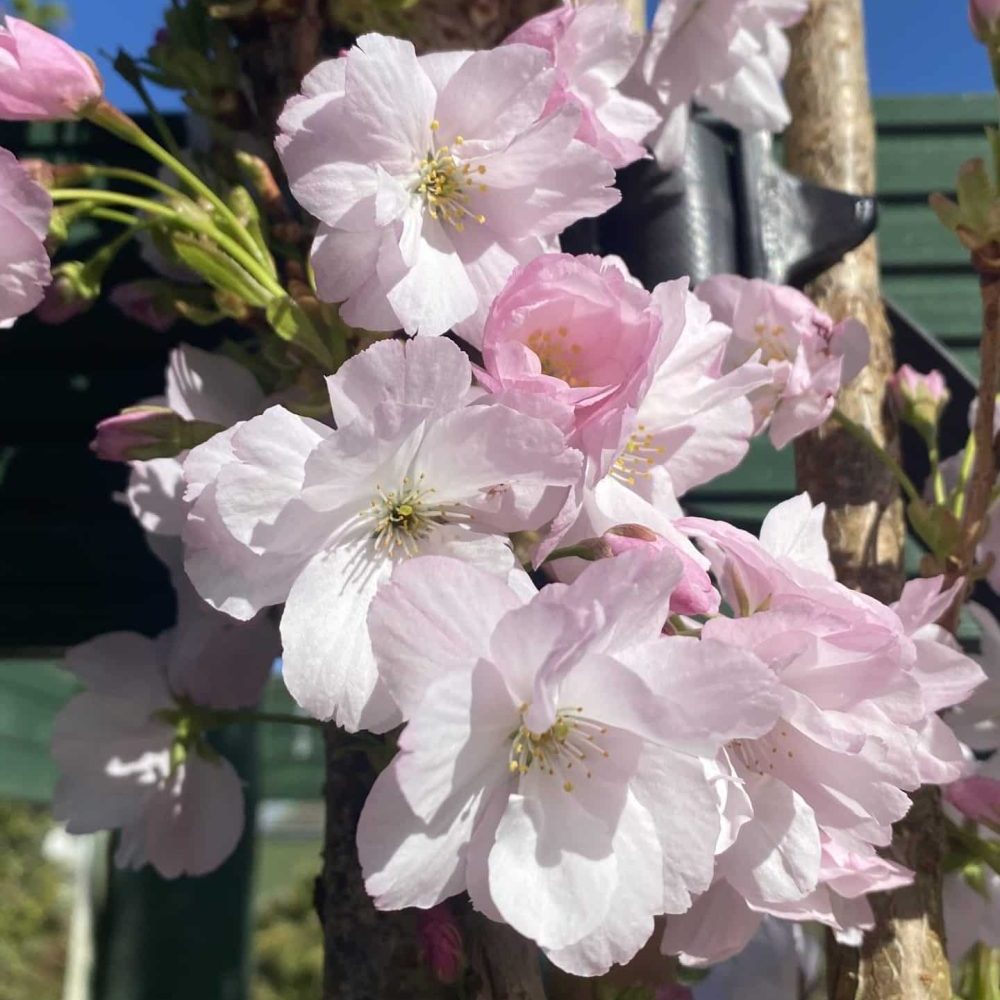
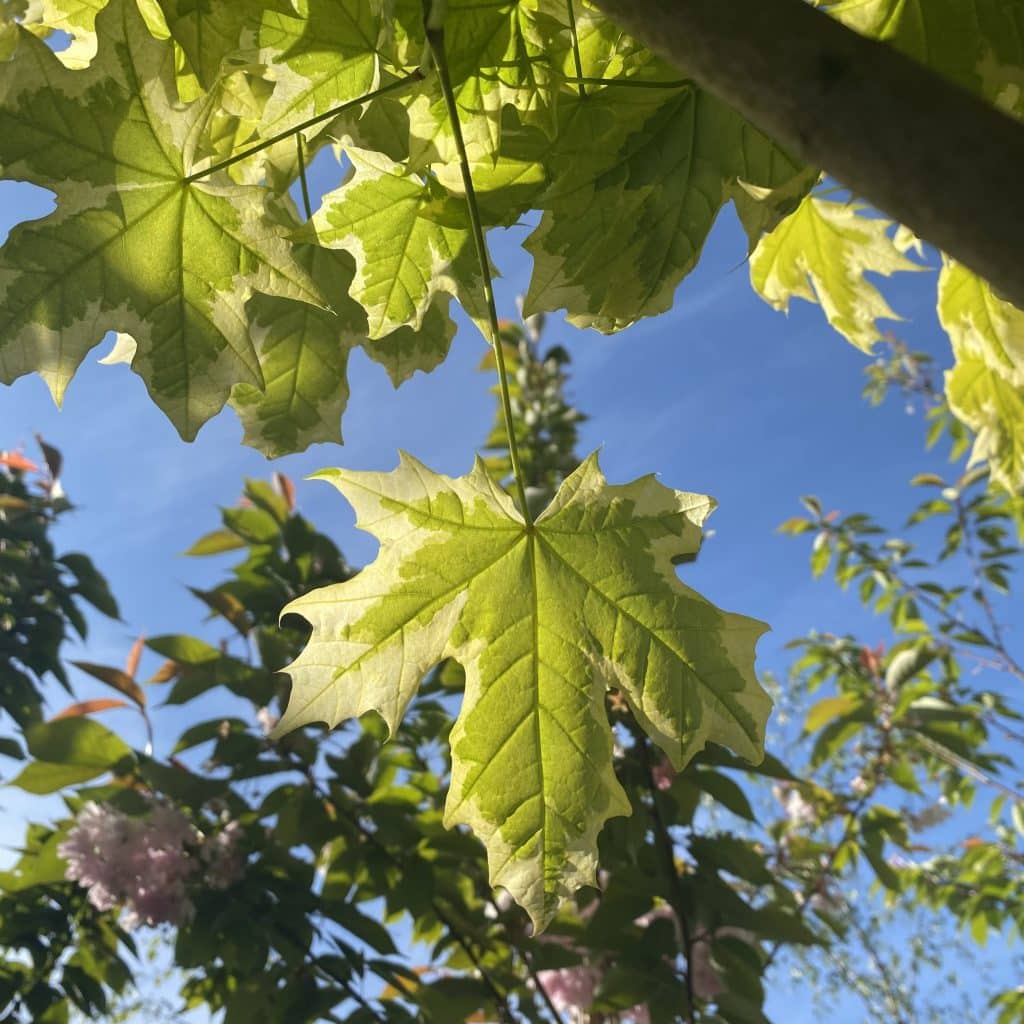
It is important to consider the surrounding environment as well as the available space when choosing a new tree. Different garden settings present different growing conditions, so selecting species that are well suited to the site will help ensure healthy growth and long-term performance.
Urban. Urban gardens often benefit from species that tolerate pollution and confined growing conditions. Malus ‘Street Parade’ and Prunus ‘Snow Goose’ feature narrow, upright crowns, making them excellent choices for restricted spaces and street planting.
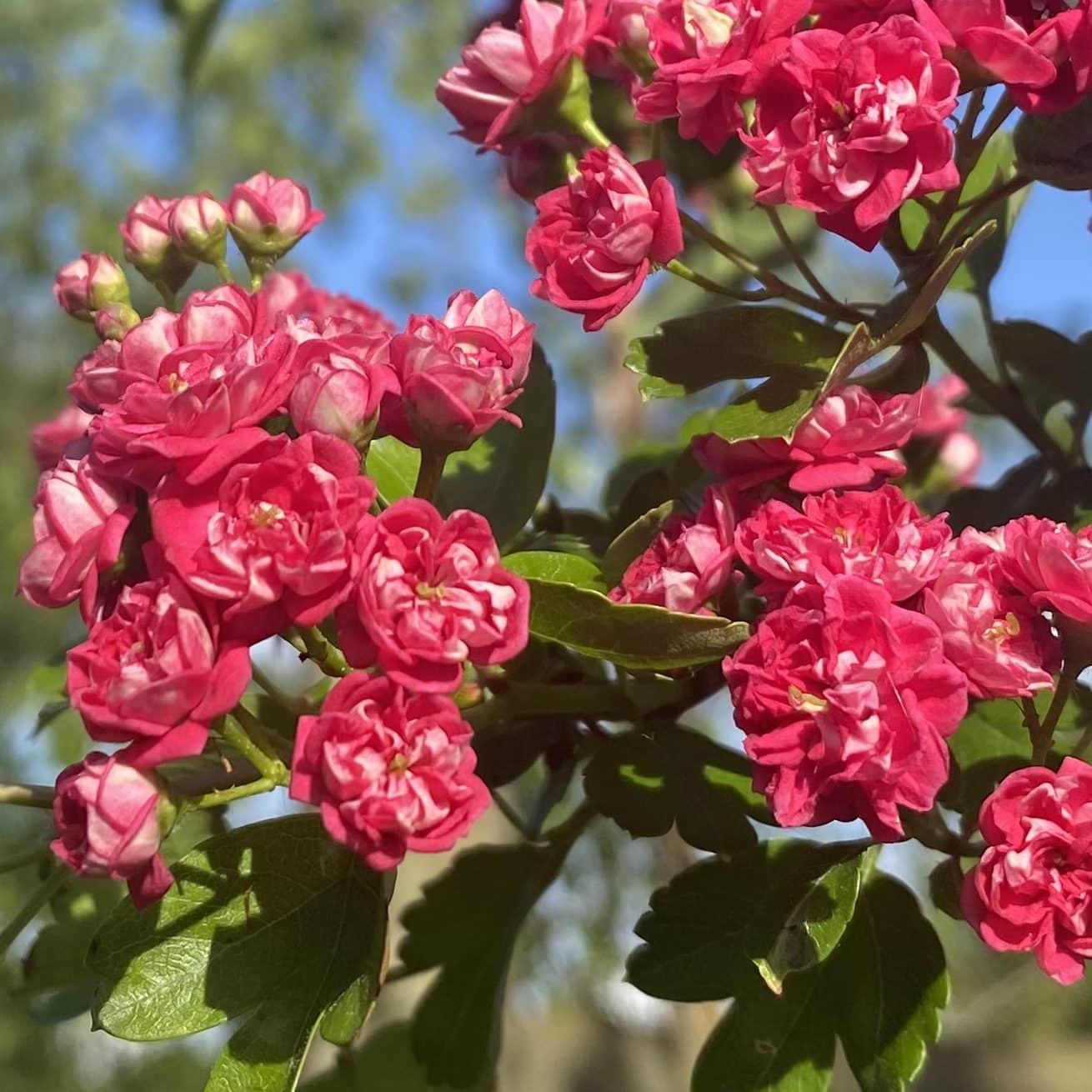
Coastal. Coastal gardens require trees that can withstand exposure to strong winds and salt-laden air. Quercus ilex, Crataegus ‘Paul’s Scarlet’ and Sorbus aria ‘Lutescens’ are all excellent choices, as they are highly resilient to exposed coastal conditions.
Overlooked gardens. Consider trees with a dense or evergreen habit that can be planted at regular intervals to create an effective, uninterrupted screen. Popular choices include Photinia ‘Red Robin’, Cherry laurel and Portuguese laurel.
Consider how much sunlight the planting site receives throughout the day. Some species require full sun, while others are well adapted to partial shade or even heavily shaded locations. Selecting trees that are suited to the available light will help them establish well and perform at their best.
Full sun. Trees growing in full sun generally produce their best flowering, foliage colour and overall growth. Suitable choices include Olive and Magnolia grandiflora ‘Gallissoniere’, both of which thrive in bright, sunny positions.
Partial shade. Many species perform well with a balance of sun and shade, particularly where they are protected from the hottest afternoon sun. Acer palmatum and Acer griseum are excellent choices for these conditions.
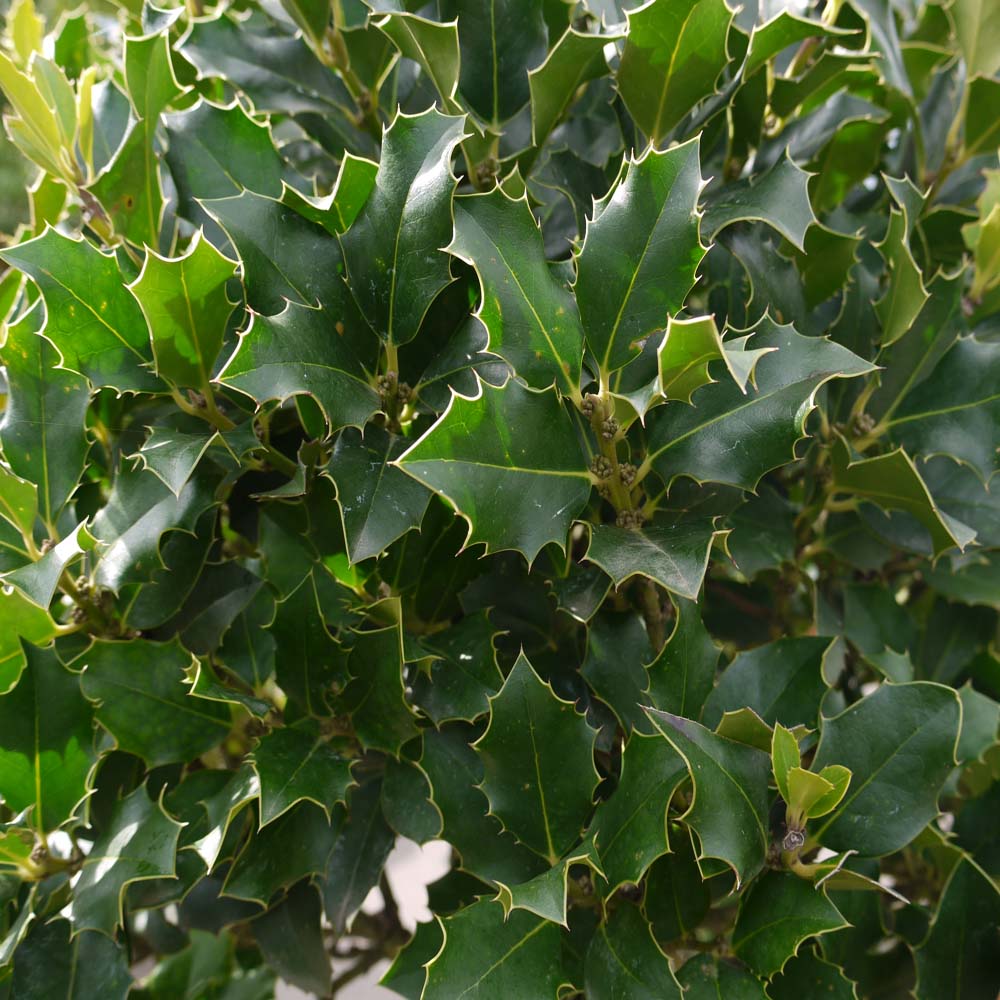
Shade. Shadier areas require species that are adapted to lower light levels. Cherry laurel and English holly are reliable choices for these areas.
Soil conditions have a significant influence on how well a tree establishes and grows. Choosing trees adapted to your existing soil type encourages strong root development, reduces maintenance, and improves long-term health.
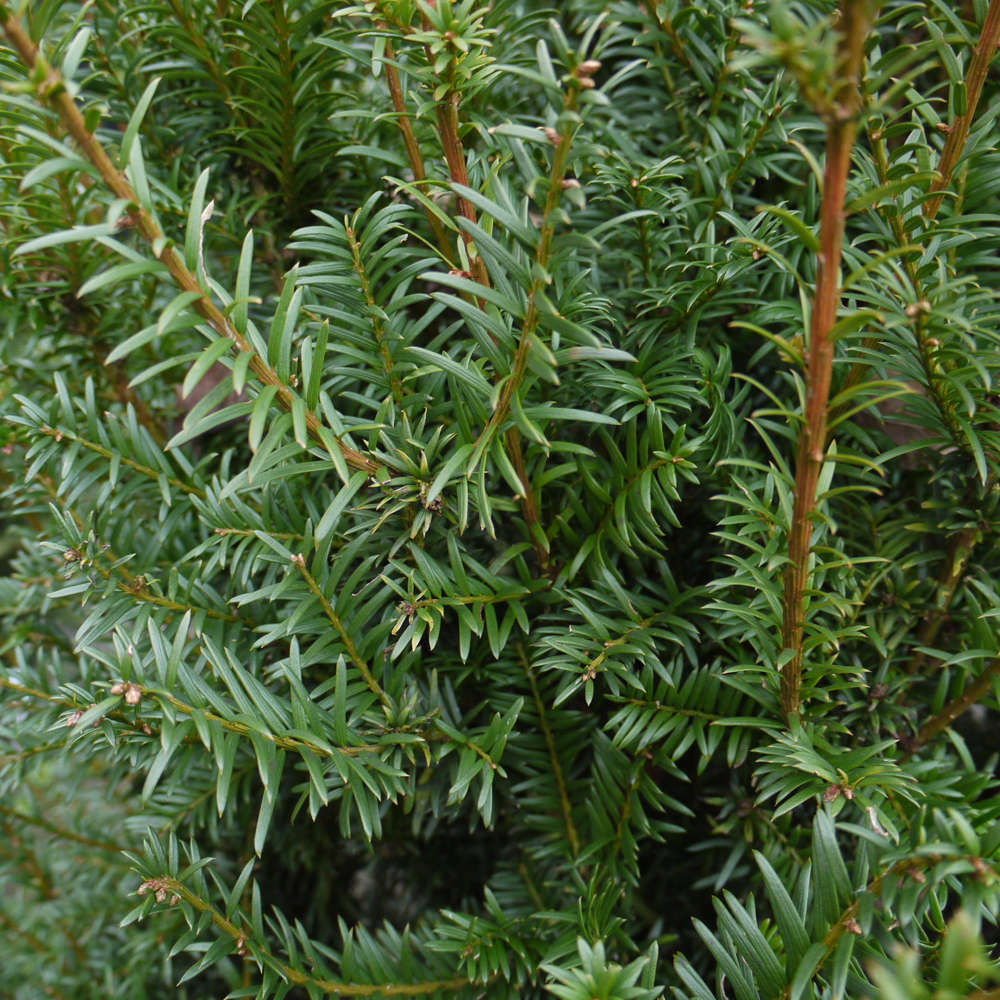
Dry. Free draining soils are best suited to species that can tolerate periods of drought once established. Yew (Taxus baccata) is a hardy and adaptable choice for these conditions.
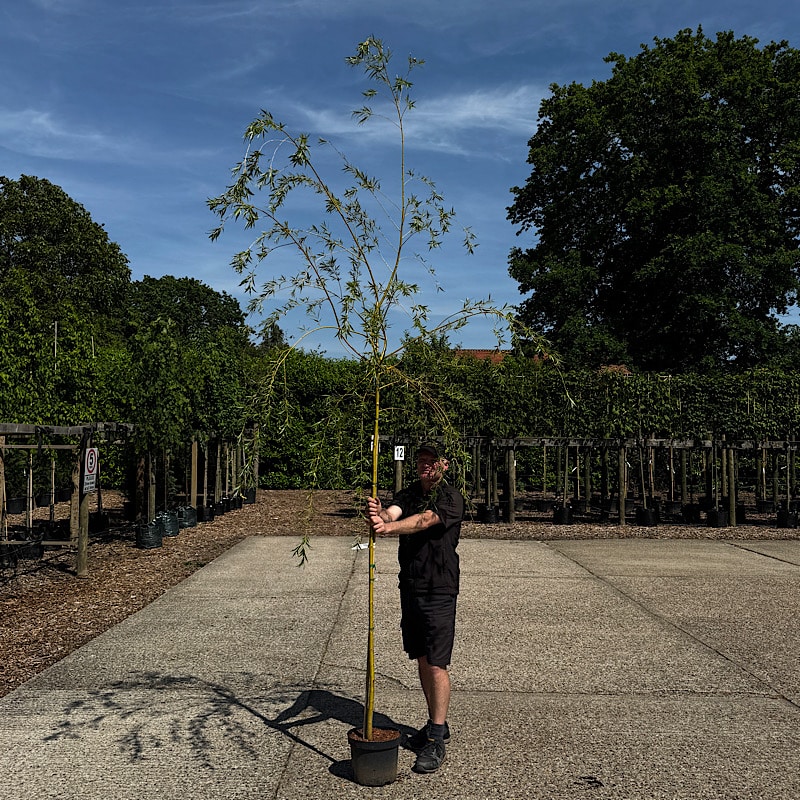
Wet. Consistently damp soils require species that can tolerate high moisture levels. The Golden Weeping Willow (Salix ‘Chrysocoma’) thrives in these environments and is particularly well-suited for planting near ponds or streams. Please note that extremely stagnant or waterlogged conditions can still lead to root suffocation. This can result in weak, shallow root systems and eventually lead to root rot.
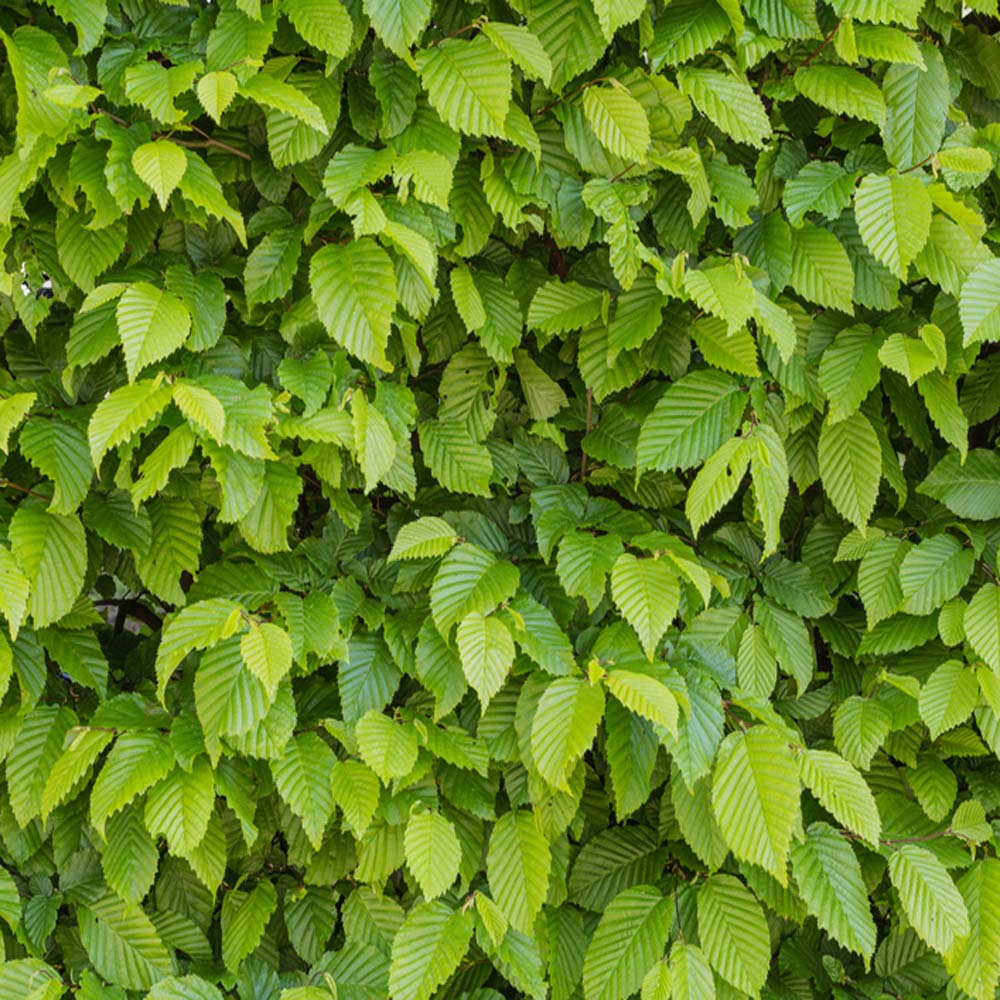
Clay. Hornbeam is an excellent choice for heavy clay or restricted root zones, as it handles compacted ground well once established. While it should not be planted in permanently waterlogged soil, it tolerates temporary winter waterlogging much better than most plants.
Regardless of the species, all newly planted trees require regular watering during their first few growing seasons while their root systems become established. Even drought-tolerant species need consistent irrigation during this initial period. Additionally, ensuring well-drained soil is vital, as prolonged waterlogging can damage roots. In areas with heavily compacted or poor-quality soil, some soil improvement may be necessary to facilitate healthy root development.
While many new build gardens start with little more than a lawn, fencing and a patio, they provide a perfect blank canvas for creating an outdoor space that suits your lifestyle. Without the burden of overgrown roots or outdated, immovable features, homeowners have the total freedom to design a layout from scratch that perfectly fits their lifestyle.
While new build gardens offer the creative freedom to design your perfect outdoor space, they can be limited in size and overlooked by neighboring properties. Choosing the right plants is a fantastic strategy to ensure your garden remains balanced as it matures.
Focus on…
1. Evergreen screening trees
2. Evergreen shrubs
3. Small ornamental trees
4. Multi-stem trees
You can create a beautiful outdoor space that maintains its shape and privacy all year round!
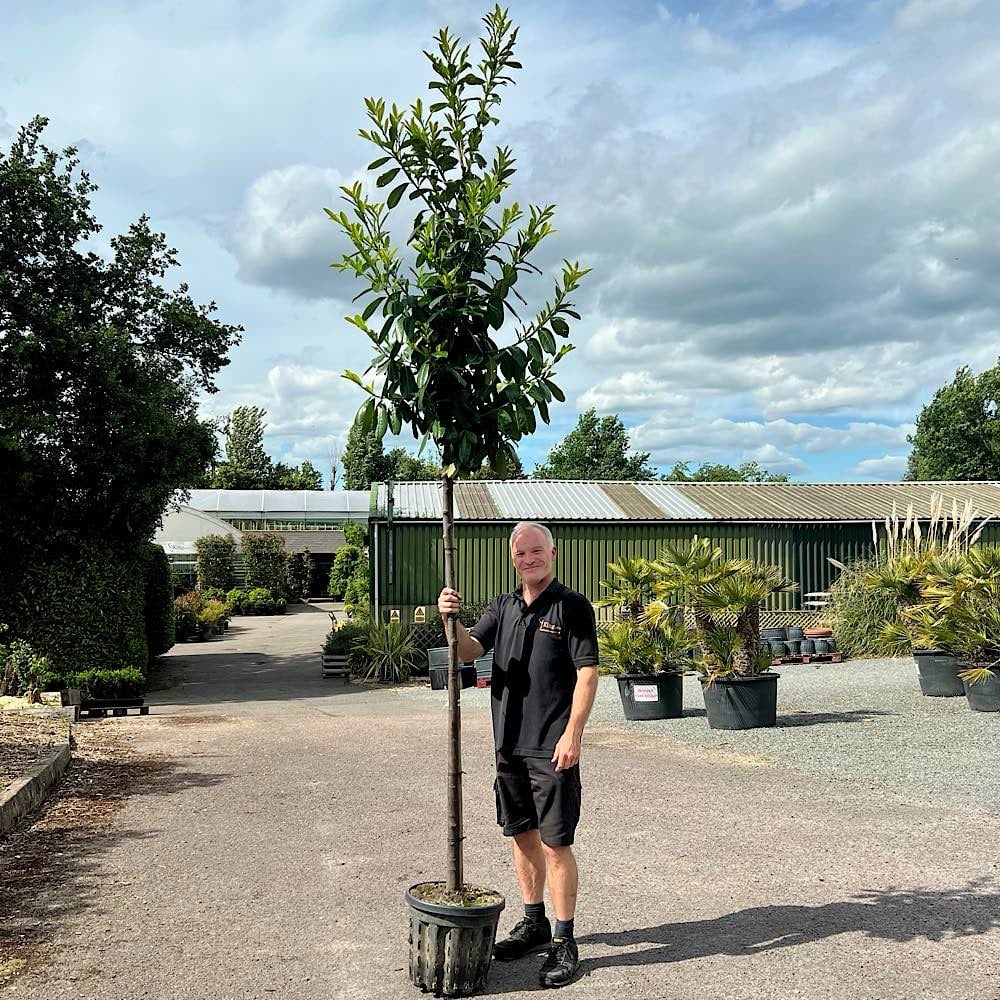
Evergreen screening trees. Offer an ideal solution for providing privacy above the fence line. These trees effectively screen overlooking windows, unsightly views, or nearby roads, and can even offer a level of noise protection. They also feature clear stems, which allow for underplanting!
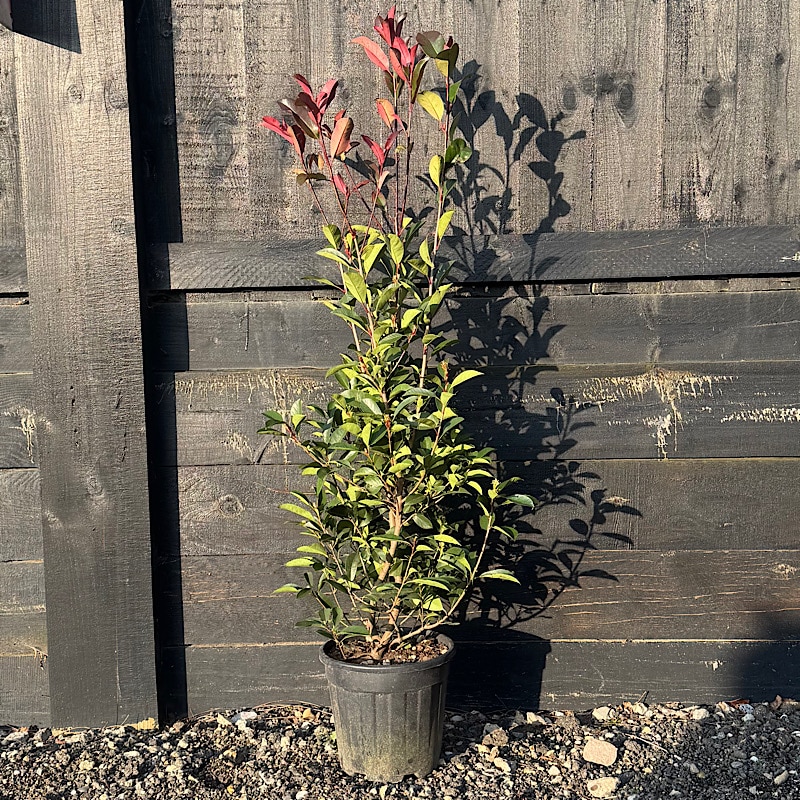
Evergreen shrubs. Great for softening fence lines, which can often appear harsh in open or empty outdoor spaces.
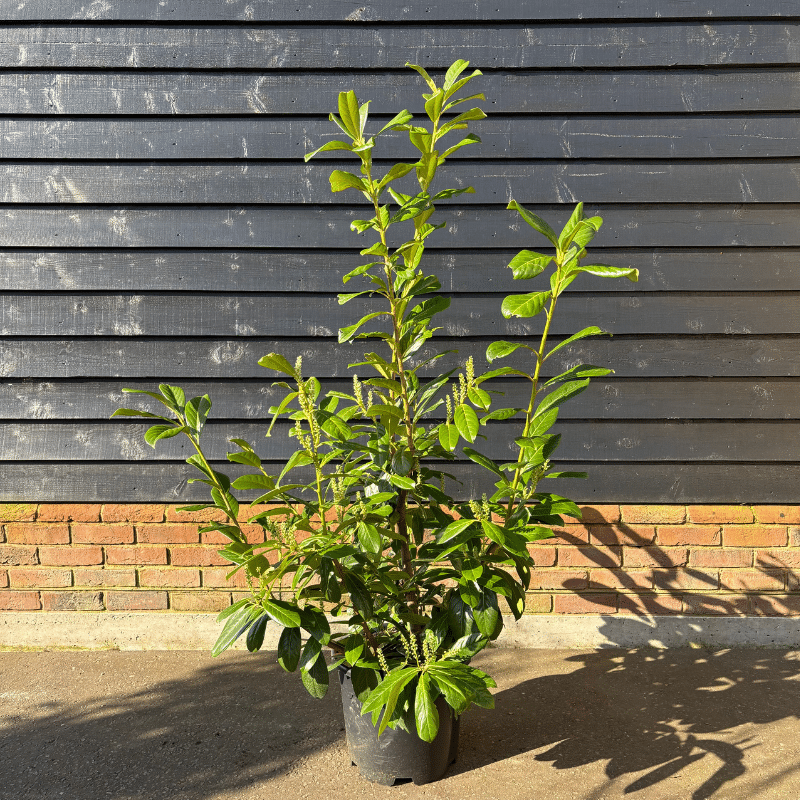
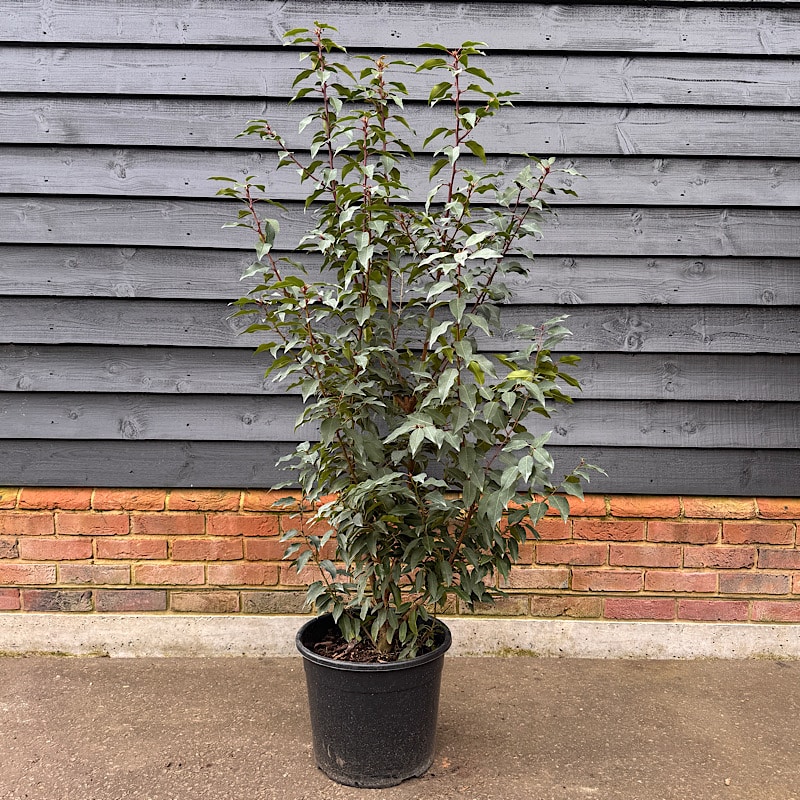
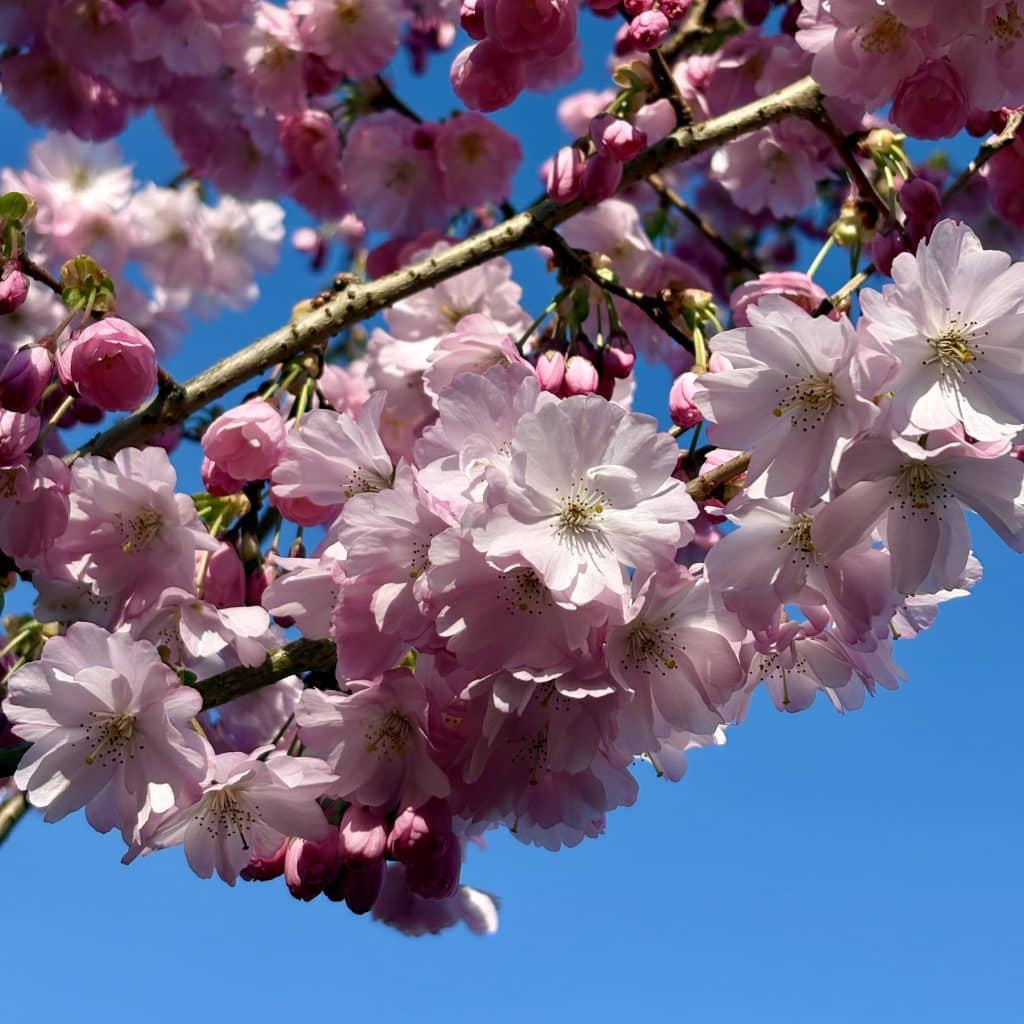
Small ornamental trees. Choosing trees with spring blossoms and autumnal colour changes is an excellent way to add seasonal interest to your garden. Selecting a tree with a smaller mature height ensures that it will fit perfectly without outgrowing your available space.
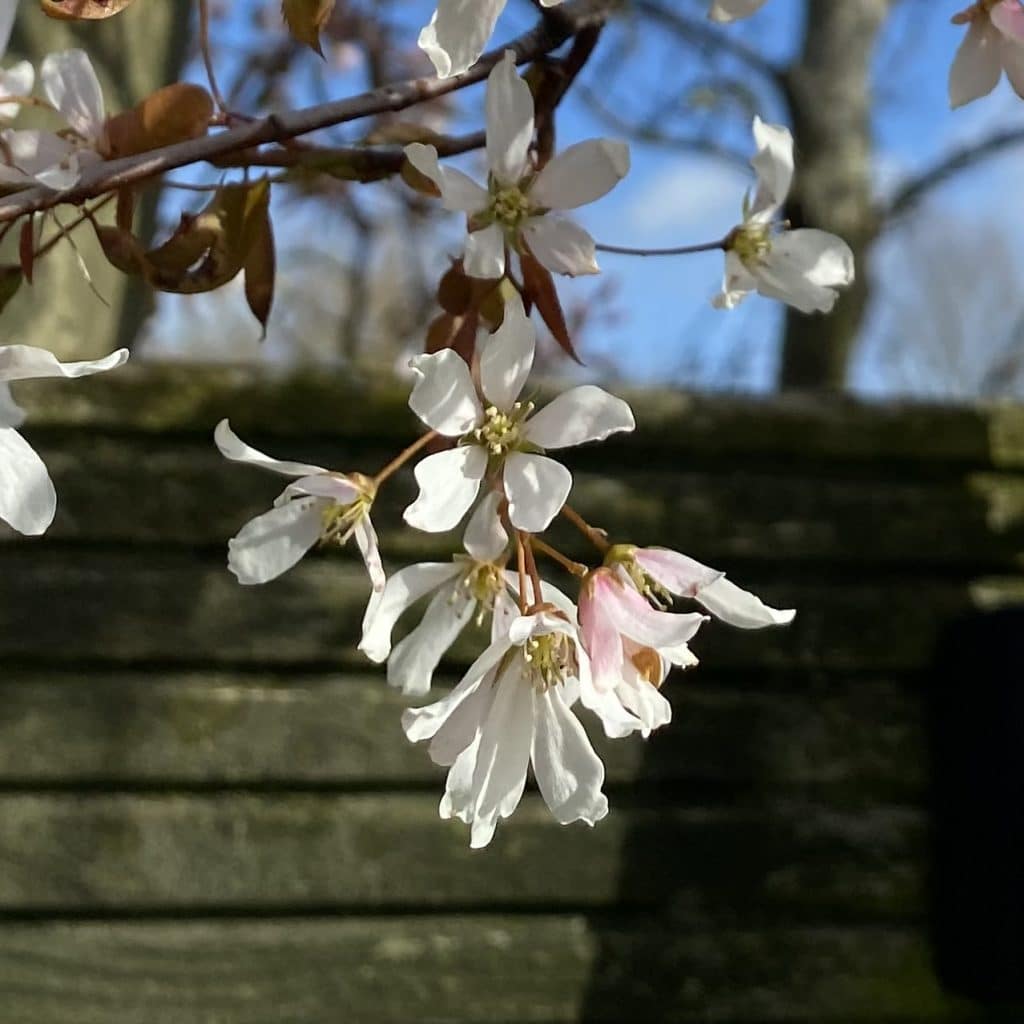
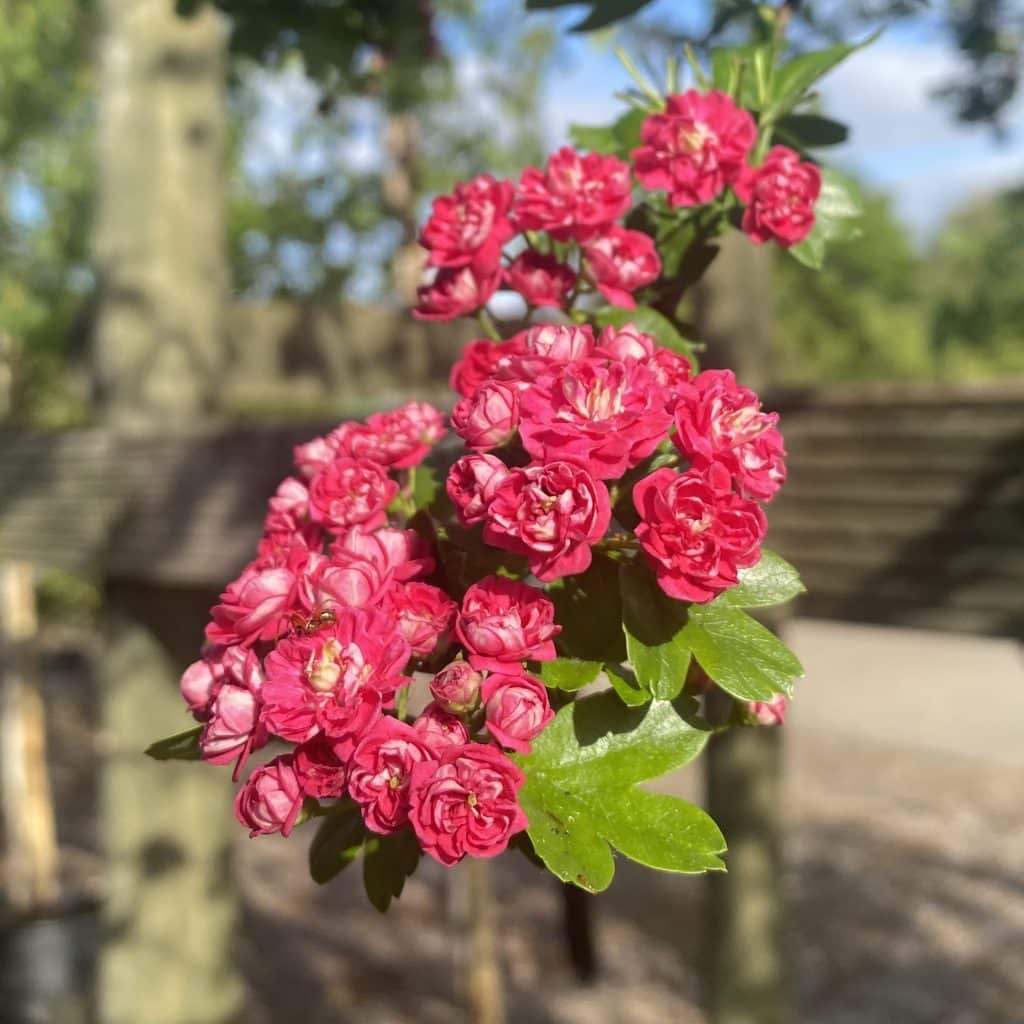
Multi-stem trees. An excellent choice for adding texture and movement to a landscape without overgrowing the space. Because these trees share energy across multiple branches, their mature height remains limited. They are a great way to help new gardens feel established surprisingly quickly.
Creating a beautiful garden doesn’t have to cost a fortune. With the right mix of trees and shrubs, you can easily landscape your garden on a budget. Whether refreshing a space or starting from scratch, investing in plants is a great way to introduce lasting structure, colour and interest for years to come.
Trees are one of the best investments you can make for your garden, providing lasting structure, seasonal interest and increased privacy while improving kerb appeal.
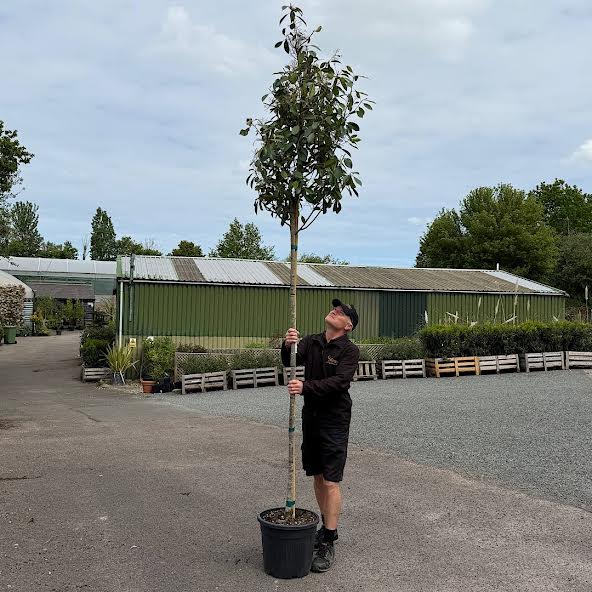
If you’re looking to create an instant transformation, semi-mature trees are an excellent option. Typically supplied at heights of 3-3.5 metres, they provide an established look from the moment they’re planted, making them ideal for creating privacy, adding focal points or enhancing a newly landscaped garden.
For those looking to keep costs down, younger trees offer exceptional value. Usually supplied in 10-20 litre containers and standing around 2 metres tall, these trees are more affordable while still providing plenty of impact as they mature. With proper care, they will establish quickly and develop into impressive specimens over time.
A carefully chosen selection of ornamental trees can transform a garden on a modest budget. Trees provide year-round interest through striking bark, elegant form, seasonal flowers, and vibrant autumn color, while also creating valuable wildlife habitats. Whether used as focal points, boundary features, or to add height and structure, trees help a garden appear mature and professionally designed without the expense of extensive hard landscaping. Some of our favourite varieites include:
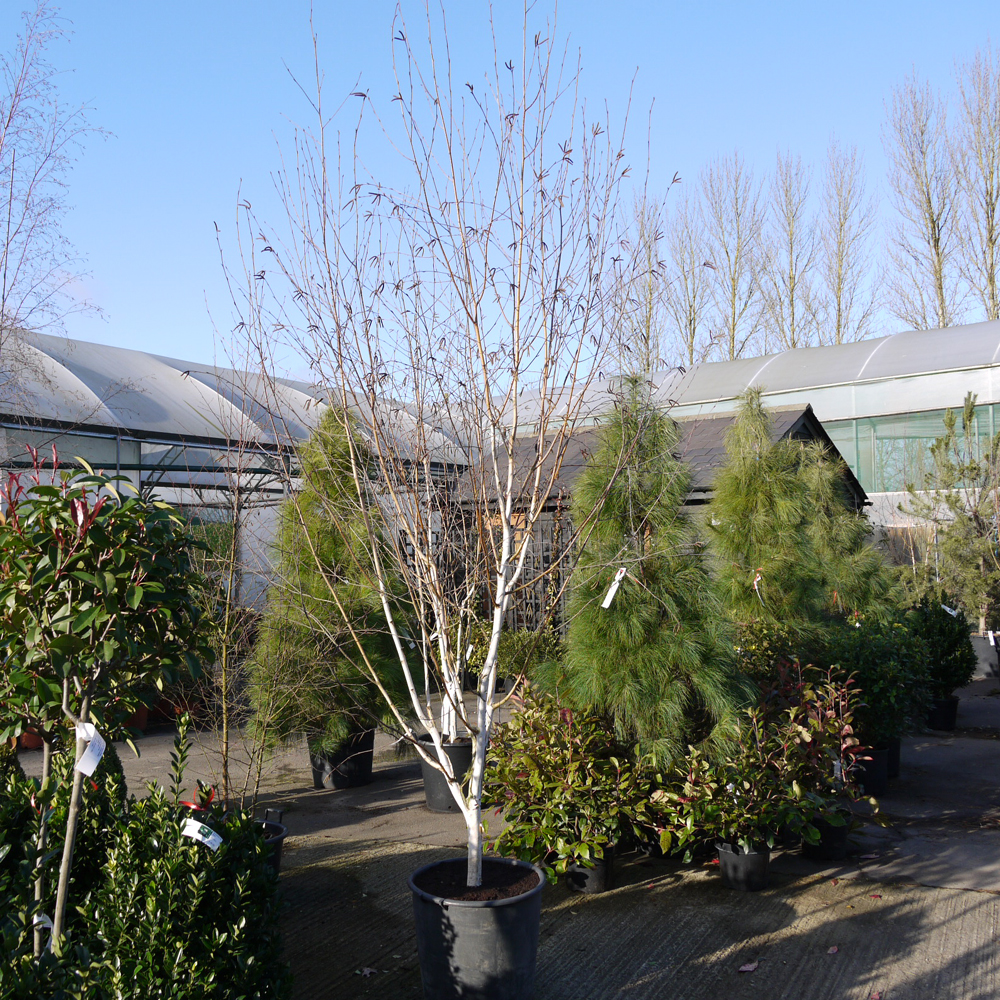
Himalayan birch (Betula jacquemontii). Loved for its brilliant white bark and graceful habit, this elegant tree provides light, deciduous screening, helping to soften and distract from unsightly views while allowing plenty of natural light to filter through its airy canopy.
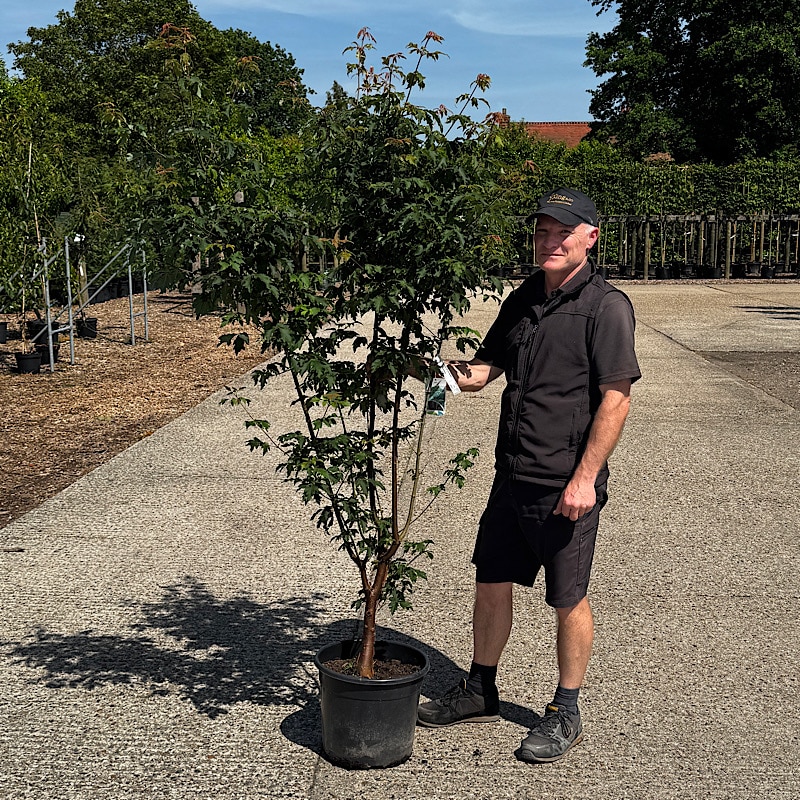
Snakebark maple (Acer rufinerve). An attractive small tree with distinctive green-and-white striped bark and vivid autumn colours of gold, orange and red.
Cotoneaster cornubia. A hardy ornamental tree producing masses of white spring flowers followed by red berries that are loved by birds. Its a great way to encourage wildlife into the garden.
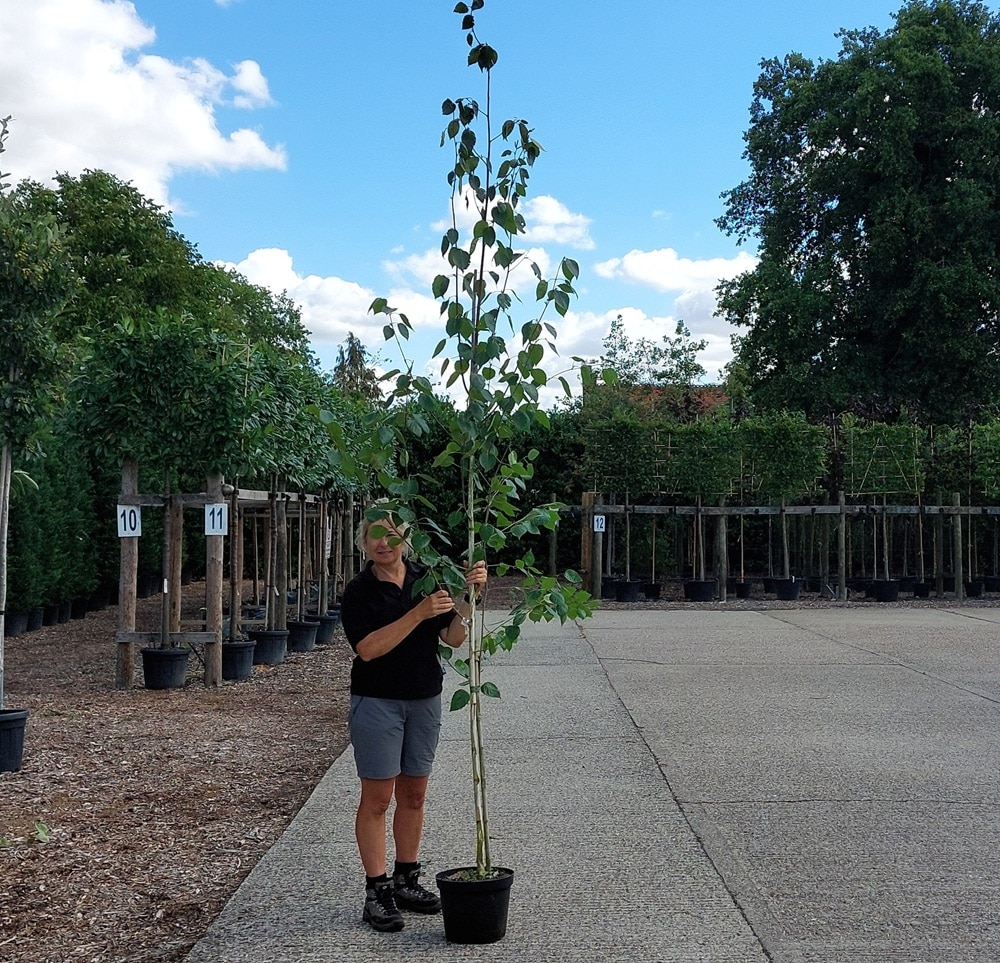
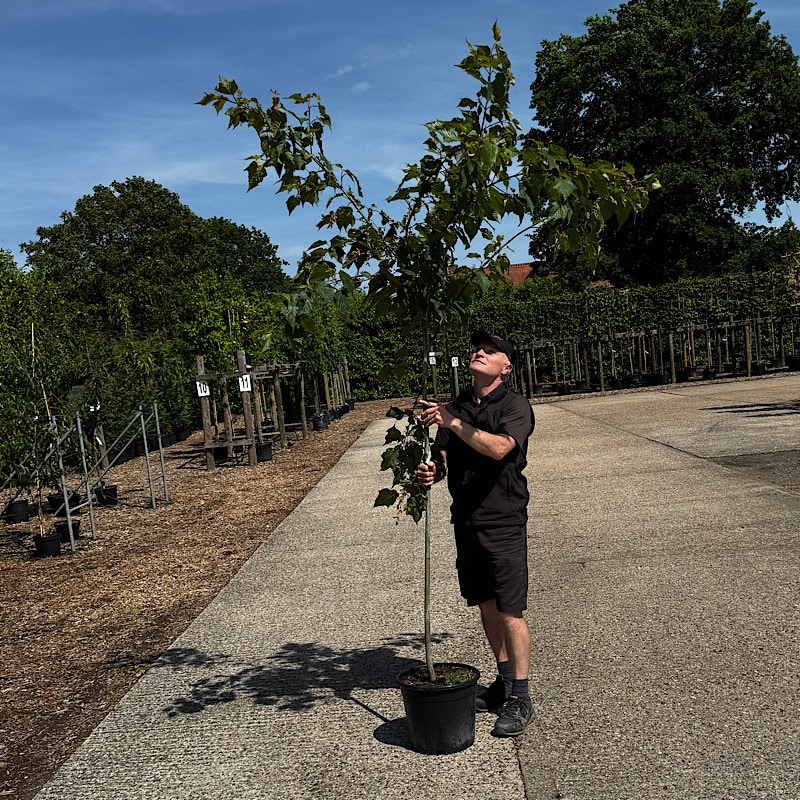
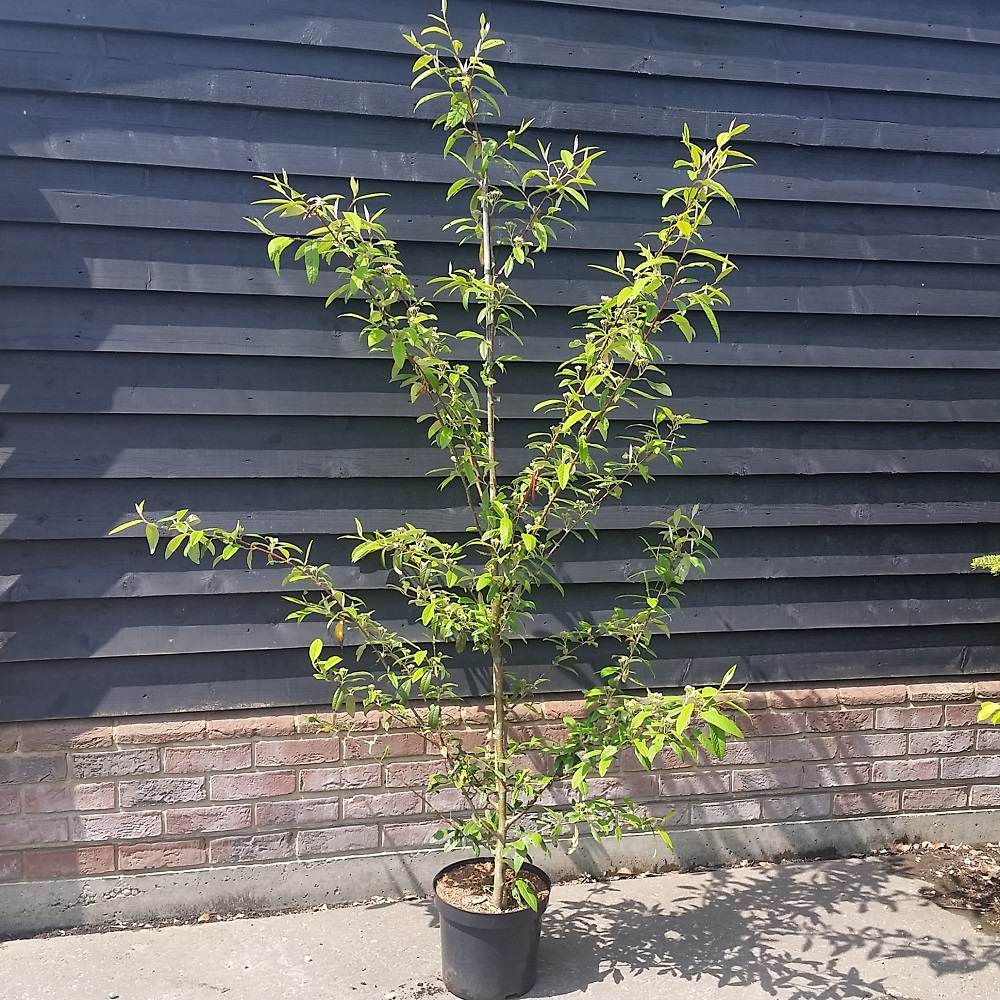
Sweet Gum (Liquidambar styraciflua ‘Worplesdon’). A great option for seasonal colour, with stunning shades of yellow, orange, crimson and purple in autumn.
Golden Weeping Willow (Salix ‘Chrysocoma’). A fast growing specimen with cascading golden branches, its a great choice for structure and movement throughout the year.
Sorbus aria ‘Lutescens’ (Whitebeam). With spring flowers and colourful berries, tree is another candidate for attracting wildlife.

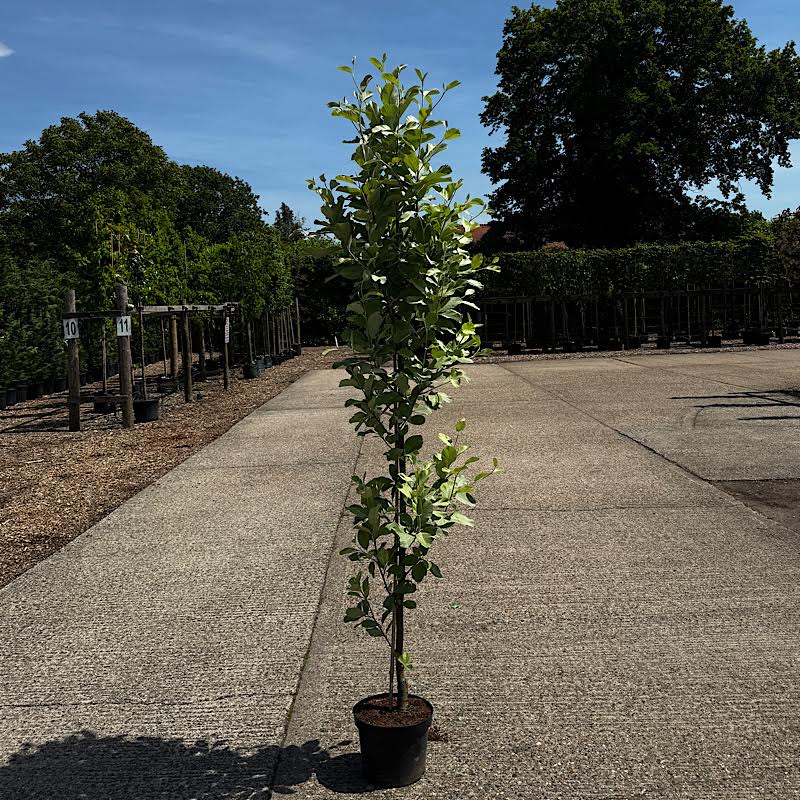
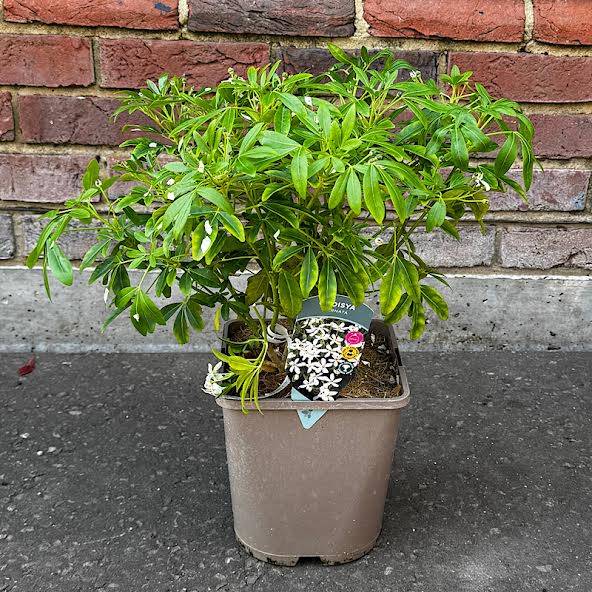
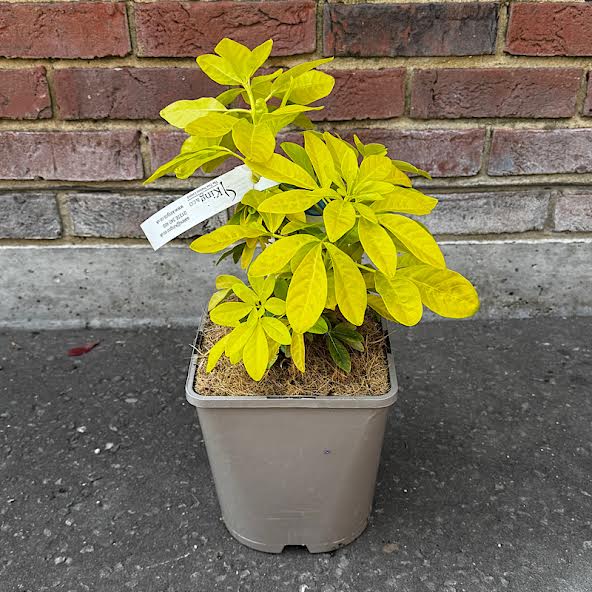
Shrubs are an excellent way to add texture, color, and year-round interest to your garden. Choosing plants in 4.5 litre pots is a cost-effective strategy to fill borders, soften hard landscaping, and complement your planting scheme. This allows you to create a fuller, more established appearance without stretching your budget. Our selection includes evergreen favorites such as Choisya and Nandina, which provide reliable structure and foliage color throughout the year. We also offer flowering varieties like Ceanothus and Viburnum, which bring seasonal interest and valuable benefits for pollinators and wildlife.
Choisya
‘Goldfingers’. Finely divided golden-yellow foliage that adds brightness and contrast to planting schemes throughout the year.
ternata. Valued for its glossy green foliage and fragrant white flowers, which often appear in spring and again later in the season.
‘Sundance’. Ideal for year-round colour, its scented white flowers that stand out beautifully against the bright foliage.
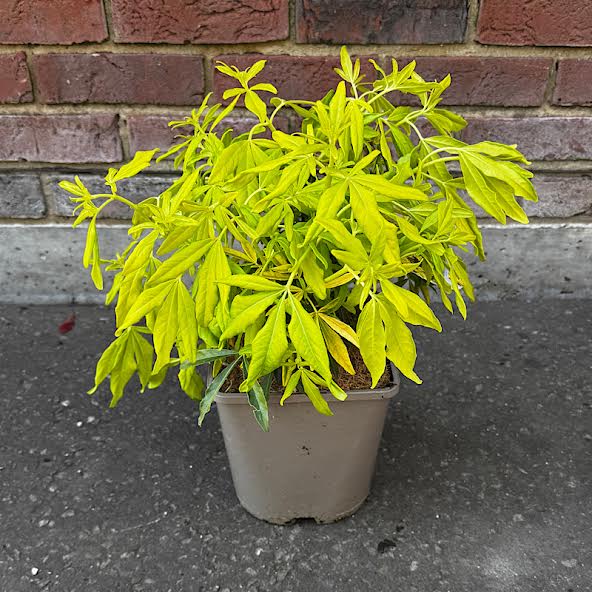
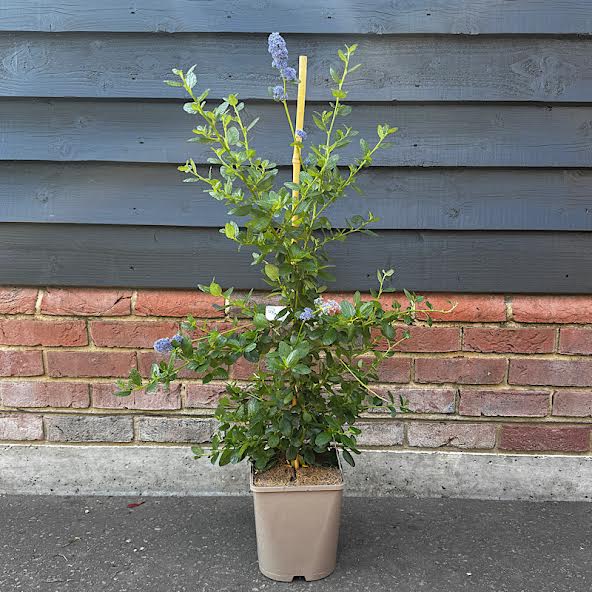
Ceanothus ‘Yankee Point’. A favourite with bees and other pollinators, this low growing evergreen produces masses of vivid blue flowers in late spring.
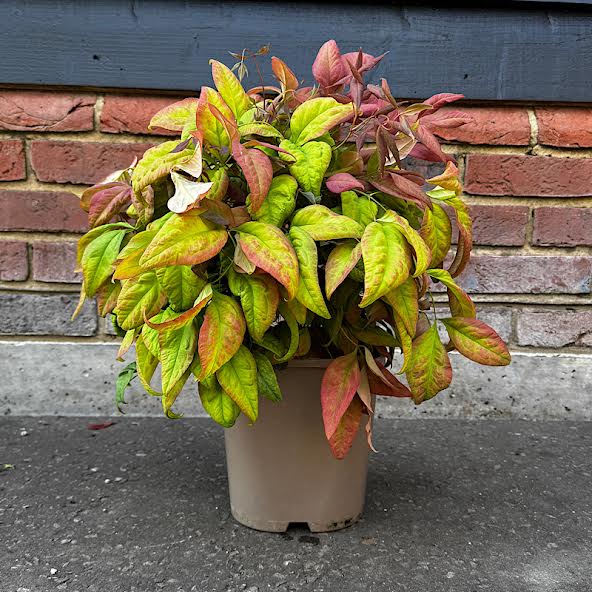
Nandina domestica ‘Blush Pink’. Great for year-round colour and seasonal interest. It has delicate foliage that emerges pink and red before maturing to soft green.
Viburnum opulus ‘Roseum’. Large clusters of white flowers in spring create a striking display.
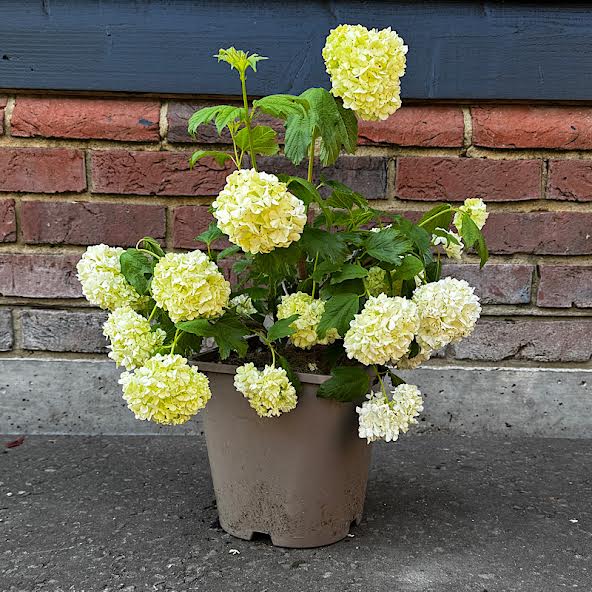
Landscaping on a budget doesn’t mean compromising on quality or impact. By selecting a mix of tree and shrub sizes, you can create a beautiful, well-balanced garden that suits both your budget and your long-term goals.
Whether you are looking for instant results or are happy to watch your garden mature over time, achieving your vision is possible with thoughtful plant choices and a clear plan.
Browse our full range online and start your garden transformation today.
You can buy trees, hedging, shrubs and topiary online by browsing our website.
If you do not see a plant or size that is suitable for you then please call as we stock a wide variety of plants in our tree nursery. It’s worth noting that many other websites sell other people’s stock (i.e. they act as an agent) so you cannot view the products at their own site. At King & Co, all of our advertised plants are available for viewing at our tree nursery in Rayne, near Braintree, situated just over an hours drive out of London.
Our knowledgeable and experienced tree nursery staff are always contactable via phone on 01376 340469 or if you have any questions regarding any of our trees or accessories.
If you cannot see what you require on our website, please complete the enquiry form. We will give it our urgent attention and will get back to you shortly with a solution that meets your needs.
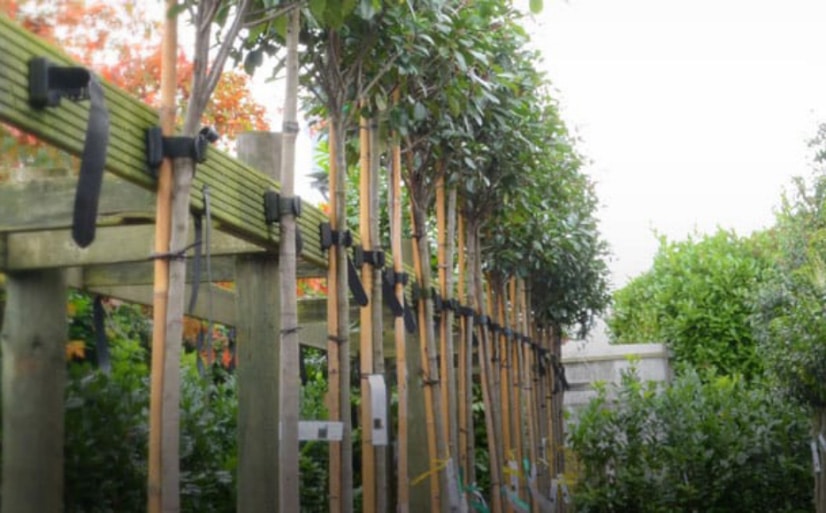
If you are looking for specific evergreen trees, Photinia, Leylandii hedging, Leylandii trees, instant hedging or shrubs, use the search bar at the top of the page
 Log In