Log In




Replacing a dead tree might seem straightforward. Remove the old tree, buy another one and plant it in the same spot.
However, that approach could lead to the same problem all over again.
Before you replace a dead tree, take some time to work out why the original tree failed. The soil might hold too much water, dry out too quickly or suffer from compaction. Poor planting, inadequate watering or an unsuitable species could also have caused the problem.
Once you understand what went wrong, you can choose a replacement tree that better suits the conditions and give it the care it needs to establish successfully.
Why did my tree die?
Start by investigating the planting area.
If the old rootball remains in the ground, carefully dig down beside it with a spade or trowel. You can learn a great deal about the conditions the roots experienced by examining the surrounding soil.
Look for signs that the ground was:
- Too wet or waterlogged
- Too dry
- Heavily compacted
- Poorly drained
- Very sandy or free-draining
- Competing with roots from nearby plants or trees
Consider the tree’s planting and maintenance history too. Did you plant it too deeply? Did it receive enough water during its first summer? Were grass or weeds competing with it for moisture?
This investigation gives you the information you need for a successful dead tree replacement.
Check whether the soil was too wet or too dry
Moisture levels play an important role when replacing a dead tree.
A tree needs water to survive, but its roots also need air. Too much or too little moisture can cause serious problems.
Was the soil too wet?
Dig beside the old rootball and examine the soil.
Sticky, saturated or persistently wet ground could point towards poor drainage. Heavy clay soils often hold water after prolonged rainfall, while compacted ground can make drainage even worse.
Some trees cope with wet conditions better than others. Choosing a replacement tree that tolerates moist or heavy soil could therefore improve your chances of success.
However, a different species will not solve severe drainage problems on its own. Standing water around the rootball may require improvements to the site before you plant again.
Was the soil too dry?
Dry soil can cause just as many problems, particularly during the establishment period.
Don’t rely on the surface of the soil when checking moisture. Rain can dampen the top few centimetres while the soil around the roots remains dry.
Instead, dig down beside the rootball and feel the soil. A dry root zone could indicate that the original tree needed more frequent or deeper watering.
Newly planted trees need particular attention during warm, dry or windy weather. Their developing roots cannot immediately access moisture throughout the surrounding soil.
When replacing a dead plant, consider both the plant’s water requirements and the amount of moisture your garden naturally retains.
Was the original tree suitable for the site?
Sometimes the tree didn’t receive the wrong care. Instead, you may have planted the wrong tree for the location.
Every tree has its own preferences for soil, drainage, moisture, sunlight and exposure.
A tree that prefers well-drained ground may struggle in a wet border. Another species might need consistently moist soil but struggle in a sandy, free-draining position.
That makes replacing a dead tree with the same species a decision worth considering carefully.
Use the evidence from the failed tree to guide your next choice.
Choosing a replacement tree for wet soil
Wet ground requires careful plant selection.
Look for trees that tolerate moist or heavier soils, particularly if your garden regularly stays damp after rainfall.
Remember that moist soil and permanently waterlogged soil present very different conditions. Many trees tolerate occasional wet periods but struggle when their roots remain submerged for long periods.
Where water regularly collects around the planting area, investigate the drainage before choosing another tree.
A suitable replacement tree should match the actual conditions of your garden rather than simply looking good at the point of purchase.
Choosing a replacement tree for dry or free-draining soil
Free-draining soil presents the opposite challenge. Water moves through it quickly, which can leave newly planted trees short of moisture during dry weather.
Drought-tolerant trees can perform better in these conditions, but you should also look at the reasons the site dries out.
Nearby lawns, hedges and established trees can all compete with a young tree for available moisture.
Adding a suitable mulch can reduce moisture loss from the soil and suppress competing weeds. A consistent watering routine will also help your replacement tree establish.
Could incorrect planting have caused the problem?
Your old rootball may provide clues about planting problems.
One common mistake involves planting a tree too deeply. Soil should not cover the trunk above the appropriate root flare.
Compacted soil can create another problem. Construction work, heavy machinery and repeated foot traffic can compress the ground and restrict root growth.
When you replace a dead tree, take the opportunity to correct these problems.
Prepare the surrounding soil rather than simply putting a new tree into the old hole.
Choose the right replacement plant
Once you understand the cause of failure, start looking for a plant that suits the site.
Consider:
- Soil type
- Drainage
- Moisture levels
- Available space
- Sunlight
- Exposure to wind
- Mature height
- Mature width
- Maintenance requirements
- The purpose of the tree
Think about the job you want the new plant to perform too.
Perhaps you originally planted the tree for privacy. Maybe you wanted shade, screening, flowers or seasonal interest.
A screening tree for a wet garden needs different qualities from one for a dry, free-draining site. Matching the plant to both the purpose and growing conditions gives you a much stronger starting point.
Consider the mature size of your new tree
Replacing a failed tree also gives you an opportunity to reconsider its eventual size.
A tree can look perfectly proportioned when you buy it and become much larger over the following years.
Before choosing your replacement tree, check its expected mature height and spread.
Ask yourself:
Will this tree still suit my garden in 10, 20 or 30 years?
Think particularly carefully about planting near:
- Houses
- Garden buildings
- Boundaries
- Patios
- Driveways
- Utility lines
- Existing trees
You might also discover a better solution while researching your options.
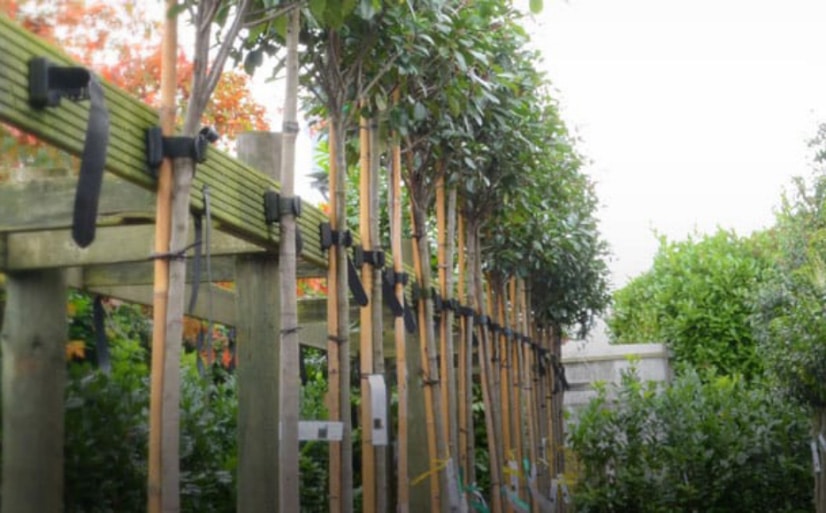
For example, a pleached tree or trained screening tree can create privacy above a boundary while taking up less ground space than a conventional tree with a large spreading canopy.
Prepare the site before replacing the tree
Don’t rush straight from removing the old tree to planting the new one.
First, remove the old tree and as much remaining root material as practical. Take extra care if you suspect disease caused the original failure.
Next, examine the soil again.
Break up compacted areas and improve drainage where necessary. On very dry ground, consider how you will maintain moisture around the new rootball.
Avoid simply filling the old hole with compost and dropping a new tree into it.
The new roots will eventually grow beyond the original planting hole. The surrounding soil therefore needs to provide suitable conditions for healthy root development.
Give your replacement tree a watering plan
Planting your new tree marks the beginning of its establishment, not the end of the job.
Watering plays a particularly important role during the first growing seasons.
Check the soil regularly, especially during warm, dry or windy weather. When the soil around the rootball starts to dry, water thoroughly so moisture reaches the developing root system.
At the same time, don’t water automatically every day.
Heavy soil can remain wet beneath the surface even when the top looks dry. Overwatering can create problems just as easily as drought.
Your watering routine should reflect the soil, weather and tree rather than follow a rigid calendar.
Mulch around the new tree
Mulching can help your replacement tree establish.
A suitable organic mulch helps retain moisture, suppress weeds and gradually improve the soil as it breaks down.
Spread the mulch over the soil around the tree but leave a clear gap around the trunk.
Avoid piling mulch directly against the bark. Excess moisture around the trunk can create its own problems.
Keep grass and weeds away
Grass and weeds compete with a young tree for water and nutrients.
Keep the area immediately around your new tree free from competing vegetation, particularly during the establishment period.
This matters even more on dry, free-draining soil, where several plants may compete for a limited supply of moisture.
Regularly check the planting area and remove new weeds before they become established.
Does a replacement tree need pruning?
Not necessarily.
A newly planted tree needs time to establish its root system. Heavy pruning immediately after planting can create unnecessary stress.
However, remove damaged, dead or diseased branches when necessary.
You can also use formative pruning as the tree develops to create a balanced structure. The correct approach depends on the species, growth habit and purpose of the tree.
Include pruning in your long-term maintenance plan for the replacement tree, rather than treating it as a one-off task.
Check stakes and tree ties
Larger trees may need staking while their roots establish.
Check the stake and tree tie regularly. The support should hold the tree securely without restricting its natural movement or becoming too tight around the trunk.
Remove or adjust the support when the tree no longer needs it.
Regular checks can prevent a small maintenance issue from turning into damage.
Can I replace a dead tree with the same species?
Yes, sometimes.
The original species may still suit your garden if poor watering, incorrect planting or another correctable problem caused the failure.
However, the situation changes when the tree struggled because of unsuitable soil, poor drainage or limited space.
In those circumstances, choose a different species that better matches the conditions.
Disease also deserves careful consideration. If you suspect a plant health problem, investigate the cause before replacing a failed tree with the same species.
When is the best time to replace a dead tree?
For many trees, autumn through to early spring provides a good planting window, provided the ground isn’t frozen or waterlogged.
Bare-root and rootballed trees typically suit the dormant season, while container-grown trees offer more flexibility throughout the year.
Spring and summer planting require particular attention to watering. Warm weather can quickly dry the soil around a newly planted rootball.
Whenever you plant, monitor the moisture around the roots and adjust your maintenance routine accordingly.
What should I plant after a tree dies?
The answer depends on the reason for the original failure.
Wet soil may call for a tree that tolerates moist conditions, although severe drainage problems may require attention first.
Dry, free-draining soil could suit a more drought-tolerant tree alongside a reliable watering routine.
A tree that simply became too large needs a smaller or more compact replacement.
For privacy or screening, you might find that a hedge, pleached tree or trained screening tree works better than the original choice.
The best replacement tree is therefore not necessarily the same species you had before. Choose a plant that suits both the conditions of the site and the job you want it to perform.
Don’t make the same mistake twice
A dead tree can feel like a wasted investment, but its failure can also tell you a lot about your garden.
Before you replace a dead tree, investigate the soil and rootball. Check whether the site stays too wet, dries out too quickly or suffers from compaction.
Then consider whether the original tree suited the soil, available space and purpose.
Choose your new tree based on those findings.
Finally, give it a clear maintenance plan covering watering, weed control, mulching, staking and pruning.
A little extra investigation before planting can give your new tree a much better chance of becoming a healthy, established part of your garden.
Need help choosing a replacement tree?
Choosing the right tree involves more than finding one that looks attractive.
At King & Co, we can help you choose trees and hedging suited to your garden, whether you’re replacing a dead tree, creating privacy from neighbouring properties or looking for screening plants for a particular soil type.
If your previous tree failed, don’t automatically replace it like-for-like.
Find out what went wrong first. Then choose a tree that’s better suited to the job.
Quick checklist for replacing a dead tree
- Find out why the original tree failed
- Dig down beside the old rootball and check the soil
- Establish whether the site is too wet or too dry
- Check for compacted soil and poor drainage
- Consider whether the original species suited the site
- Choose a replacement tree suited to the soil conditions
- Check the mature height and spread
- Prepare the planting area properly
- Plant the new tree at the correct depth
- Create a watering plan
- Keep grass and weeds away
- Apply suitable mulch
- Check stakes and tree ties
- Establish an appropriate pruning routine